Excerpt: House Kundarak and the Mark of Warding

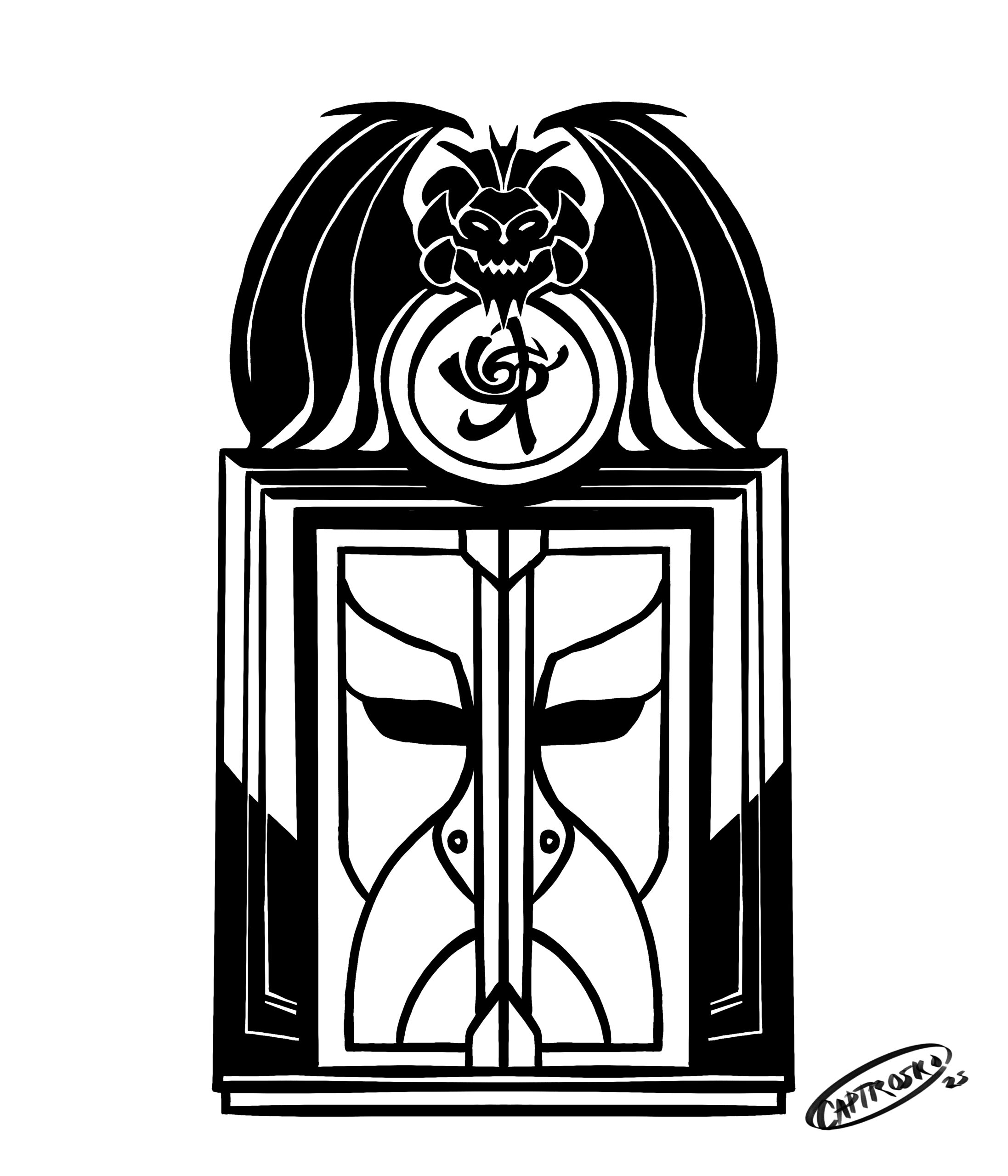
A crowned manticore with one foot resting on a chest.
The seal of the Banking Guild, by Matthew Johnson

You’re right, Lord Ruken. We’re talking about a great deal of gold. But there are a few things that only you know. Only you know the fervor of your enemies and how far they would go. Is there anyone who might scry upon you, seeking to pry your secrets from your private conversations? Is there anything in your home you truly can’t afford to have stolen? Is it possible that someone hates you so much that they might seek to kill you… or to harm you by harming those you love? Only you know these things, my lord… and only you know what peace of mind is worth to you. 

The heirs of House Kundarak are often maligned as being paranoid, always suspecting the people around them of coveting their fine possessions. This is a foolish fabrication. But there are two factors that play into this stereotype. The first is Kundarak’s great wealth. Most of the houses became wealthy because of their success. But the Kundarak lords were wealthy long before they became a House, possessing riches greater than any western king. There have always been those who have sought to steal Kundarak gold, whether through force or guile. So if Kundarak heirs look at the world around them with a little suspicion, it’s because history has given them good reason to be cautious. Beyond that, those who carry the Mark of Warding feel an inherent urge to protect the things that matter to them. Heirs of House Sivis love words. Those who carry the Mark of Making are often tinkering with something. And the dwarves who bear the Mark of Warding are always ready to protect the things they love. The Mark of Warding seals and shields, but it also allows its bearer to create deadly traps that will punish those who trespass against them. Kundarak won’t just keep you from touching their things; they’ll leave you with a bloody stump for daring to make the attempt. These threads run through the psyche of every Kundarak heir: pride in what they possess and what they have accomplished, and a fierce instinct to protect what they love and to punish those who would try and take it. 

While some might expect Kundarak heirs to be avaricious, the truth is often the opposite. Some of the greatest philanthropists in the history of the Five Nations have been Kundarak viceroys, and heirs of the house are often generous with their friends. Kundarak teaches its heirs to be sharp in matters of business, to cut to the heart of a situation and identify its risks. But the House also teaches its children that a life driven solely by the pursuit of wealth is as cold as a copper coin. A Kundarak heir always considers the costs of things, and anyone who knows a Kundarak dwarf has probably had a moment when their friend has stepped in to haggle on their behalf or to warn them of a possible scam. But this is because what the heir values most is friendship. Kundarak heirs won’t waste gold, but they aren’t afraid to spend it on things that truly matter, including helping their friends and creating fine memories. Likewise, Kundarak dwarves usually have treasures, whether those are heirlooms passed down to them or things they’ve worked to acquire. Some of these things would be seen as treasures by anyone; many heirs appreciate art, jewelry, and goods of the highest quality. But others have more of a personal value. A copper tankard that’s the last surviving mug made by a distant ancestor. A rare book of poetry by a poet who’s still unappreciated long after their death, but which the dwarf loves. A silver coin they struck as a child, when their mother took the mint. Beyond this, every Kundarak heir has something they dream of acquiring. This is a game that starts among children, as heirs declare what wonders they will one day possess, and these desires are refined as they grow. This could be a title, a family, an estate… but most heirs have something very concrete in mind, whether it’s an artifact or a piece of art. So in making a Kundarak heir, consider: What treasures do you possess, and what do you yearn to obtain? What do you value above all else, and what would you do to protect the things that you love? 
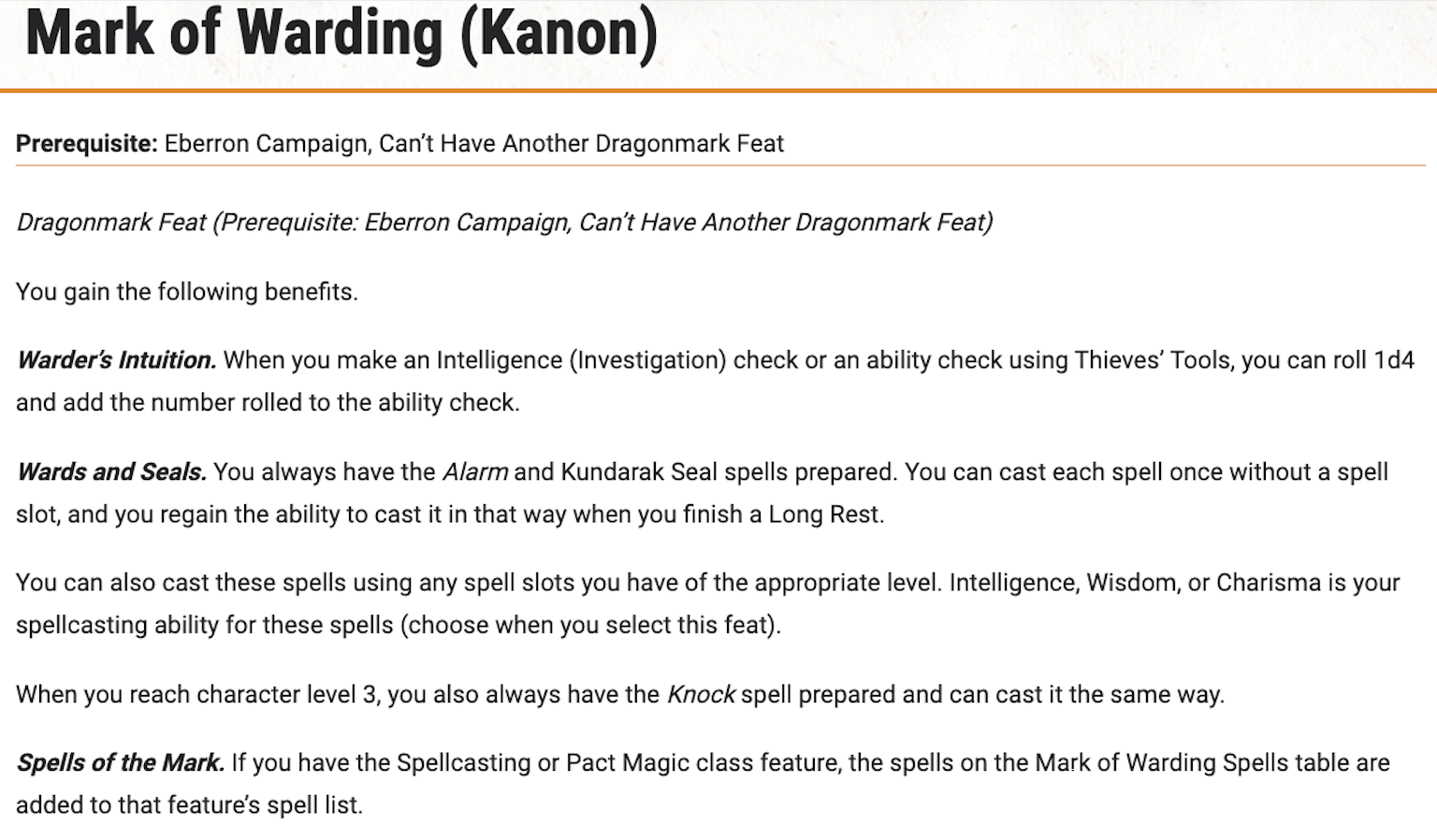
Note: The version of the Mark of Warding presented here differs from what is presented in Forge of the Artificer. This is the version I am using in my campaign, but it is not official! My reasons for these changes are described later in this article

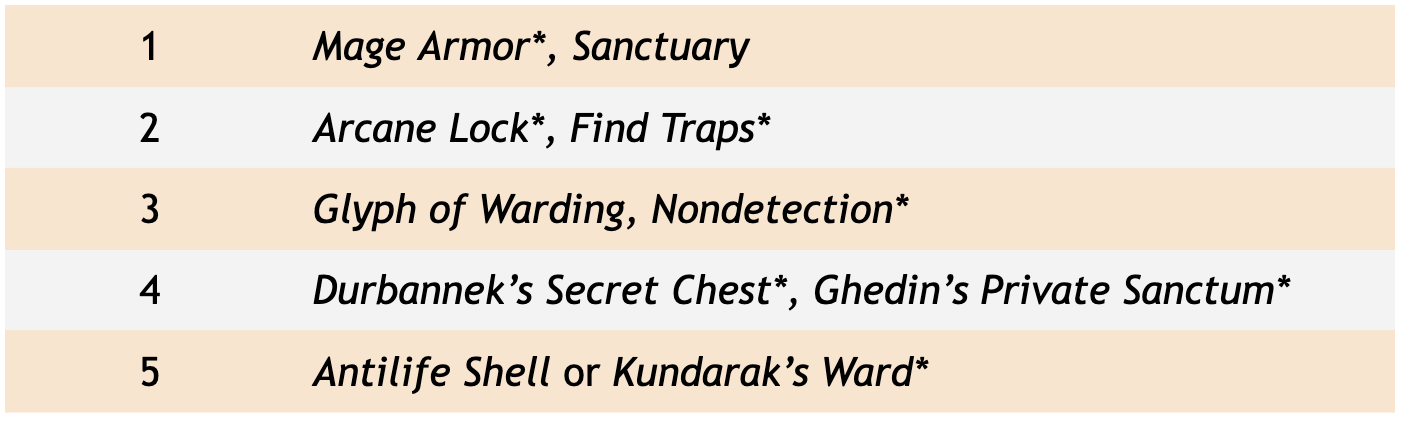
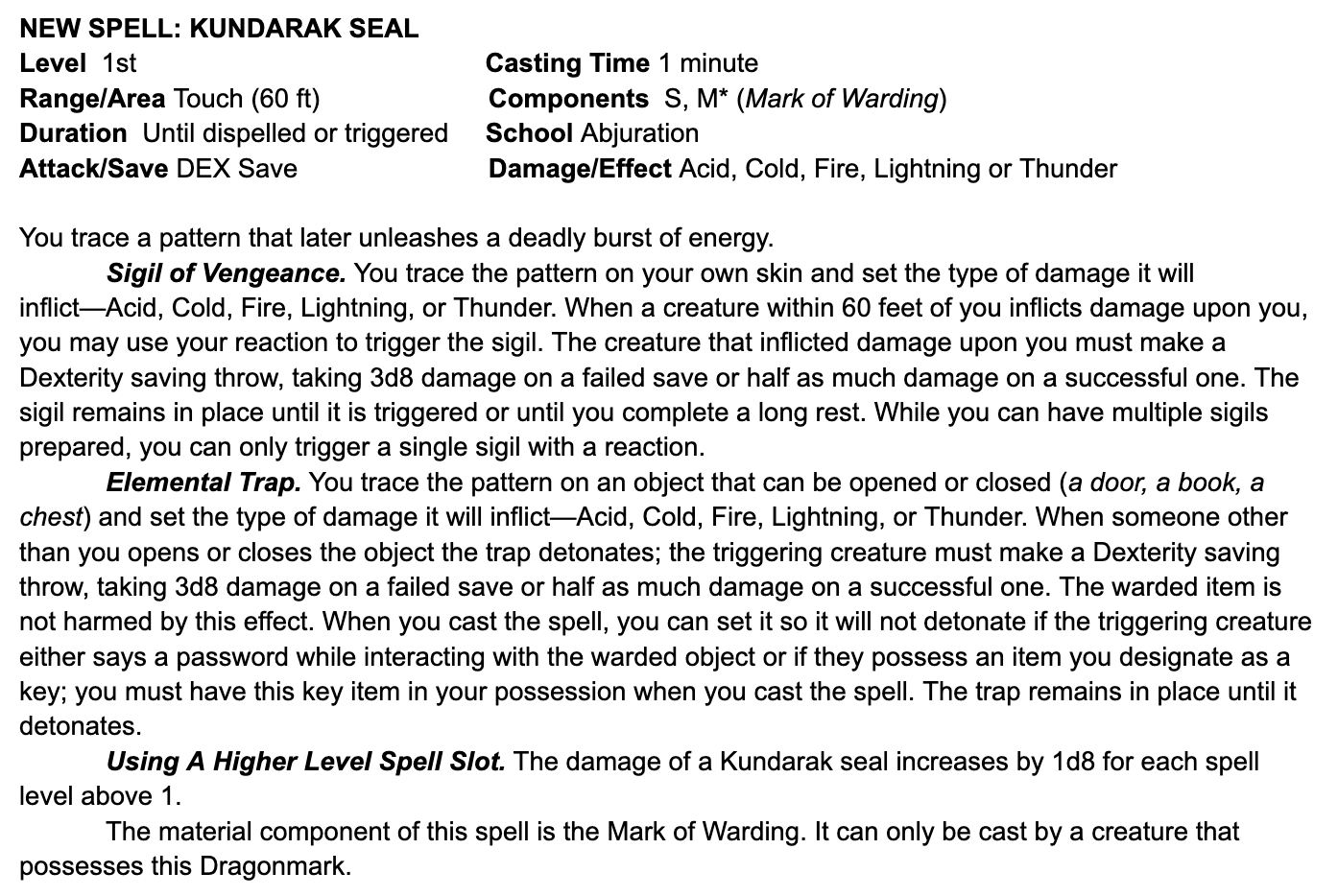
When an heir of House Kundarak first manifests the Mark of Warding, they are placed in isolation while they master its first two gifts. The first of these is a peaceful source of comfort: the ability to set an Alarm. As a ritual spell, this can be cast at any time. The heir studies the space or the portal they wish to ward, and imagines energy flowing from their dragonmark to fill that space. While there is no actual sentience to an Alarm spell, most Kundarak heirs imagine a guardian—crafting the story of the spirit that serves and protects them. The heir traces the patterns of the Mark of Warding in the air and murmurs instructions to their guardian (the somatic and verbal components of the spell), thanking the spirit for its service and telling it whether to respond to intrusion by warning the heir directly or making a noise. For most Kundarak heirs, this is a comfortable experience; it makes them feel protected and secure. Heirs with a newly manifested Mark are encouraged to cast Alarm over and over, warding everything in sight. This power poses no danger to anyone. But the second gift of the Mark of Warding is another matter entirely, and this is the reason new heirs must be isolated. Every heir can feel the power of the Mark promising protection. If they let instinct guide them and trace the pattern of the Mark, power flows through the Mark and into that seal, burning with the determination to protect and to punish. This is the Kundarak Seal, the first step toward a Glyph of Warding. It can be placed on anything that can be opened or closed—a door, a window, a chest—or on the heir’s own skin. With time and training, an heir can weave safeguards into the seal, setting a word of safe passage or choosing when to trigger the seal on their skin. But in those first days these traps pose a danger to everyone; a playful shove is enough to trigger a Sigil of Vengeance and injure or kill a friend. Foundlings with the Mark of Warding are rare, and often have tragic tales of loved ones harmed by an Elemental Trap before the heir mastered their powers. This isn’t  a danger for long. Once an heir understands this gift, they can contain a Sigil of Vengeance until they choose to unleash its power; most heirs start each morning by tracing the mark on their skin and setting that ward against enemies. This is something everyone knows about Kundarak heirs—You strike a blow against them, and they’ll blast you with vengeance. It’s something that gives Kundarak bankers and negotiators confidence when dealing with strangers: you harm me at your peril. 

Further gifts of the Mark of Warding offer both sides of a coin, as heirs learn both how to protect the things they love and how to bypass protections. An experienced heir can seal anything that can be opened, weaving an Arcane Lock; but they also possess the power to Knock, opening any door. They have an intuitive knack for using Thieves’ Tools to create traps and locks as well as to remove them; they can set deadly wards, but they also have a talent for Investigation and for mystically finding traps. Warding-marked heirs often have a fondness for puzzles; there is an intuitive satisfaction that comes from opening a look or unraveling a mystery. 

Player characters and remarkable NPCs can master both powers of the Least Mark of Warding, but most heirs only learn one of its two paths. Those drawn to the path of Wards gain the ability to cast Nondetection and Private Sanctum. These allow the heir to shield objects, people, or places from divination magic, and also to prevent teleportation into or out of a particular space. Private Sanctum can be made permanent, and most long-established prisons have Kundarak wards that prevent teleportation. Those who follow the path of Seals gain access to Glyph of Warding and Secret Chest. These heirs are the trapsmiths of the House, weaving Glyphs into security systems for valued clients. 

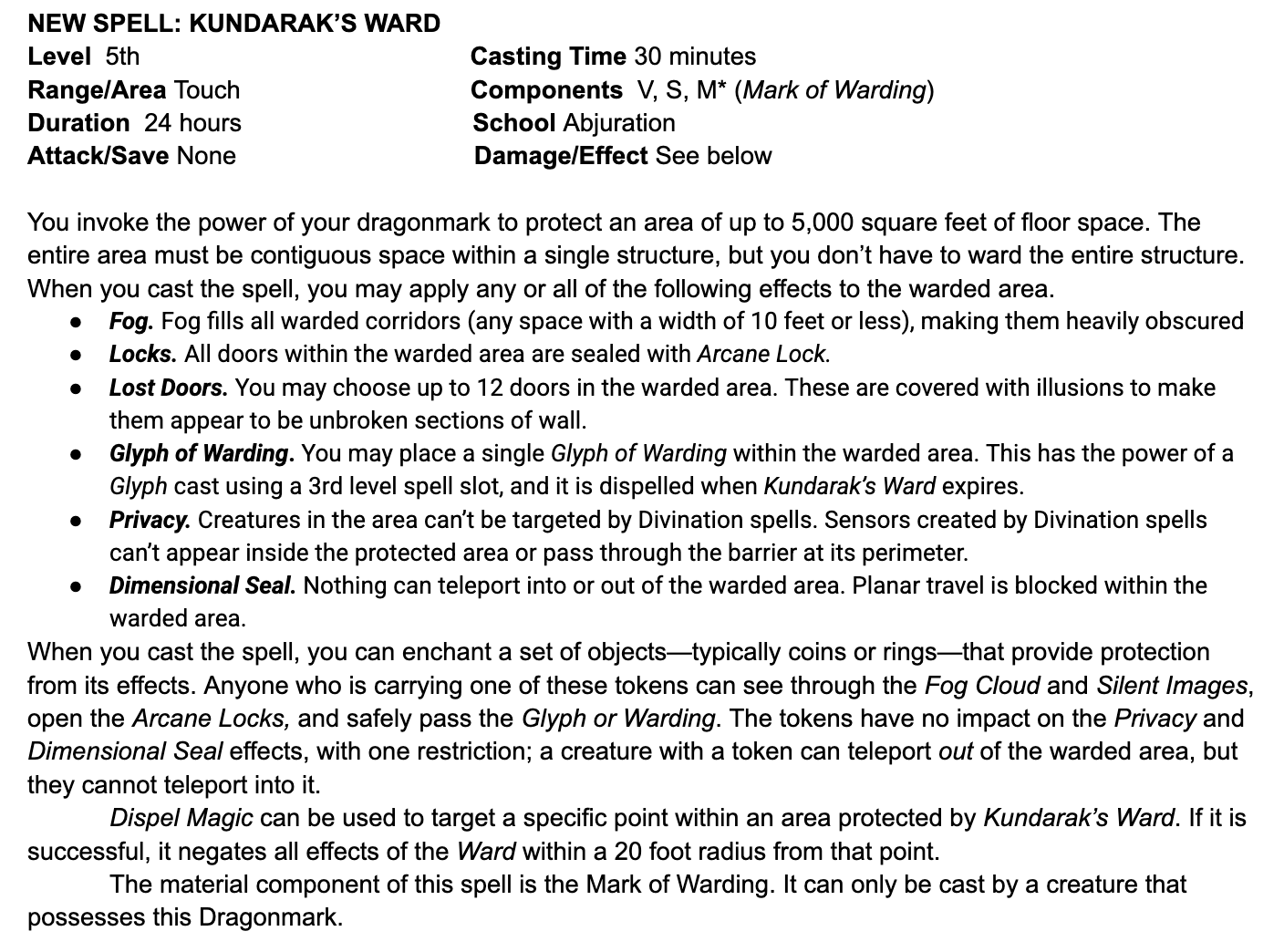
The final gift of the Greater Mark is one that even player characters have to choose between. The rarer of the two options is the ability to cast Antilife Shell, keeping all living things from approaching the Warding heir. Those with this gift often worked with House Deneith during the last war; a Warding heir could shield a Siege Staff crew and keep them from being overrun. Heirs with this power are rare and as the war went on, the use of Warforged constructs and Karrnathi undead reduced its value, but there were still times when these wars played a key role in a battle. The more common gift of the Greater Mark is Kundarak’s Ward—a power that weaves Private Sanctum, Arcane Lock, and Glyph of Warding together to protect a stronghold. Many noble estates have Housewards that maintain Kundarak’s Wards. With that said, when an heir casts Kundarak’s Ward they choose which effects to implement. Most nobles don’t want to have their hallways filled with fog!

Durbannek’s Secret Chest and Ghedim’s Private Sanctum are identical to Leomund’s Secret Chest and Mordenkainen’s Private Sanctum, just using the names of the Kundarak families who specialized in these spells in the early history of the House. 

Kanon vs Canon. Most of the time I prefer to hold to current canon, but I’ve made a significant number of changes here. The core abilities remain the same; what I’ve swapped are the spells. My goal here is to work with the original idea of the Mark, the services Kundarak provides, and what feels logical and cohesive to me. Specifically…

  • Forge of the Artificer assigns Mage Armor to the base mark and Armor of Agathys as a spell of the Mark. Mage Armor is fine, but it’s useless for adventurers who use medium or heavy armor, so I shifted that to be the Spell of the Mark and replaced Armor of Agathys with Kundarak Seal. Kundarak Seal draws on Fire Trap (which was part of the 3.5 Mark) but adds the idea that you can use it to trap YOURSELF. This is similar in concept to Armor of Agathys and Hellish Rebuke—you hurt someone who hits you—but you have to cast it in advance. It keeps the idea of Elemental Trap as a service Kundarak heirs can provide, but Sigil of Vengeance is likely to be more useful for the typical adventurer.  
  • The typical adventurer has more use for Knock than Arcane Lock, and both are useful for the House businesses, so I made Knock the spell provided by the base feat and Arcane Lock the Spell of the Mark. 
  • I swapped Nystul’s Magic Aura with Find Traps because to me, Magic Aura is more about deception than protection, and that’s not something that is reflected in the other spells of the mark. Meanwhile, Find Traps establishes that the Mark of Warding gives its bearers a broad affinity for traps, which is reflected by the Intuition with Thieves’ Tools and is one of their main fields of business. Just as the Mark allows you to lock and unlock things, it makes sense to me that it can help you find traps as well as to set them. 
  • I replaced Magic Circle with Nondetection because Nondetection was an original spell of the mark in 3.5 and because it’s consistent with Private Sanctum—establishing that the Mark can ward against divination—while there’s no other Mark effects that feel aligned to Magic Circle (such as Hallow or Protection From Good And Evil). 
  • I swapped Faithful Hound with Private Sanctum because I previously assigned Faithful Hound to Ghallanda. While Faithful Hound isn’t a bad option for Warding, Private Sanctum is consistent with Nondetection and it fit to me that Ghallanda could set a spectral blink dog to guard your door while Kundarak would ward a wider area.
  • Guards & Wards was a key feature of the Mark of Warding in its original incarnation. Aside from being a 6th level spell, the standard Guards & Wards goes kind of over the top (There’s spiderwebs in every staircase! There’s confusion spells at every intersection!), and I wanted to tone that down a little — and since the Mark now includes Private Sanctum, it made sense to weave that in. So Kundarak’s Ward is a watered down Guards & Wards with added functionality from Private Sanctum. Notably, it doesn’t have the “Cast every day for a year to make permanent” clause; it’s maintained by Housewards, but you can’t make it permanent. 
FOCUS ITEMS

The ability to cast Glyph of Warding or Knock once per day is a useful trick, but if you’re going to make a living as a locksmith or selling security systems, you need to be able to produce these effects more frequently and to provide services that will last. Someone poor and in a hurry can pay a Kundarak Warden to cast Glyph of Warding on their door, but once the spell is triggered it will disperse. If you want to create a Glyph that will last—an ongoing security system for a noble or a prison—you need to use focus items. 

The two most common Kundarak focus items are Warden’s Wares and Sealing Pigments. Warden’s Wares are a specialized form of Thieves’ Tools; they are treated as Thieves’ Tools for purposes of tool proficiency, but Kundarak heirs can use them to construct magical traps as well as to disarm them. Sealing Pigments are infused with powdered siberys dragonshards. When an heir creates a long-term security system they trace its patterns with Sealing Pigments. The Pigments become invisible after the work is complete, but the power remains in place. Long term Kundarak traps often have some sort of focal point as well. Rather than being a glyph, a trap that dispels magic could be a metal plate engraved with the image of a beholder that opens its central eye when the trap is triggered. Sealing Pigments are still used in the creation of this trap, but it’s not just a pattern of paint. 

Traps and security systems are the primary products of House Kundarak, and these are discussed in greater detail in the sidebar that follows this section. Here’s a few other Kundarak focus items.  

Adamant Chest

Wondrous Item, Uncommon 

The Adamant Chest is a Tiny model of chest forged from adamantine and set with a sliver of siberys shard. If someone uses the Adamant Chest as a material component when casting Durbannek’s Secret Chest with the Mark of Warding, they can summon a 3’ x 2’ x 2’ chest from the Ethereal Plane. This chest has the durability of adamantine and is sealed with an Arcane Lock; the Adamant Chest serves the key. Casting the spell allows the bearer of the Mark of Warding to summon this chest or to send it back to the Ethereal Plane, but the chest is bound to the Adamant Chest, not to a specific caster; anyone with the Mark of Warding who gains possession of the Adamant Chest can use it to access the associated chest. There is no risk of the spell expiring and the chest being lost in the Ethereal Plane, and an heir can cast the spell with a different material component to summon their own personal chest. 

Keycharm

Wondrous Item, Common 

A Keycharm is a simple amulet, typically worn around the neck or kept in a pocket. When someone with the Mark of Warding casts Alarm, Arcane Lock, Glyph of Warding, Kundarak’s Ward or the Elemental Trap function of Kundarak Seal, they can choose to link the spell to a Keycharm in their possession. If they do this, whoever carries the Keycharm is considered to be the caster of the spell. They are aware of the location of the spell effect and can choose to end the spell or bypass its effects. Most of these spells give the caster an option to set a password or to create objects that serve as keys; the Keycharm just takes that a step further, allowing the caster to give full ownership of the spell to the bearer of the Keycharm. 

Houseward

Wondrous Item, Rare 

A Houseward is a heavy block of lead and stone engraved with arcane sigils. An heir with the Mark of Warding can sense the presence of any Houseward within 20 feet and can target the ward with any of the following spells: Alarm, Ghedin’s Private Sanctum, or Kundarak’s Ward. When cast in this way, the spell doesn’t require concentration and the duration is increased by a factor of 28—allowing a spell that would normally persist for a single day to last for an entire month. If a Houseward is destroyed, the spells it is maintaining dissipate. For this reason, Housewards are typically buried beneath the floor of the location they are protecting, or embedded in the base of a statue. 

Locksmith’s Ring

Wondrous Item, Uncommon (Requires attunement by a creature with the Mark of Warding)

The Locksmith’s Ring is a large iron ring with a single embedded siberys dragonshard; it’s often used as a keyring, but there is no actual need for it to carry other keys. While attuned to the Locksmith’s Ring, a creature with the Mark of Warding can cast Arcane Lock or Knock as a ritual; however, doing so requires 100 gp worth of refined eberron dragonshards, which are consumed by the ritual. 
THE HISTORY OF HOUSE KUNDARAK

The ancient history of the dwarves of the Ironroot Mountains is preserved solely in stories—tales passed down and embellished over the course of generations, stories that vary depending which clan is telling them. According to the talespinners of Clan Mroranon, King Mror sent twelve heroes to the surface world so they could prove themselves worthy of inheriting his kingdom. He also sent the master mason Kundarak to help build their halls and to protect them from harm. The bards of Clan Soldorak tell a different story. They say King Mror was a tyrant who banished the twelve heroes, fearing that they would overthrow him… and that Kundarak was the warden who sealed the gates to the Realm Below and made sure the heroes would never return. Every clan has its own twist on the tales, but in every one of them Kundarak stands apart. In most tales Kundarak is a protector who helps the heroes build their mountain fortresses. But some clans say those keeps were first made as prisons, and that Kundarak only relented because the clans became too strong to be held under lock and key. Narathun ‘spinners say that when Mror sent the heroes to the surface, he gave their greatest treasures to Kundarak with instructions that they should be restored to the clan leaders when they proved their worth. But, say the Narathun, greedy Kundarak refused to return these treasures. According to these stories, House Kundarak is still holding onto legendary artifacts tied to each clan founder—awesome treasures hidden in its deepest vaults. 

The truth of these tales is buried in the past. But a few things are certain. The early Ironroot clans weren’t exceptional miners, and they were divided by bitter feuds; they spent most of their energy and resources fighting one another, as well as the Jhorash’tar Orcs. Clan Kundarak remained neutral in these conflicts, helping every clan build fortifications—and the Kundarak dwarves were expert miners. While the other clans largely didn’t tap their natural resources until the period known as Korran Hal, Kundarak dwarves always spent as much time below the earth as they did above it. Early in their history, Kundarak had two important subterranean holdings. The first is Aur-Hal, the “Blessing of Gold”—a gold mine beneath Korunda Gate that was the original source of the clan’s wealth. Aur-Hal remains in operation to this day, but it is shrouded in mystery. Kundarak has never allowed outsiders into its oldest mine. Some believe that the original mine was tapped out long ago—but that the Aur-Hal tunnels contain an entrance to a demiplane that is the actual source of Kundarak’s gold. Others claim that there is a dragon in the depths—that the gold of Aur-Hal all comes from this Greatwyrm’s hoard, and that this creature is the true master of House Kundarak. The truth is hidden beneath a maze of tunnels and centuries worth of wards. But one thing is certain; the house still draws gold up from the depths. A second deep holding of note is Bal Ulok, the “Great Pit.” This is the oldest continually operating prison on Khorvaire. The prisoners held in Bal Ulok generally weren’t criminals; instead, they were members of the ruling clans who ran afoul of more powerful members of their clan, or hostages whose sentence was part of the terms of a temporary truce between feuding rivals. Occasionally, dwarves targeted by a relentless enemy voluntarily chose to dwell in Bal Ulok; there was no safer place in the Ironroot Mountains. While Dreadhold is now considered to be Kundarak’s most secure prison, Bal Ulok is still in operation and offers luxurious confinement for noble prisoners. 

While the scholars of the Twelve believe that the Mark of Warding first appeared around the same time as the Mark of Making, there’s no way to be certain. The dwarves remained isolated in their mountain holds as new civilizations spread across the lands below. This changed with the rise of the Kingdom of Galifar. Prince Karrn subdued the Ironroot Mountains in the name of his father, and it was the flow of tribute that opened the floodgates to trade and communication with the clans. House Sivis was quick to investigate this new territory, and they were thrilled to discover a new mark within the mountains. House Sivis and House Kundarak formed a quick bond that remains one of the strongest alliances among the Twelve, and it was from this union that the Banking Guild was born. Kundarak’s vast wealth provided the capital, but it was Sivis that understood the markets and the math, and Sivis scribes who maintained the ledgers and drew up letters of credit and loans. Sivis helped Kundarak establish the Korunda Mint and convinced Galifar to accept its coins throughout the kingdom. Over the next century, the Banking Guild spread across Galifar. While the Twelve worked to suppress unpleasant details, Kundarak and its allies took aggressive action to undermine or assimilate rivals. 

While the Banking Guild was the driving force of House Kundarak, the Warding Guild played a noteworthy role in the early history of the House. Centuries before the rise of Galifar, Karrn the Conqueror established a prison colony in the Lhazaar Principalities on a barren island he called Blackrock. King Galifar I saw the value of a distant, secure prison—a place to hold hostages and rivals too valuable to kill but too dangerous to be kept close at hand. Prince Karrn’s battles in the Ironroot Mountains demonstrated Kundarak’s talent for constructing fortifications and defensive magic. Working through House Sivis, Galifar I arranged for Kundarak dwarves to build a proper prison on Blackrock—a prison that would eventually be rechristened as Dreadhold. This comes to another interesting aspect of House Kundarak: its land. The Korth Edicts were put in place before Kundarak joined the Twelve. While Kundarak was willing to respect the edicts in regard to its holdings in the Five Nations, the dwarves had no intention of surrendering Kundarakhold or their precious mines. After long negotiations they were allowed to “purchase” Kundarakhold from Galifar for a lump payment. After the death of Galifar I and King Cyre, Kundarak also negotiated an agreement that gave the House dominion over the island of Dreadhold, as long as they continued to serve Galifar and secure its prisoners. 

For the last eight centuries, House Kundarak has been a vital part of the economic foundation of Galifar. Along with House Sivis, it’s one of the most trusted and reliable houses. Kundarak investments have funded countless projects and expeditions. While its services have largely remained consistent, Kundarak continues to work with the Twelve in pursuit of new advances in security. The most dramatic development occurred in the last century. Like the other Mror Clans, House Kundarak began exploring the realms below the Mror Holds over the last century. They have kept their discoveries hidden, but in 960 YK Lord Morrikan declared that he was withdrawing his forces from the depths and fortifying all gates to Sol Udar, saying that the dangers of further exploration outweighed the risks involved. Four years later, the Twelve unveiled the Kundarak Vault Network. This leaves a few critical questions in the hands of the DM: What did House Kundarak find in Sol Udar? Did they ACTUALLY seal the gates, or is that a public lie to conceal continued operations in the depths? Does the demiplane tied to the Vault Network have ties to Daelkyr or an Overlord? Most of all… Is it safe? 

The Last War had relatively little impact on House Kundarak. All nations made use of Kundarak services and sought Kundarak investments and loans during the war. The one twist that has shaken the House is the rise of the Aurum. Before the rise of Galifar, Kundarak alone carried out extensive mining in the Ironroot Mountains. But Prince Karrn’s victory over the dwarves actually led them to dig deeper, setting in motion the age known as Korran Hal, Korran’s Blessing. All of the clans found wealth beneath their feet. And over the last century, with the Mror claiming full independence from fallen Galifar, many Mror nobles have become more active in engaging with the rest of the world. Kundarak is still the most trusted name in banking, but Mror investors are taking opportunities that would once have surely fallen to Kundarak. Antus ir’Soldorak has established his own mint producing coins of Soldorak gold. While these actions have yet to have a serious impact on Kundarak profits, it’s a concerning development for the House. 

What Happens Next?  

House Kundarak seeks stability. It strives to protect an image of absolute security and reliability. As such, it’s not a House that takes dramatic actions—or at least, when it does, it seeks to keep them quiet. Here’s a few seeds to work with. 

  • The Heist. There’s countless opportunities for adventurers to be pitted against Kundarak. This could be driven by simple greed, seeking to plunder a Kundarak bank purely for the gold it holds. But villains bank with Kundarak, and there’s many reasons adventurers could need to plan a heist. Perhaps someone is unjustly imprisoned in Dreadhold and the adventurers need to get them out—or perhaps they just need to deliver a message to a prisoner. Maybe the adventurer’s arch rival has a crucial item in a Kundarak demiplane vault—can the adventurers get the key and the password and get it on the surface, or do they actually need to find a way to enter the vault demiplane itself?  
  • Inheritance. One of the player characters discovered that they’ve inherited the contents of an Adamant Chest stored in a distant bank. How quickly can the adventurers get to the bank? What is in the Chest? Is it just a useful item or gold or could it be dangerous secrets? If the adventurer is an Artificer, this inheritance could be an arcane prototype created by a rival, with the note that they believe House Cannith is going to have them killed to prevent them from completing this paradigm-shifting invention—will the adventuring Artificer finish what they started? 
  • What Lurks Beyond The Vault? The Kundarak Vault Network is located in a demiplane, and the House needs to know more about it. The adventurers are hired to enter a portal below Korunda Gate and explore the realm beyond… what will they find? And if given the opportunity, will they plunder any of the vaults? 
  • Your Mission, If You Choose To Accept It… A dying spy thrusts a crumpled paper into the hands of an adventurer—the key and password to a Kundarak vault. This contains information about a dangerous plot and an artifact that must be kept out of enemy hands. But it’s unclear who the spy was working for and who exactly the adventurers are going up against. Will they dive into this shadow war or leave it alone? 
  • Storage Wars. Perhaps, if a Kundarak demiplane vault is left unpaid for over a decade, the House will hold an auction for a select group of bidders. The adventurers have a chance to obtain the contents of one or more vaults. Perhaps they only hold junk. Maybe they hold valuable treasures. Or perhaps they hold dangerous secrets, the answers to unsolved crimes, or things that were buried and never meant to see the light of day. How much are you willing to spend to find out? 

Would you like to know more? This is just a third of what I’ve written about House Kundarak. The full article includes the structure and customs of the House, details about its nine major families, and an extensive look at the Kundarak Vault Network and the sorts of traps, seals, and other services Kundarak provides. The full article is available to people who support me on Patreon, along with access to monthly Q&As (and the opportunity to ask questions!).

Excerpt: House Cannith and the Mark of Making

A smith's anvil with a Gorgon's head displayed on the side
The seal of the Fabricator’s Guild, by Matthew Johnson

The coldfire lantern hanging from the ceiling? That flickering’s due to a poorly etched sigil. Give me five minutes and a crown’s worth of residuum and I could have it steady and brighter. There’s a crack in the cleansing stone, and if it continues another inch it’s going to start soiling instead of cleansing. But that’s not the worst of it. In my mind I can see a better design. I could make a cleansing stone that’s half the size, using half the shards, that would make colors even brighter. I can see it. I could make it. I know I could. I just don’t have the time.  

The Mark of Making provides an intuitive bonus to any ability check made using Artisan’s Tools. This isn’t Proficiency, though it stacks with it; it’s an intuitive understanding of tools. Weaving, painting, baking, smithing—you instinctively know how to make things. This guidance goes beyond the mundane. The Mark of Making provides the same intuitive bonus to any Intelligence (Arcana) check, and anyone who carries the Mark has the ability to cast Magic Weapon once per day. Magic comes naturally to you, and one of the first things you learned to do was to weave it into wood and steel. So when you look at a weapon, you know you could improve it. When you see a broken object, you know you could mend it. And if you had the tools and the time, you know that you could make something better.

For some Cannith heirs, this knowledge becomes an obsession. They can’t pass by a broken object without Mending it. Others may seem socially awkward or absent minded, because the designs they’re working through in their minds are always more interesting than the conversations around them. But for most Cannith heirs it’s a background detail and a point of pride. They are confident in their skill, and find it soothing to create things; Cannith heirs often have some project they’re working on, something small that keeps their hands busy. But they don’t have to work on it at all times; they can set it aside to focus on the needs of the moment. 

House Cannith has long been seen as the most powerful Dragonmarked House and the heart of the Twelve. In part, this is due to the commercial success and wealth of the house. Cannith goods have long been part of everyday life across the Five Nations, from the Everbright Lanterns that light the streets to the coaches that drive along them. Cannith supplied the armies that fought in the Last War, producing arcane artillery, armor and weaponry for soldiers, and with the warforged, soldiers themselves.  But beyond that, many Houses rely on Cannith for the tools that are integral for their success. The Lightning Rail, Elemental Airships, Speaking Stones—all of these were designed with the assistance of Cannith artificers and produced in Cannith factories. This in turn has nurtured a cultural arrogance within the House itself; Cannith heirs consider themselves the equals of any noble, seeing their House as the greatest power in Khorvaire. At least they did until the Mourning. The loss of Eston and of the Patriarch Starrin d’Cannith has sown the seeds of chaos. Almost every heir supports one of the three leading candidates to replace Starrin, and no compromise has emerged in the last four years. The divided House was unable to block the edict in the Treaty of Thronehold that shut down the creation forges, further weakening House Cannith. The House continues to move forward, sustained by its infrastructure and its momentum, but pressure is building. If the House can’t mend itself and unite behind a single leader, it could soon splinter into three. 

THE MARK OF MAKING

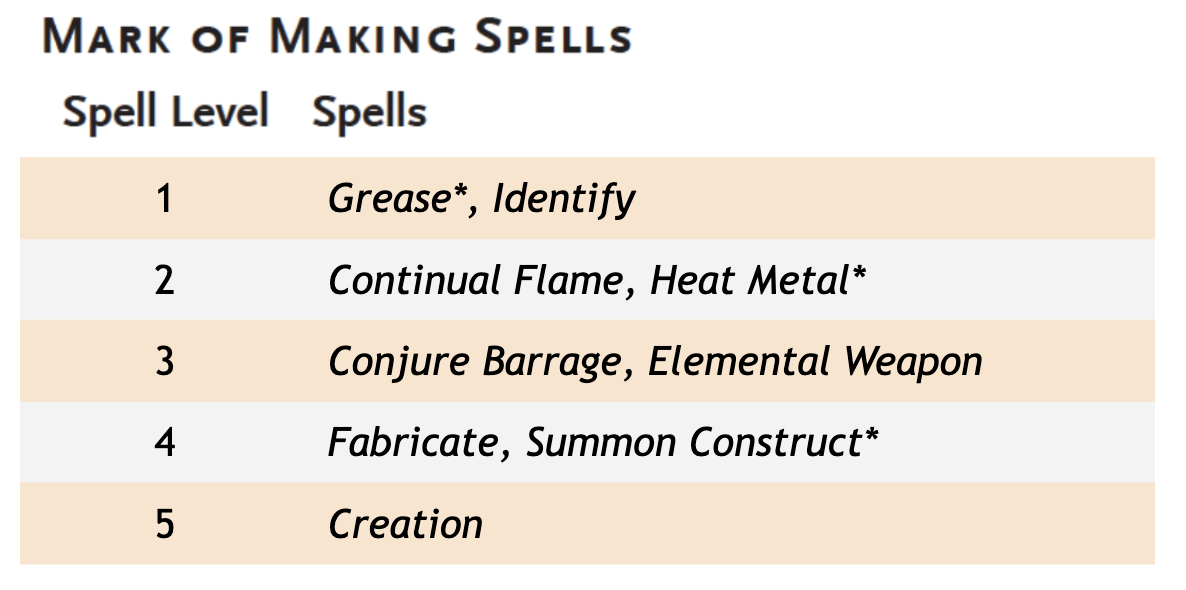
The most basic gift of the Mark of Making is Mending—the ability to repair things that have been broken. While the most obvious manifestation of this cantrip is repairing a break or tear, in my campaign I also allow it to undo other sorts of minor damage: smoothing out dents, restoring burnt cloth or leather, lubricating rusted metal, and similar minor transformations. Cannith Tools amplify these gifts in small and sustainable ways, while the Spells of the Mark allow a Cannith Heir to perform instant, dramatic effects. Some say the Mark of Making draws on Onatar’s Forge while others claim it’s tied to the Fires of Fernia. Whatever the truth, a Dragonmarked heir can instantly Heat Metal or Grease a surface. Fabricate allows an heir to visualize a creation and use the Mark to impose their vision upon raw materials; while the ultimate power of Creation manifests matter from pure arcane essence to make the vision real. This is also the basis for the dramatic Conjure Barrage, which allows a Cannith heir to temporarily create a swarm of weaponry. 

Summon Construct lies between Fabricate and Construction. While the spell normally requires “a lockbox worth 400 gp” as a nonconsumable material component, when cast with the Mark of Making the caster instead needs to be holding a set of Artisan’s Tools with which they are proficient. While no materials other than the tools are required to cast the spell, Canith heirs usually draw on raw materials in the area and fill in the gaps with manifested matter; the final appearance of the construct depends on the materials used and the imagination of the heir. Many younger heirs manifest constructs similar in appearance to warforged, because they are used to working with warforged; but others could create animated armor, metal insects, or even clockwork beasts. When the spell expires, the manifested matter dissipates and the construct collapses back into raw components. Regardless of the materials used to create the construct, when it is summoned the caster decides whether it possesses the Heated Body, Stone Lethargy, or Berserk Lashing trait.

An heir capable of casting Spells of the Mark can cast Identify as a ritual. Here again, the heir needs to have a set of Artisan’s Tools they’re proficient in rather than the traditional pearl component; when casting Identify, the heir is essentially running a series of tests on the object they are studying. Meanwhile, Magic Weapon is a fundamental power of the Mark that any heir can cast—while those with access to Spells of the Mark can master the more powerful Elemental Weapon. 

Kanon vs Canon. Three of the spells on the list above are marked with asterisks, and that’s because they vary from what’s presented in Forge of the Artificer. In the original Eberron Campaign Setting, two of the Mark of Making’s spells were taken up with Repair Damage; Mending was a full spell rather than a cantrip; and Creation was split into two spells. So in translating the Mark of Making to 5th Edition, there’s a lot of space to fill… but I don’t love the choices made in canon. I associate Cannith with metal, so using the Mark to lubricate and heat metal makes sense to me—more sense than Floating Disk and Spiritual Weapon, both of which are more about projection of force and levitation. At 4th level, I prefer Summon Construct to Stone Shape. I don’t feel like stone is something we’ve called out as playing a major role in Cannith, while constructs have been part of its story since the first Gorgon!

ARCANE FORGES AND CREATION PATTERNS

The most iconic tool of House Cannith is the Creation Forge used to create the Warforged. These eldritch machines draw on the full potential of the Mark of Making, working with the principles of Creation and Fabricate to manufacture construct bodies and draw the spark of life into them. The Treaty of Thronehold demanded that House Cannith shut down its Creation Forges and cease the production of Warforged, and the House appears to have done so. But the Creation Forges are just one of the many arcane tools House Cannith employs to streamline its production process. Arcane forges are stationary tools that amplify the powers of the Mark of Making. The standard arcane forge can only be operated by someone with the Greater or Lesser Mark of Making—which is to say, someone who can cast Fabricate as a Spell of the Mark. Arcane forges are limited in a number of ways. 

  • A forge requires a Schema, which is a blueprint for a particular object. The forge has to be attuned to the Schema, which takes time; so on a typical day, an arcane forge is only producing a specific thing. 
  • Most arcane forges are specialized tools that can only work with a particular type of material—metal, wood, stone. 
  • Likewise, most arcane forges are limited in the size and complexity of object they can fabricate.
  • An arcane forge requires a small amount of residuum (refined eberron dragonshards) to operate. This is a minor cost that’s far outweighed by the speed and efficiency of the forge, but it is a requirement nonetheless. In the past, this has been a limitation on how many forges the house could operate. The rise of House Tharashk ensured a steady flow of dragonshards, which has allowed Cannith to expand its use of arcane forges.  

A Grand Forge provides access to the full scope of Fabricate, allowing an heir to, for example, produce a fully formed longsword from the raw materials presented. However, the more common Base Forge is typically used to produce components which are then assembled by workers on a line. It dramatically speeds production and helps to ensure uniformity of product, but it’s still a process that requires a significant amount of human labor. Whether using a Base Forge to produce simple elements or a Grand Forge to produce finished goods, the heir operating the forge is required to be proficient in the type of tool that would normally be used and to make a check to ensure the quality of the product. In essence, the heir walks through the process of production in their mind and the forge uses the Mark of Making to make it real. While the operator has to have the ability to cast Fabricate through their Mark, they don’t actually cast the spell when using a forge; like a Sivis heir operating a Speaking Stone, it’s something that they can repeat indefinitely—provided they have rare materials and residuum.

Arcane Forges are a form of Eldritch Machine. They’re large, stationary objects tied to a specific f. However, Cannith has smaller tools that help them accelerate production. Creation Patterns are metal rods or tablets engraved with arcane sigils. A Creation Pattern holds the imprint of a particular magical device. This reduces the time and cost to create the item embedded in the Pattern by 33%, provided the artisan has the Mark of Making and has access to the Pattern throughout the creation process.  

FOCUS ITEMS

House Cannith is the primary source of Dragonmark Focus Items in Khorvaire. Cannith heirs regularly make use of Dragonmark Channels, Dragonmark Reservoirs, and Channeling Rods. Exploring Eberron calls out that House Cannith can produce objects that duplicate effects of existing magic items but with the additional requirement of having the Mark of Making to use them. A few examples of these…

  • Onatar’s Gift has the powers of an All-Purpose Tool. A +1 Onatar’s Gift is standard issue for any capable Cannith Artificer, and is generally shortened to Ony—as in, “You got your Ony?
  • Cannith’s Marvelous Miniatures are identical in effect to Quaal’s Feather Tokens, but they appear to be small metal objects in the shape of the token effect (Anchor, Bird, Fan)
  • Talin’s Compact Constructs duplicate the effects of Figurines of Wondrous Power, but they appear to be articulated metal models rather than statuettes; they expand in size when activated. 
  • Merrix’s Instant Fortress works like Daern’s Instant Fortress; the Cannith model was created by the same artificer who developed the Warforged Titan (the grandfather of the current Merrix d’Cannith).
  • The Apparatus of Cannith is similar in effect to the Apparatus of Kwalish. Cannith developed the Apparatus over the course of the last decade as a potential submersible for use in the Last War, but has been unable to produce a version that doesn’t require the use of the Mark of Making. 

The idea is that all of these items are drawing on the power of the Mark of Making. In the case of the Compact Constructs, Instant Fortress, and Onatar’s Gift, the item literally builds itself when activated, using the principles of Creation to fabricate temporary matter. In the case of the Apparatus, the idea is that the heir has to use the power of the Mark of Making to keep the Apparatus stable and functioning. I might allow a player character Artificer (especially a Battle Smith) to operate an Apparatus of Cannith, with the idea that they can use their own remarkable skills to hold things together. So in choosing Focus Items for Cannith, look in particular for things that are used to create objects or that could be depicted as creating themselves. The Rod of Lordly Might is another example of this, with the idea that the Rod constructs and deconstructs the various weapon forms it can take. 

The silhouette of a gorgon's head above a crossed wand and smith's hammer.
The seal of the Tinker’s Guild, by Matthew Johnson.

THE HISTORY OF HOUSE CANNITH

Cyre was said to be the heart of Galifar, and with good reason. The central region of Khorvaire is blessed with a blend of fertile soil, abundant resources, and beneficial manifest zones. When humanity spread across Khorvaire, the Metrol League was quick to prosper. Initially a single city, the League expanded to include the city-states of Metrol, Eston, and Tolan. The Mark of Making appeared approximately 2,500 years ago, appearing in three families. The Harns of Tolan traced their roots to Nulakesh in Sarlona, and had established a reputation as armorers and weaponsmiths; the first marked heir, Costa Harn, forged a set of magic swords that would feature in countless legends and tales in the centuries to come. The Vowns of Eston were Pyrinean. Eliasa Vown declared her Dragonmark to be a blessing from Onatar, and she crafted reliquaries and Octograms charged with mystic power. The Jurans were wanderers with Rhiavhaaran roots. They traveled the roads between the great cities, carrying goods and news and using their skills to repair broken things. Ellos Juran gained renown for his ability not just to fix broken things, but to transform wood and steel into finished goods. Each family prospered in their own way; the most dramatic moment came in the following century when the heirs of Costa Harn led a coup in Tolan and seized control of the city. They placated the other leaders of the Metrol League by promising a tribute of Harn weaponry. They shifted the city itself to support their vision, fortifying it and building up its foundries and its forges; it was Castela Harn who changed the name of the city to Making as a celebration of her family’s skills.  

The reputation of the Making families grew over the course of decades, as their goods spread out to distant markets; the warlords of Karrlakton and Korth prized weapons forged in Making. It was Dedra Vown who engineered the alliance of the Making families. A charismatic woman with a grand vision, Dedra wooed the Jurans and Harns with stories of the marvels they could create if they pooled their resources and diverse talents—not to mention the economic advantages to building a regional monopoly. Cannith was the name of a legendary shrine of Onatar in Sarlona, and Dedra convinced the others to join together as the House of Cannith. Castal Harn and Dedra Vown were wed, and it was said at their time that they gave birth to a Gorgon, as this was the first joint product they unveiled. As centuries passed, the House of Cannith prospered. They developed the first Arcane Forges, which were initially used primarily to refine ore—turning raw iron into ingots of fine steel. They developed the earliest form of Magecraft. As the house extended its reach across Khorvaire, they eagerly sought out new arcane techniques and tools, sending adventurers into ancient ruins and adapting any innovations they found in other cities (as they would one day use Desa Cane’s Truelight Lamp as the model for Cannith’s Everbright Lantern). One of the most remarkable forces they encountered were the Edoros of Thaliost, a family of innovative alchemists. Though the Edoros didn’t carry the Mark of Making, their skills and techniques were so valuable to the House that it slowly absorbed the entire family. Today the Edoro are considered one of the founding families of House Cannith, and the Mark of Making is firmly rooted in their lines. 

House Sivis and House Cannith both claim credit for the early unification of the Dragonmarked Houses. Cannith accounts say that the Vowns considered the Dragonmarks to be blessings of the Sovereigns and thus thought it logical to bring them together—not to mention profitable—inspiring others with their own structure and organization. Whoever laid the bricks, it was the War of the Mark that served as the mortar, laying the foundation of the Houses as we know them today. As the Houses initially spread, it was natural for them to forge alliances through marriage. The Harn line of House Deneith is one of the few concrete relics of this time, reflecting strong ties between the weaponsmiths of Metrol and the warlords of the north. This blending of bloodlines produced a wave of Aberrant Dragonmarks. It took generations for people to truly recognize the impact of this—critically, that someone who manifested a “mixed mark” lost all connection to the Dragonmarks of their parents and couldn’t pass either Mark to their own children. While this was a general concern to all of the Dragonmarked families, the Vown in particular saw it as an act of blasphemy. If the Dragonmarks were gifts of the Sovereigns, and crossing the lines both produced an unpredictable, dangerous Mark and stripped the bearer of their former connection to the Sovereigns—how could this be anything but the work of the Shadow? While the Vowns were driven by religious fervor, the Lyrrimans of House Sivis recognized the power of a manufactured enemy to bring people together and willingly embraced and amplified the Vown message. This was the beginning of the War of the Mark. Sivis and Phiarlan propagandists worked together to spread terrifying tales of Aberrant Dragonmarks, some based in truth and others entirely false. As Deneith troops armed with Cannith weapons pursued Aberrants across the land, most people believed that the Dragonmarked forces were heroes defending them from a deadly threat. The War of the Mark showed what the Houses could accomplish when they worked together, and the leaders of the houses weren’t about to let that go. Hadran Vown Cannith and Alysse Lyrriman Sivis forged the proposal for a permanent alliance between the Dragonmarked Houses—though it was the architect Alder Juran who pushed to have that alliance named The Twelve

The next great shift came with the rise of Galifar Wynarn of Karrnath. House Deneith strongly supported Galifar’s ambitions, believing he would succeed where Karrn the Conqueror failed. Deneith arranged negotiations between Galifar and the Twelve, and pushed the other Houses to accept the terms of the Korth Edicts. This placed significant limits on the political and military power of the Houses, but promised them vast economic influence. House Cannith was severely impacted by this, as the Harns were the Lords of Making and the House had vast holdings in Eston. But while the House would have to give up its absolute claim, Galifar promised they would retain their enclaves and forgeholds. This was accomplished in part by Galifar’s dismantling of the nobility of Metrol, a more severe restructuring than took place in any of the other Five Nations; Galifar built his new nation of Cyre around the pillars of House Cannith. 

House Cannith prospered during the golden age of Galifar, helping to support the expanding infrastructure of the united kingdom. Cannith steel and the Flying Buttresses supported the great towers of Sharn. New enclaves and forgeholds were established throughout the Five Nations; while Making continued to thrive, the House shifted much of its heavy industry to Breland. While the House made a slow and steady profit, this period also saw it splinter into what Baron Starrin d’Vown once described as “The hundred kingdoms of Cannith.” Viceroys and ministers built their own tiny empires, diverting funds for their personal projects. Rivalries escalated between forgeholds. This was never so severe as to threaten a true splitting of the House itself, and some of the Barons even encouraged these little wars; overall, House Cannith continued to grow and prosper. But it’s a key aspect of Cannith’s culture that can be seen throughout the Last War and in the present day. A strong Baron could hold the House together and force it to move in a single direction—but the Cannith Seneschals were always looking out for their own projects and interests. 

As centuries passed, Cannith helped construct the Orien trade roads and spread everbright lanterns throughout the kingdom. Speaking Stones, Elemental Galleons, the Lightning Rail—these were remarkable innovations that transformed daily life. And yet, these advances occurred slowly. Cannith and Galifar both grew at a careful, steady pace. It was King Jarot ir’Wynarn who shifted this tempo. Some say Jarot was shaken by the events of the Silver Crusade, or even by reflection on the Year of Blood and Fire that had rocked Thrane centuries earlier. By some accounts, Jarot feared armies rising up from Khyber; others claim he was certain that the forces of Riedra were preparing to invade. Whatever nightmares drove him, King Jarot demanded that the Twelve provide him with weapons. Not just arms and armor for common soldiers; Jarot urged Cannith to devise new forms of arcane artillery and to “Change the face of war.” Across Khorvaire, forgeholds devoted to civilian goods shifted to produce tools of war. Soon the hundred kingdoms of Cannith were competing, each seeking to shine. Hungry for inspiration, Cannith Viceroys launched a new series of expeditions to search for forgotten secrets; Cannith teams traveled to Xen’drik, explored Dhakaani ruins, and even made their way into the Demon Wastes. 

Cannith’s achievements over the course of the Last War are too numerous to list here. With each decade, they improved the design of their Siege Staffs, Long Rods, and Blast Disks. The development of the Warforged forever changed life in Khorvaire; what began with the semi-sentient Warforged Titan ended with the terrifying Warforged Colossus. Throughout the course of the war, the competition within the house continued, with each Viceroy vying for resources, each determined to make the next stunning breakthrough. Of course, Cannith didn’t want to create a weapon that would end the war; the perfect weapon was one that required rival nations to purchase their own counter to it. Cannith thrived in the Last War… until the Mourning. 

The Mourning devastated House Cannith. The death of Baron Starrin created a crisis of leadership. But beyond the loss of a leader, Cannith lost its oldest and most important enclaves—the centers where young heirs of the House were raised and trained. It lost a host of forgeholds and factories, the full impact of which is yet to be seen. Cannith forgeholds aren’t interchangeable. White Knight was a small forgehold near Kalazart that focused on the creation of Focusing Nodes. While these have no function on their own, they are crucial to maintaining the flow of power through large-scale arcane systems—and as such, are necessary for the creation of a Lightning Rail engine, an Elemental Airship, a Warforged Colossus, a Floating Fortress, or anything of similar size. This is just one example of a specialized facility that supplied Cannith forges across Khorvaire; the wounded house is scrambling to repurpose existing facilities to compensate for what was lost in Cyre. Other forgeholds were engaged in research that had been intentionally held in isolation by the Holdmaster—potentially decades of specialized work now lost to the House. Beyond forgeholds and enclaves, Cyre held countless Cannith warehouses filled with raw materials and finished products. The Mourning claimed vital resources, facilities, skilled staff, and House officers, along with historical records and relics of the House; it was a shattering blow. 

The surviving officers of House Cannith—the Seneschals and Viceroys—gathered in Sharn at the end of 994 YK. Over the course of a week of meetings, these ministers developed plans that would allow the Fabricator’s Guild to continue to operate, redirecting supply lines and resources to account for the loss of Cyre. But try as they might, there was no consensus on a replacement for Starrin d’Cannith. There was a formal process for succession that traditionally occurred in Eston, with relics, rituals, and a vote amongst the officers. But Eston and its relics were lost, and many of the ministers were dead and had yet to be replaced. In addition to a bitter divide over the proper candidate, many ministers insisted on filling the empty offices first and attempting to reclaim lost relics, either out of a legitimate loyalty to tradition or a belief that more time would help their chosen candidate gain additional support. Ultimately, the Sharn Accords split House Cannith into three administrative regions, each overseen by a Baron; the Accords dictate that the officers of the House shall gather at Vult each year to discuss the process of succession. 

This is the state of things in 998 YK. The House remains divided in its loyalty to the three Barons. It remains to be seen if one of them can restore the House to its former glory, or if the House will fracture. But should House Cannith break apart like the Shadow Schism of Phiarlan and Thuranni, the smaller Houses would be far weaker than the Gorgon of old. Cannith South and Cannith East rely on alchemical solutions produced by Cannith West, while Cannith South has the bulk of the steelworks; a full separation would dramatically limit what each of the smaller factions could produce. 

What Happens Next?  

  • Just How Bad IS House Cannith? Eberron is a setting in which the DM is expected to make key decisions about their version of the world. One of those questions is whether House Cannith is a villainous force. Cannith can be presented simply as a resource that produces useful tools for adventurers. Its inventions are a vital part of everyday life. On the other hand, it’s possible to present House Cannith as a force that acts with ruthless efficiency to maintain its monopolies, stifling or stealing independent arcane resources, acting carelessly in its dangerous research (IE did it cause the Mourning?), and using its economic power to demand favors from governments, criminal organizations, or others who rely on its services. You can present the typical Cannith heir as feeling remorse for the fact that the House treated Warforged as weapons, or you can present the House as having no sympathy for the Warforged and scheming to regain control of the Creation Forges and the Warforged themselves. Canon material generally walks a middle line between these extremes; it’s up to the DM to decide what’s true in their version of the world. 
  • The Three Headed Gorgon. The Sharn Accords split power between three Barons: Jorlanna Edoro in Fairhaven, Merrix Vown in Sharn, and Zorlan Harn in Korth—has a strong case and a faction that supports them. But Cannith is a machine that needs all its pieces working together to prosper. The Sharn Accords have kept it going so far, but if the three factions can’t come to an agreement soon it may begin to break down. Any of the three Barons might employ a capable group of adventurers to help with their schemes, whether they seek to elevate their own standing (recovering treasures from the Mournland, completing an arcane breakthrough, performing a major act of philanthropy) or to sabotage their rivals. 
  • Profiting from Prophecy. House Cannith’s leadership crisis could be a key decision point in the Draconic Prophecy, with the future taking different paths based on which Baron claims the crown. If this is the case, each Baron could have a greater power promoting their cause. Canon has already suggested that one of the Lords of Dust is influencing Jorlanna. But there could be a different Lord of Dust backing one of the other Barons—perhaps Mordakhesh is supporting Zorlan, knowing that his leadership will lead to devastating war—while the Chamber may be supporting the third Baron. On the other hand, it could be that the fall and dissolution of House Cannith is the outcome an immortal faction is seeking.   
  • The Bounty of the Mournland. There are countless Cannith facilities in the Mournland, ranging from warehouses stocked with mundane goods to hidden forgeholds where secret weapons were being designed. Perhaps the Mourning itself was the result of an accident at just such a facility—and if that’s the case, the weapon responsible could be there just waiting to be found. Adventurers already exploring the Mournland could stumble onto such things, or they could be hired to recover Cannith goods from the Mournland. The patron could be a Cannith heir, or it could be someone with nefarious intent. The dwarf who pays the adventurers to recover a sealed chest—an extradimensional locker filled with Blast Disks—could be an Aurum arms dealer looking to resell them for a prophet, or they could be one of the Swords of Liberty planning to blow up King Boranel. The lost forgeholds weren’t spared from the effects of the Mourning, and Cannith ruins might contain warped constructs, living spells, tormented ghosts, or even greater dangers. 
  • Endless Rivalries. House Cannith has always suffered from corporate intrigues and internal divisions. While Zorlan, Merrix, and Jorlanna vie for control, there are countless lesser intrigues between rivals fighting over resources, contracts, and simply for prestige. Adventurers could be employed to steal a rival’s research, to embarrass them at a gala, or any sort of minor scheme. 
  • The Fate of the Forged. House Cannith created the Warforged and sold them into servitude as weapons. Some heirs of the House seek redemption by helping the Warforged in the present day. Some are indifferent to the overall plight of the Warforged as a species, but seek to continue their research—secretly creating new Warforged, whether using hidden Creation Forges in violation of the Treaty of Thronehold or pioneering new means to create sentient constructs. And then there are those who still consider Warforged to be assets of House Cannith, villains who seek to impose their will on Warforged with tools like the Master’s Summons. On the other side of the equation, there are Warforged who yearn for vengeance on their creators, and others who seek Cannith aid in solving the challenges faced by their species. 

WOULD YOU LIKE TO KNOW MORE? This is an excerpt of an article written for my Patreon supporters. The full article is three times the length of this one, and includes the Structure of House Cannith (with details on the Fabricator’s Guild, the Tinker’s Guild, the factions of the three Barons, prominent forgeholds and enclaves, and more), the Families of House Cannith, Cannith Customs, new focus items, and more!