Dragonmarks: A Q’Barra Campaign

My last post raised a question: what cities or locations in Eberron can support an entire campaign? Sharn and Stormreach can fill this role, if you want them to. But what about other locations? Someone raised the idea of the city of Newthrone in Q’barra, and that got me thinking. Because I think you could easily run an entire campaign in Q’barra, but I wouldn’t start it in Newthrone.

In my mind, a Q’barra campaign would be a fantasy twist on the classic Western. The adventurers are people who’ve chosen to live on the frontier, searching for fortune, redemption, or simply an escape from something. Rather than starting them in the largest city in the region, I’d do the reverse and start them in an entirely new community. Q’barra is a frontier nation largely untouched by humans, but in the past decades prospectors and settlers have discovered rich deposits of dragonshards in Q’barra. Much like the classic gold rush, this has drawn a host of opportunists and fortune seekers – and all the sorts of people who hope to profit or prey upon them.

Player Backgrounds

So: I’d sit down with the players and establish that there’s a new town in the Hope region of Q’barra. Tharashk prospectors have identified the region as rich in shards, and it’s on the precipice of a boom. With that in mind, I’d ask the players if any of them want to be founders of this community. There’s a couple of roles a player could choose to fill:

  • The Law. Someone needs to keep order in this small town… do you have what it takes to pin that star to your chest? This is an easy go-to for a paladin, but there’s no reason a fighter or even a rogue can’t design to be the lawkeeper. It’s also a role that could be shared among multiple characters, either equally or as a warden with deputies.
  • The Faith. As a divine character — or a druid, for that matter — could be the spiritual guide for this small town. Their choice of faith will say a great deal about the flavor of the town; is the local church dedicated to the Silver Flame or to the Blood of Vol? And does the character have the respect of a significant portion of the community, or are they an evangelist trying to convert the faithless townsfolk? This is an opportunity to play up the idea of a divine caster filling the actual duties of a priest – guiding and counseling a community – as well as smiting undead.
  • The Money. It’s a small town, but someone’s got to buy and sell. Personally, I’d be inclined to have the primary merchant prince be an NPC so you have a little flexibility in tracking the local economy and you don’t get into the weird space of “Why don’t I give all my goods away to the party?” But you could certainly have a bard or rogue running the local saloon — having a stake in the local economy, and having a little bit of a minigame involving managing goods and employees.

If one or more players is up for taking one of these central roles, I’d ask them to name the townThey may not be the mayor, but they’re one of the founders… so what did they call it? For the rest of the article, I’m going to call my town Felhaven. But having the players name the town is a way to give them a concrete connection to it and establish that it is new. It’s not on the existing maps of Q’barra because it wasn’t there when those maps were made.

So, what about the rest of the players? Everyone needs a reason to be in Felhaven: What is it? Here’s a few ideas, just off the top of my head…

  • A rogue or bard could be any combination of grifter, gambler, entertainer or professional “companion” (an especially strong role for a changeling).
  • A ranger would make an excellent Tharashk bounty hunter — someone who’d have ties to the Tharashk prospectors in the area, and who could be offered work tracking down troublemakers. You could take the same path with another class, but ranger’s a great match.
  • I love the idea of a warlock or sorcerer as a professional wandslinger – gambler, duelist, and general scoundrel. Either one could also have ties to the dark powers in the region, either by choice or unwillingly.
  • A fighter could be an ex-soldier fleeing the war. They could be a deserter who fled during the war, a Cyran soldier without a home, someone who served with distinction but now feels they have no place in the Five Nations. But they could just as easily be a mercenary looking for opportunities — Firefly terms, Mal or Jayne. A deserter
  • An artificer or wizard could be interested in rare dragonshards in the region — believing that if they can locate a supply of these shards, they could make some sort of arcane breakthrough. Or they could be a sage interested in the history of the Age of Demons, eager to explore the local ruins.
  • A halfling druid, barbarian or ranger could have come from the Talenta Plains. They could have formed a bond to one of the other PCs and this is what drew them from their homeland… or they could have been exiled from their tribe, for reasons that will be explored as the campaign continues.

Given that Q’barra is off the beaten path, it’s also an easy place for any sort of unusual character who doesn’t feel comfortable in the Five Nations. Tiefling, warforged, magebred exotic race – Felhaven’s a perfect place for a person who doesn’t fit in elsewhere.

Once players have basic concepts, I’d also suggest that they come up with exactly what has brought their character to Felhaven… a hook that could be explored in future adventures. Here’s a few ideas:

  • Family. This is a good match for someone who has an important role in the town. Family could mean parents and siblings, but if could just as easily mean a spouse and children. Often adventurers are rootless, but in this scenario, Felhaven is the character’s home. Personally, if a player picked this path, I’d have each of the other players also take on the roles of a member of the PC’s family – rather than me playing them all as NPCs, if there’s a scene with the PC’s spouse, one of the players always takes on that role. In doing this, it gives the other players both a stronger connection to the fate of the family and to the town overall.
  • Profit. The character is a mercenary who’s in this for quick gold. They’re here for tomb raiding, bounty hunting, and anything else that could get a few galifars in their purse. Will they discover there’s something more important than gold as time goes on? Alternately, the character could be a dragonmarked heir, either sent to oversee a specific house operation or hoping to make a name for themselves within the house through their own action.
  • Redemption. The character did something terrible in the Last War… something they deeply regret. It’s possible that they are a wanted criminal in the Five Nations… and if so, it’s possible bounty hunters could show up in pursuit of them. Was the terrible action justified? Is it that they once were a truly terrible person and remorse has changed them? What will redemption involve?
  • Revenge. Someone wronged the PC in a terrible way – murdered their family, stole their future, what have you – and that person is somewhere in Q’barra. Felhaven is just the first step in tracking them down.
  • Knowledge. Q’barra has well-preserved ruins from the Age of Demons. The people of the Five Nations also know little about the lizardfolk and the Dragonborn. Any of these could be an interesting thing to pursue, and the PC could have a specific lead or contact they’re following up on.
  • Vision. This is an easy option for a divine character, but anyone can have a vision. The character has had a vision of a terrible darkness that could sweep out to destroy Khorvaire – and knows that the path to stopping it begins in Felhaven. Is this a true divine vision? Or could they be being manipulated by the Dreaming Dark?
  • Spy. The character is working for an organization that wants to keep an eye on this developing community. Easy options include the Aurum or a local crime boss in Newthrone… but you could have a secret agent of a Dragonmarked House or even the Lords of Dust. A changeling companion could have ties to the Cabinet of Faces. This most likely is something that gets the PC a little extra gold on a regular basis, but they could start getting orders that put them at odds with the needs of the community. Turning on their boss is a great arc for a midlevel story!
  • Mystery. The PC has a map to a fortune. It could be treasures stashed during the Last War, an ancient fiendish vault, or a rich shard field. Whatever it is, they have a lead on a fantastic opportunity – but it’s not something they can pull off alone.

Building The Town

So: now we have some well rounded player characters and some hooks to explore in upcoming episodes. Next I want to develop the town itself. Who are the major NPCs? Who are the power brokers? If the players didn’t take on these parts, someone has to be the law and there will certainly be some sort of temple or church. There will surely be a saloon, inn or brothel (or some combination of all of these) and a general store. There’s a local leader: is this a mayor, or is this town a Tharashk outpost governed by a Tharashk baron (in which case Tharashk would also provide the “law”)? What other groups are here? Who’s the richest person in town, and how desperate is the poorest person? I’d certainly want to develop these characters myself so they have secrets for the PCs to uncover, but I’d also engage the players to help me fill out details. “Bob, the innkeeper at the Rusty Nail is a beloved pillar of the community. What gender is the innkeeper? Sarah, what race are they? Galen, any distinctive physical details?” Again, I’m establishing the critical story detail – the innkeeper is a beloved figure, as opposed to a hated pennypincher – but I’m letting the players add details that give them a connection.

In creating the town, there’s a few critical questions. What services are available here? Is there a Sivis message station? Is there a Jorasco healer? What can be bought, and what’s the limit on what the merchants can afford to buy? Who are the potential troublemakers, and who could be patrons or long-term enemies of the PCs? In particular…

  • Is someone in town a disguised agent of the Chamber or the Lords of Dust?
  • Is someone being manipulated by the Dreaming Dark?
  • Is someone a spy for one of those groups I mentioned before?

Personally, I WOULDN’T provide a lot of dragonmarked services to begin with, because it’s a great way to establish the growth of the community; I’ll talk more about this below.

What last thing to consider: Manifest zones. Is the town built by or in a manifest zone, and if so, what are its effects? Manifest zones can have very useful effects; a zone tied to Lamannia might naturally purify all water in the region, while a zone tied to Fernia might cause fires to burn longer and brighter than normal. Logically, if people were going to build in a manifest zone it should have some sort of useful effect. But it’s also possible that the founders didn’t know the zone was there – or that there’s a zone adjacent to the town that has dangerous effects.

Plots

So we’ve got a fun location. We have interesting characters. What do we do for story? Here’s a few easy starting adventures….

  • There are ruins near the town. These could date back to the Age of Demons, or they could be tied to the fallen dragonborn nation. At low levels, you don’t necessarily want people stumbling into Haka’Torvhak, but these could be tiny outposts or tombs with simple traps and minor undead or local wildlife. This is a great opportunity for the PCs to do something that sends a longer term plot in motion: they take the magic orb from the tomb, little realizing that it was a warding stone holding an evil spirit in check… and in future adventures, they’ll have to deal with the unleashed spirit and its corrupted minions.
  • Bandits or criminals can threaten the town, preying on the honest prospectors. Can the PCs act as mediators, or violence the only solution?
  • Likewise, you could have any number of mysterious strangers showing up for an adventure of the week. A wealthy explorer shows up with a map but needs bold adventurers to help her find the prize. A large group of Cyran refugees shows up and wants to settle, but are they as innocent as they seem? A crusading priest shows up and tries to rally the townsfolk to his cause. A traveling tinker has a host of mystical treasures for sale… but we’ve long been warned to beware the gifts of the Traveler!
  • The PCs can run into trouble with the local scales – hostile lizardfolk and dragonborn. The Poison Dusk are aggressive servants of the local demon Overlord; the Cold Sun lizardfolk fight the Poison Dusk, but could end up fighting the PCs or Felhaven because the PCs have unknowingly violated a taboo or threatened the local balance. Can the PCs establish communication and work out an alliance with the Cold Sun? Logically, this is something that starts small – clashes with a few bands of warriors – but that over time draws PCs into the ancient conflict in the region and reveals the history of the dragonborn and the Cold Sun.
  • Within the town itself, you could have a Cult of the Dragon Below or a Dreaming Dark cell spread like a cancer until it’s uncovered. You could also simply have mundane troubles – organized crime or a Dragonmarked House seeking to claim the town as their own.

Beyond this, you’ve got a lot of hooks in the choices made by the players. If a PC is the law in these parts, you can always drop in quarrels or crimes they need to deal with… while the preacher may have to deal with morale and the saloon owner with economic challenges. If someone came to town seeking revenge, well, where’s that trail lead?

Now: In this scenario, I’d make the town essentially a character in the game as well… as the PCs grow in power, the town can gain levels as well. While the PCs are going on adventures, prospectors are hunting for shard deposits and farmers are settling in. if the PCs can hold off bandits and scales, the town prospers and should gain services. Each time the players gain a level, consider adding something new: a Sivis message station (perhaps initially only connected to Newthrone), a Jorasco healer, a magecrafting blacksmith, a Cannith tinker who produces a few minor magic items, a larger Tharashk refinery that raises the cap on what merchants can afford to play. If the players screw up, things could be lost; the message stone operator could be killed, or simply decide it’s too dangerous for him to stay. The players should feel a meaningful impact both for their triumphs and failures.

Longer term, you can start bringing in more powerful organizations and greater challenges.

  • An elite Emerald Claw squad comes through – what are they looking for in the jungle, and should the PCs stop them? Do they want to outright fight the Emerald Claw on the streets of Felhaven – which could result in a lot of innocent deaths – or find another answer? It could be that the secret to Erandis Vol’s ascension lies in the region – which is a reason to have a long term and evolving Emerald Claw presence. This is a good basic for a recurring villain, such as the necromancer Demise.
  • The Lords of Dust have plans involving Felhaven. Logically this would invovle the Overlord Masvirik, the demon bound in Haka’Torvhak… but you could also have agents of a different Overlord with plans that run counter to what Masvirik wants. The Lords of Dust seek to enact a particular branch of the Prophecy – and they’ll help the PCs, but only because they are trying to steer the PCs into unleashing Masvirik or another Overlord. Eventually the PCs might expose the rakshasa hiding in Felhaven – but is it too late to stop the demon’s plans?
  • You could likewise have an agent of the Chamber, whose plans involve the Prophecy and the scales. This character could be a patron who wants to use the party against the servants of Masvirik… but dragons have little regard for individual human lives, and missions could put the PCs in grave danger.
  • Initial casual bandit raids could escalate into a larger struggle. Does the powerful bandit leader have a goal beyond simply getting gold? Are they an agent of the Lords of Dust, the Dreaming Dark, a Dragonmarked House. or are they just a brilliant, charismatic leader? This could lead to a full-on attack on Felhaven.
  • A dragonmarked house could have plans that threaten the entire community. This could be about acquiring resources – Cannith wants all the rare dragonshards- or it could just be about direct house conflict, like Deneith striking against Tharashk. Following the idea of the rare dragonshards, Felhaven could end up being at the center of a conflict between agents of the three Cannith houses… and meanwhile, the Cold Sun could be furious because removing these shards is empowering the local fiends.
  • The Dreaming Dark could be attempting to create a new puppet figurehead — people who can take on the role of the Inspired in the event of a Quori takeover. Can the PCs uncover and expose this plot?
  • A Dragonmarked baron could seek to expand the power of their house across the region – either with or without the support of the Twelve.

Beyond this: gateways to Khyber can be found anywhere… and where you have Khyber, you can have the Daelkyr. What begins as a simple (and easily defeated) Cult of the Dragon Below can ultimately be tied to the rising power of a Daelkyr, complete with aberrant dinosaurs or warped lizardfolk. Alternately, the same approach can be taken with the Overlord Masvirik. A cult to Masvirik could also end up producing yuan-ti – literally new yuan-ti reflecting the corrupting influence of Masvirik, so the local merchant prince becomes yuan-ti over the course of the campaign.

Long term, this can lead to epic developments in the region:

  • Masvirik is unbound, and there is a bitter conflict as corrupted scales and possessed dinosaurs ravage the region.
  • A Daelkyr rises, unleashing abberant terror (with the exact nature depending on the Daelkyr).
  • Erandis Vol herself comes to Q’barra; once her mark is restored, she raises an army of undead dragonborn and lizardfolk.
  • The Dreaming Dark unleashes a scheme to take over Q’barra, using their makeshift Inspired (local heroes they’ve created and raised) as the figureheads.

Ideally, this is something where things that have been around from the start end up being central to the epic finale. That greedy Cannith baron who’s been a throne in the PC’s side throughout the campaign ends up becoming the vessel for Masvirik due to his foolish experiments with corrupted Dragonshards! Perhaps there’s even an army of possessed warforged, as this evil artificer has found a way to use the shards to implant demons into warforged!

Now: Felhaven might be the heart of the campaign, but that doesn’t mean the players will never leave it. Events and adventures should take the PCs to ruins across the region, to the cities of the Dragonborn or warrens of the lizardfolk, to Haka’Torvak and to Newthrone. But Felhaven can always be at the heart of it.

That ended up being longer than I planned, but I hope it’s interesting both in terms of developing stories in Q’barra and as a look at how I think about campaigns. In the meantime, I’m working on a number of big articles you’ll see in future weeks. As always, the more support I get on my Patreon the more time I can justify spending on this site. If you’re already supporting me, thank you very much; if not, check it out here!

Also: the ideas I present here draw heavily on the expanded Q’barra articles I wrote for Dungeon 182 and Dungeon 185. D182 examines the Dragonshard trade and introduces the concept of dusk shards and dawn shards. D185 delves deeper into the Cold Sun, Poison Dusk, and dragonborn of the region, along with additional information about the role it played during the Age of Demons.


What have you done with Q’barra? What would you do in a Q’barra campaign? Post your answers below!

Favorite Cities in Eberron?

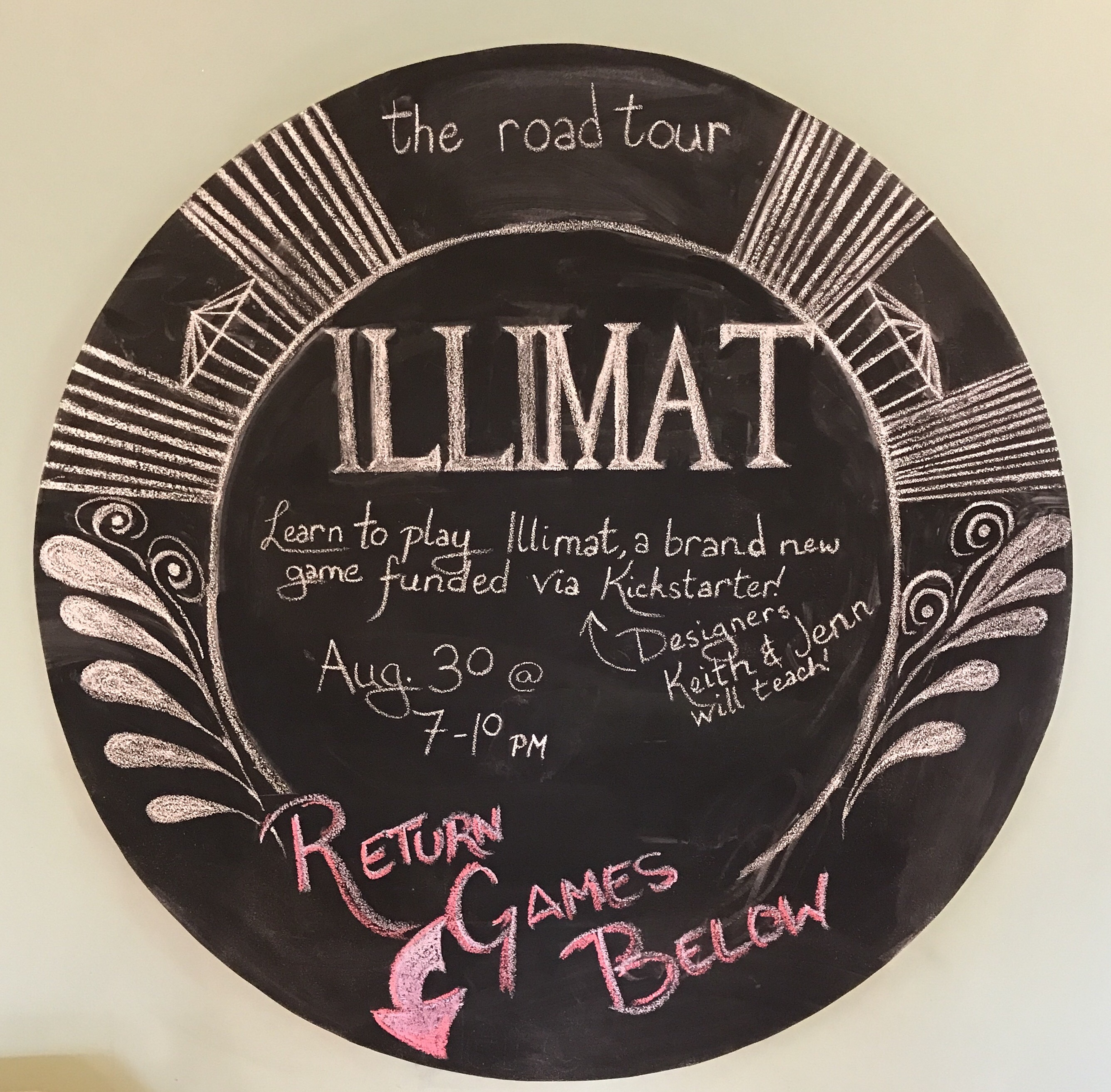
I’ve spent the last six weeks traveling the US in a van to demo my card game Illimat, and that’s meant that I haven’t had much time for writing. I have three big articles I’m working on for the website, but they’re complicated topics and need more time. But rather than leave you all hanging, I wanted to pull out an easy question from the ones submitted by my Patreon supporters… and while I’m at it, thanks to everyone who has chosen to support me and this site! Now on to the question:

If you had the chance to to another Eberrron city book on the scale of Sharn or Stormreach, which city would be your first pick and why?

My first choice would definitely be Graywall. This is the second largest city in Droaam, lying directly on the border between Droaam and Breland. Why Graywall? Here’s a few reasons…

  • Like Stormreach, Graywall is a frontier — a gateway to a world the people of the Five Nations know little about.
  • Droaam is a nation of monsters. Humans are in the minority here, and that creates a lot of potential for interesting stories that don’t work in many other places. It’s a chance for player characters to interact with “monsters” as something other than enemies – to deal with medusas, harpies and werewolves in ways they wouldn’t anywhere else.
  • It’s a city filled with intrigue and opportunities. Droaam has only been a nation for a decade. Many of the warlords have their own agendas, and there are those who which to bring down warlords to take their places. Beyond this you have the mysterious schemes of the Daughters of Sora Kell. As it’s not bound by the laws of Thronehold, you have opportunities for war criminals, outlaws, or wizards engaging in arcane research forbidden in other places. Beyond this, it’s built atop ancient Dhakaani ruins… yet one more thing to explore.
  • Beyond the city itself, such a sourcebook would be an opportunity to explore the many cultures of Droaam in more depth. Droaam is a tapestry woven from many distinct and very different cultures: the doppelgangers of Lost, the tieflings of the Venomous Demesne, the lycanthropes of the Dark Pack, the gnolls of the Znir Pact, etc, etc. I’d love to be able to delve into each of these more deeply, creating hooks that are equally useful for DMs building stories and players who want to play a member of that culture.

Graywall is a chance to take something very different and distinctly part of Eberron and to tell stories that you couldn’t tell in any city in the Five Nations.

So: that’s my first choice. But there’s lots of other possibilities.

  • Thaliost. This Aundairian city was seized by Thrane during the Last War. The Last War never really ended in Thaliost, and it’s a great place to explore the lingering tensions and ongoing intrigues between these two nations.
  • Atur. The City of Night is the heart of the Blood of Vol in Karrnath and the center of their necromantic research. It grew in power and influence along with the Blood of Vol, but now that Kaius has abandoned the faith it is a city in crisis – an a place filled with opportunity, adventure, and a chance to consider how necromancy could be integrated into society.
  • Rukhaan Draal. The capital city of Darguun intrigues me for many of the same reasons as Graywall — an opportunity to explore adventures in the city of those usually considered monsters in other settings. It’s also an opportunity to dig deeper into the customs of both the Ghaal’dar and Dhakaani goblins.

Taer Valaestas in Valenar. Pylas Talaer in Aerenal. Almost any city in the Lhazaar Principalities… like most of those described above, it’s the chance both to flesh out a city as a hub for adventure, but also to delve deeper into the cultures that shape it.

To be clear: This isn’t necessarily one of the first sourcebooks I’d make if I had the power to do so. I’d rather write a sourcebook on Darguun than specifically one on Rukhaan Draal, and I’d pick a Droaam sourcebook over a Graywall sourcebook — because there’s so much to delve into about those entire regions. And I might write a book on the Planes before that. This is a thought experiment — if someone appeared tomorrow and said “You can write an Eberron book, but it has to be a city sourcebook” what would I want it to be?

Anyhow, that’s all I have time for today. What cities would you like to see developed in more depth?

The Cost of a Life

Recently I’ve started a Patreon to help me justify spending more time on this site. The full Dragonmark/Imperial Dispatch articles take a significant amount of time and there’s a limit on how often I can post one of those, but I want to post more short articles. I’ve asked my Inner Circle of Patrons to pose questions about Eberron, Phoenix: Dawn Command, or game design in general, and I’ll be answering these whenever I have time. So, here’s the first one.

Regarding your Death and Resurrection post, what are some good dark bargains higher powers might want met in exchange for letting you go back?  

In my previous article on Death and Resurrection, I suggested that you could set a personal price on resurrection. This could be a bargain the dead character makes in order to return under their own power… or you could say that even if their allies use resurrection magic, the character’s spirit still has to make a bargain to benefit from the spell. Depending on the cosmology of your game, this could be a bargain with a deity, a demon, an inevitable, or something else entirely.

So… what might a powerful being demand in exchange for helping a mortal spirit return to the world? To me, the critical thing is to make this an interesting decision that drives story. Here’s a few ideas off the top of my head. I’ll note that many of these ideas carry the inherent threat that the character could permanently die if they don’t hold up their end of the bargain. If you aren’t willing to have that threat on the table, you’d need to come up with another consequence to give the threat of failure dramatic significance.

A Life For A Life. The entity will return the victim to life – but the PC must pledge to kill a specific person who has somehow cheated death. The PC has a set amount of time in which to accomplish this task; if they fail or choose not to complete the bargain, they will die for good. It’s up to you how many details the entity reveals about the target. Here’s a few different ways this could play out.

  • The target is a vicious tyrant. They’re a horrible person who deserves to die, but they have an army and a fortress. So morally the PC is on solid ground, but it’s going to be a very difficult task to accomplish.
  • The target is a fiend, a vampire, or something else that clearly IS cheating death or doesn’t belong here. Again, easily justified, but a difficult target to take down. In Eberron, you might have to find and destroy a lich’s phylactery (maybe Erandis Vol?) or even destroy one of the Deathless Councilors of Aerenal.
  • The target is a cult leader who’s sacrificed many innocent victims. This seems like a reasonable quest, but when the PCs track down the cultist they discover that he’s turned on his old faith and is seeking redemption by helping and healing the needy. The entity that resurrected the PC is in fact the cultist’s previous deity – and wants the cult leader killed as vengeance for his betrayal. Does the PC kill the cultist as punishment for his previous actions? Or spare someone trying to do the right thing, even if it means their own death? Together, could they find some other way to keep the PC alive?
  • The target is an adventurer, someone pretty much just like the PCs. Perhaps they have a checkered past, perhaps not; but they’ve certainly cheated death multiple times. Will your PCs execute someone who’s following the same path they are?

These are just a few examples of where you could go with this. The question is whether the challenge is primarily physical or moral, and if there are any long term consequences of fulfilling the bargain. There’s one easy long-term hook: At any point, the resurrected PC can be targeted by another group of adventurers… because one of their members was resurrected by the same entity and pledged to kill someone who cheated death!

Your Days Are Numbered. The entity will return the PC to life, no strings attached… for a set period of time, after which the PC will permanently die. This creates a different sort of tension: what can the PC accomplish in this time? Now their death isn’t a random thing: it’s an absolute, known fact and the question is what they can do to make their last days mean something. You can always introduce a path for them to escape the bargain, but it can be more interesting to hold them to it and make them really think about how they’d face this known death. And, of course, you could always decide that if they face it well the entity might grant them more time… or that they will die, but achieve some form of spiritual evolution or apotheosis after this second death. In some ways, this is the basic premise of Phoenix: Dawn Command; players are reborn after death, but they know they will permanently die after their seventh death.

A Lease On Life. A combination of the two preceding ideas. Every job the PC accomplishes buys them another (month) of life. This works best if the people the PC is being sent to execute are generally bad people… but this is an opportunity, after the PC has killed a bunch of scumbags, to suddenly introduce an apparent innocent. Does the player trust that the Entity would only target people who deserve to die? This bargain doesn’t have to involve killing; it could be that the PC must save a life each week, or something like that.

Everyone Loves A Good Host. The Entity can resurrect the PC – but only by imbuing them with part of its own spirit, incidentally making them a vessel for it to act in the physical world. This could be a very specific arrangement: The entity gets to use the PC’s body for one hour out of every day, or for one day out of every week. It could be that the PC becomes an NPC during these times, or if the player’s up for the challenge, you could tell them what the entity is like and have them play the entity-in-the-PC’s-body at those times. Alternately, the Entity could be present in an abstract way; perhaps exercising magical powers around the PC… which could potentially be very useful, but in a way that’s entirely uncontrolled and unpredictable. So when the PC has a conversation with a rude innkeeper, flames suddenly burst from the PC’s eyes and burn the arrogant innkeeper. This would be sort of like becoming a warlock, but the PC doesn’t have any control over the warlock abilities.

Another approach on this path is to have the arrangement initially appear to be benign, but every time some specific trigger occurs – say, any time the PC kills someone – the Entity takes more possession of the host. The PC might even gain new abilities as this process continues, but they also start having blackout periods or personality shifts and know that this will eventually give the Entity full control of their body.

The Orpheus Gambit. The PC is returned to life and will remain alive as long as they DON’T do something… but if they break this rule, they permanently die. This could be a common action: the PC will remain alive as long as they don’t kill anyone else, but if they take a life they’ll die. 5E helps this by stating that a PC can decide the fate of someone reduced below zero HP, so its easy for a player to spare their victims… but what do they do when there’s someone who truly needs to die? The prohibition could be more specific: you can’t ever return to Sharn, you can’t see your one true love ever again, you can’t conceive a child. Needless to say, this should be something that seems reasonable on the surface… but as time goes on, there should be a host of compelling reasons to do that thing.

Start A Movement! The resurrected PC could be called on to start a movement on behalf of the entity. If the entity is a deity, the PC might have to resolve a schism in their church or bring down corrupt leadership. It might be a forgotten deity that wants its faith revised. In either of these cases, the PC could gain some divine benefits – but it could be that the PC doesn’t have to have faith, they just need to inspire it in others. However, this could also involve something mundane. Rally an oppressed population. Revitalize a secret society. Crush a cult or overthrow a government oppressing a region the entity cares about. The main thing is that this will require leadership on the part of the PC.

If You Build It, You Will Live. The PC might have to create something on behalf of the Entity: a monument, a temple, or something else. Rather than spending 5000 GP on a resurrection spell, they need to spend that money acquiring land and labor. Alternately, they could have to cleanse a temple or stronghold overtaken by dark forces – which is to say, go on an epic dungeon crawl!

WHAT ABOUT PHOENIX? 

One of the core elements of Phoenix: Dawn Command is that the PCs can die and return stronger after death, up to seven times. A Phoenix has to earn each new life by enduring a series of trials in a pocket limbo known as The Crucible. By default this isn’t a bargain as such. However, you can certainly add a bargain into the story, if both you and the player like the story. There’s a few ways this could work.

A Mentor’s Demands. A Phoenix has one guide in the Crucible: their Mentor, the spirit of a previous Phoenix who’s been through all seven lives. Normally a mentor helps with no strings… but you could say that the mentor has set a price on their help. The simplest approach is that the mentor has unfinished business they want the PC to complete for them.

  • The mentor wants a message delivered to a loved one or someone else they left behind.
  • The mentor wants the PC to resolve a grudge or vendetta against another Phoenix. This could be one of the Marshals – in which case the PC’s mentor might know a dark secret about the Marshal in question. Is the PC willing to disrupt Dawn Command at this critical time? Are they sure they can trust their own mentor? Alternately, the vendetta come be with a dead Phoenix – the mentor of another member of their wing.
  • A Shrouded mentor could have any number of unfinished schemes left in motion. They need the PC to be their go-between with a network of mortal agents. But does the PC understand exactly what they’re becoming part of?

The Fallen. The Crucibles exist in the Dusk, a realm between life and death. But the Dusk isn’t empty; it’s inhabited by the Fallen Folk. It’s possible that one of the Fallen could appear in the PC’s Crucible and offer a bargain. This can mirror any of the ideas presented in the first part of this post. If you take the Vessel approach, you could represent this by adding an Affliction card to the player’s deck. Every time the Affliction card comes up, the Entity takes an action or takes over briefly. As described above, it could the that the PC actually gains new powers – that the Entity can do something useful or powerful when it acts – but it’s something that the PC can’t predict or control. Given that Phoenixes normally don’t HAVE to make bargains to return, if this is an inconvenience you’d need to balance it with an obvious benefit. This could be something that benefits the PC directly – a new trait or lesson, for example – or it could be story driven. If the PC will act as a host for the spirit, they will send their minions to protect the player’s family.

In Eberron, what sort of powers exist that could make these sorts of deals? 

Well, if the character is being raised by divine magic, the answer is easy – whatever force is raising them. If you’re being raised by a cleric of the Undying Court, your spirit might be called before the Court for judgment and negotiation. If you’re being raised by the power of the Silver Flame, a couatl might speak for the Flame… or perhaps Tira Miron. A manifestation of the Sovereign Host will depend on your view of the Sovereigns, but if you don’t want an actual encounter with a Sovereign, you could use an angel acting on behalf of a Sovereign. With the Blood of Vol, you might be dealing with the priest’s divine spark – which could be a separate consciousness from the mortal awareness of the priest. Essentially, the cleric’s raise dead spell invokes the divine power and requests that you be restored… but there’s nothing stopping that power from demanding a personal price.

Another option is The Keeper. Mythologically, the Keeper snatches souls on their way to Dolurrh. Most stories say that the Keeper hoards these stolen souls, but there are those – notably the Watchful Rest – who maintain that the Keeper takes these souls to preserve them from Dolurrh so they won’t fade and be lost… and so that they can be returned when they are needed. THIS interpretation of the Keeper would be exactly what you’re looking for – something that could choose to spare a soul and negotiate for its return. In MY Eberron, BOTH of these Keepers – the greedy hoarder and the noble preserver – would exist, but neither one is actually a Sovereign. Instead, both would be mighty inevitables, among the most powerful spirits of Dolurrh. The preserving Keeper could fill much the same role as the Raven Queen in 4E… while the hoarding Keeper is a darker and more selfish force. Beyond this, you can always assert that there are other entities with the power. There are certainly spirits of Irian and Mabar that can restore life, though they’d usually do this through the medium of undeath.

Anyhow, this ended up being longer than planned, so I’m going to stop here. If you’ve got ideas for life-or-death bargains, share them below!

Dragonmarks: The Demon Wastes vs The Mournland

Over on my Twitter (@HellcowKeith) I received a question that seemed worthy of a more-than-140-character response.

Demon Wastes vs Mournland: what are the key differences? When would I choose to set an adventure in either one? Both have similar elements: magical wasteland, “edge of the world” vs “apocalyptic” feel, manipulative villains scheming from ruined cities. Roaming savages & arcane horrors prey on PCs; devastated landscape, unnaturally hostile weather; both are essentially nation-wide dungeons.

Tldr: What kind of encounter/challenge/adventure/story would fit in either one, but not the other?

The Demon Wastes and the Mournland are both nation-sized dungeons, but they are different in many ways.

  • The Demon Wastes are ancient; the Mournland is brand new.
  • The ruins in the Demon Wastes are cities built by demons. They have been ruins for tens of thousands of years, and they hold magic that humans can’t begin to create… and anything perishable has long since perished, unless preserved by magic. The ruins in the Mournland are ruins of human cities. They were only ruined two years ago, and they contain everything you’d expect to find in a human city that was suddenly depopulated… including things that may be precious to people who survived the Mourning.
  • The inhuman threats of the Demon Wastes are fiends and the creations of fiendish power. They are ancient and innately malevolent; it is a place that is fundamentally EVIL. The inhuman threats of the Mournland are mutations seemingly created with no rhyme or reason. It may be dangerous, but it’s not evil.
  • The mortal threats of the Demon Wastes are well-established and have been in places for hundreds or thousands of years. The Carrion Tribes are themselves ancient. The Ghaash’kala have been defending the Labyrinth longer than human civilization has existed. This things have history and customs. By contrast, nothing in the Mournland is more than two years old. If there is any sort of organization or culture – IE followers of the Lord of Blades, Eladrin, Mournland Magebred – they’ve either come from the outside or only just sprung into existence. The Mournland has no history.
  • The Demon Wastes are peppered with portals into Khyber that led to demonic demiplanes. This means that you can find all sorts of bizarre wonders and worlds in the Demon Wastes, if you can find the portals. In my recent post on the Ghaash’kala I mentioned the Abyssal Forest of Khar and the battlefields of the Ironlands. A point here is that THESE places are ancient and have their own histories and structures, even if they are entirely new to the players… and again, they are fundamentally shaped by evil and filled with demons. By contrast, the Mournland is random and unpredictable. You can find all sorts of strange environments, but you won’t find ancient cities populated by demon warriors.
  • The Demon Wastes are a great place to find ancient magic humans could never create – artifacts and strange tools. The Mournland is a great place to find treasures people CAN create, left behind when they were killed.
  • The Demon Wastes are off in a corner of the world and hidden behind the Labyrinth, and have been essentially stable for tens of thousands of years. The Mournland is right in the middle of the Five Nations and is a mystery; people fear that it could suddenly start to expand.

With that in mind, here’s a bunch of adventure hooks for each that I am literally making up on the spot, so no promises that they are good.

THE DEMON WASTES

  • The adventurers must steal a scroll from the Library of Ashtakala. Perhaps it reveals the true plans of Bel Shalor, the only way to defeat Rak Tulkhesh, or exactly where Sul Khatesh is imprisoned. While in the Library, they could find entirely new arcane magic spells and rituals created by the rakshasa, or details of a new threat tied to the Draconic Prophecy.
  • Someone near and dear to the party (perhaps a PC) has been slain by a Keeper’s Fang dagger. This leads the adventurers to go to the Lair of the Keeper in the Demon Wastes to see if the soul can be reclaimed. Is this just the laid of a mundane dracolich (perhaps the FIRST dracolich), or is it a portal to another plane? Can the soul actually be found there and reclaimed?
  • An unnatural plague is sweeping through Aundair and the Eldeen Reaches. It’s definitely come from the Demon Wastes – can they find the source and a cure in the Wastes? Is the source in the wastes proper, or must you find a path to the Abyssal Forests of Khar to find that cure?
  • Take the same idea but make it personal: a PC is afflicted by a curse or disease that is tied to the Age of Demons. Perhaps they found a cursed artifact that they can’t get rid of, or dealt with a fiend or fiendish ruin elsewhere in Khorvaire. The only way to solve the problem is to go to the Wastes. It could be that this is the only place that artifact can be removed or destroyed (a la Lord of the Rings), that they need to bargain with a fiend, or just that it’s the only place that information can be found.
  • A great paladin of the Silver Flame went to the Demon Wastes and never returned. Can you discover what happened to him and reclaim his holy relics?
  • You need to do something tied to one of the planes, and the only being who can tell you what you need to know is the ancient night hag who served as ambassador to that plane during the Age of Demons. Can you find her in the Demon Wastes, and if so, what will she demand in exchange for her services?
  • The couatl sent Tira Miron to the Demon Wastes to find her sword Kloijner, the only weapon that could harm Bel Shalor. Likewise, a PC could be sent to the Demon Wastes by a vision or through lore to recover a powerful artifact from the Dragon-Fiend war.
  • Scholars are always curious to discover more about the ancient prehuman civilizations. You can blatantly rip off At The Mountains of Madness: The PCs accompany a scholarly expedition seeking to delve into the prehuman history of the Wastes, but the ruined city they explore isn’t quite as dead as they expect…

THE MOURNLAND

  • One of the Cannith factions hires the PCs to recover house secrets from a forgehold in the Mourning. This can be entirely straightforward… or the work may have evolved or mutated, or may be something Cannith doesn’t want the world to know exists. This could also be critical to the power balance between the Cannith factions – will the PCs change sides, or be opposed by another faction? Alternately, someone OTHER than Cannith could be trying to steal these secrets…
  • As above, but with ANY Dragonmarked house: a house enclave in the Mournland holds an important artifact that must be recovered, but that may have mutated or evolved in an interesting way.
  • Prince Oargev needs you to recover family tools or secrets from Metrol. Did Cyre have a secret weapon or plan that they never had a chance to deploy because of the Mourning? If so, does Oargev want to ensure that this doesn’t cause anyone harm, or does he want to use its power for New Cyre?
  • If any of the PCs are Cyrans, they could simply want to recover family heirlooms from their homes, or to try to discover the fate of their home town.
  • Inhuman raiders are striking from the Mournland and then retreating back into it. Can you find them in the Mournland and end this threat?
  • Something new (Eladrin, Magebred, Warforged) has set up a base in the Mournland, and you must go into it in order to negotiate with them.

I’m short on time so I’ll stop there, but the critical thing with the Mournland is that it’s filled with things that people want: family heirlooms, treasured works of art, secret weapons or plans from the war. It has museums, forgeholds, palaces – and people know that these things are there, in contrast to the ancient and mysterious secrets of the Demon Wastes. Consider if Washington DC was suddenly warped by magic: there would be people who would want to recover artifacts from the Smithsonian, plans from the Pentagon, family treasures, etc. By contrast, the ruins of the Demon Wastes are entirely unknown; we have no idea what rakshasa civilization even looked like, let along what treasures or dangers their cities hold.

A few more questions have come up…

Any tips on what a rakshasa city looks like? 

An important point here is that fiendish cities were created, not constructed. They were made by the Overlords, for whom it was a trivial matter to shape reality within their sphere. So the first main point is which Overlord created the city? There’s no common style here. Katashka might build a city from bones, while Rak Tulkhesh’s followers would live in a fortress of steel and stone. The city of Sul Khatesh would be a spectacle of magic while also being filled with secrets. Tul Oreshka might not have a city… or her city might exist as a shared delusion that overtakes anyone who comes upon it.

In general, things to consider:

  • These cities were formed by epic magic as opposed to mundane labor. You can have floating towers or monuments. You can have structures made out of impossible substances – a living tower, a house made from mist that somehow never drifts apart. Need light? Buildings could simply glow, or anyone in the city might find that they have darkvision within its confines.
  • Magic still lingers in these places, but that doesn’t mean it’s as strong as it was. You might have one floating tower that’s standing while another has come crashing down. A fountain of fire or blood could still be running, or it could be scroched or dried up. We’ve said of Ashtakala that the memories of the city linger even though the city is ruined – and that anyone who enters it will be cloaked in those memories.

So go deep alien and feel free to use impossible materials and designs… as opposed to the Mournland, where things may have been warped, but the FOUNDATION is entirely familiar and mundane.

What did demons like to do before the Overlords were trapped?

Immortals are ideas given form, and the primary thing they like to do is embody that idea. The demons and archons of Shavarath have been fighting since the dawn of time, and with a few remarkable exceptions they never grow tired or question the struggle; it is their PURPOSE and sole interest. During the Age of Demons, lesser fiends were essentially an extension of their Overlords. The minions of Rak Tulkhesh delighted in spreading war, and if there was no war to spread they would simply fight one another in an endless cycle of pointless violence (as they’d eventually reincarnate after death). The fiends living in Eldrantulku’s domain surely had an incredibly elaborate bureaucracy and series of houses engaged in endless schemes and vendettas. Not all Overlords HAD rakshasa or other fiends as their primary minions; Draal Khatuur is called out as preferring the company of her own icy spirits and creations to the rakshasa, and Katashka the Gatekeeper would likely rule a realm filled with undead (with a foundation of fiends specializing in necromancy and slaughter).

As I’ve said before, in Eberron immortals generally have less free will than mortals do. They don’t decide what they want to be; they KNOW what they ARE, and know it with absolute clarity. Because they’ve been so long separated from their Overlords, some rakshasa have drifted a bit – but even a rakshasa who seeks to usurp her master’s power instead of trying to free him seeks that power so SHE can become the Overlord and embody that concept. But looking to the height of the Age of Demons you can almost think of the rakhsasa as actors in a play, endlessly playing out the roles defined by their Overlord. It’s not entirely scripted, but the direction never changes. The minions of Eldrantulku are always coming up with their own new ideas and schemes – but they couldn’t just decide “Why don’t we all work together and NOT betray each other for once?”

I wonder why, if that is the nature of the cities, there aren’t demon ruins spread everywhere in Eberron. And WHY do demons need cities?

First off, demon ruins aren’t confined to the Demon Wastes. Page 20 of the 4E Eberron Campaign Guide described demon ruins as one of the types of places you can find adventure, noting in part “Fiendish strongholds are likely to be found at the edges of civilization, in places such as the Demon Wastes and Q’barra, but a subterranean ruin could lie hidden anywhere in Khorvaire.” Krezent in the Talenta Plains and Ha’katorvhak in Q’barra are both ruins from the Age of Demons. So these ruins ARE spread across Eberron. It’s simply that very, very few have survived. The Age of Demons was over a hundred thousand years ago. What hasn’t succumbed to time was often intentionally destroyed, either in the conflicts of the time or leveled by dragons in ages after. Those places that have survived are generally extremely isolated, incredibly durable, and generally infused with immensely powerful magic – like Ashtakala.

But let’s take a moment to look at the question of WHY these cities existed in the first place. Demons don’t need cities in the same way that humans do. They don’t need food. They don’t sleep. They aren’t concerned with shelter from the elements. Their numbers are static, so they don’t create NEW cities to house a growing population.

Now, the greatest cities would be the seats of power of Overlords. The city is a reflection of the Overlord; they don’t NEED it, but it is a representation of the Overlord and their power. Let’s call these citadels. There were a limited number of Overlords and not every Overlord would have a citadel, so that’s a concrete limit right there. An Overlord wouldn’t and couldn’t make more than one citadel; it literally is the heart of their power. Thus, Haka’torvhak is the seat of the Cold Sun. These places are the most likely to survive in some form, because they are suffused with the power of an overlord. But the fact that we haven’t mentioned, say, a citadel of Sul Khatesh suggests that even these could be destroyed.

Lesser cities serves a different purpose: they’d house mortals. Because most of the Overlords feed on mortals. Not literally – but it’s through mortals that the Overlords express their nature. Rak Tulkhesh is the Rage of War and yearns to create conflict and bloodshed. He can get his demons to fight each other just as a way to pass the time…but it’s not real. They’re immortal. They don’t feel rage and loss and death the way mortals do. Tul Oreshka needs mortals to experience her madness. An Overlord of Tyranny exists to dominate mortals. Tiamat is the darkness in dragons – which is meaningless without dragonsNot all Overlords need mortals. Draal Khatuur embodies the killing cold, and she is happy to lord over a desolate frozen waste. This was the point of the PC warlock in one of my campaign who was working for an Overlord of Tyranny. He didn’t WANT his Overlord to escape, but if one of them HAD to escape, at least his Overlord needed to keep mortals around… while Draal Khatuur would be happy to kill them all.

So it was these mortal cities that would have been spread across Eberron, but there WEREN’T made to last for a hundred thousand years and most are ash and rubble… hence the surviving demons assuming the title “Lords of Dust.”

And with all of THAT said: the current cities like Ashtakala do survive a concrete purpose. They are places for the rakshasa to meet and scheme. They are places for them to store their lore and their treasures. The Lords of Dust DON’T have the transcendent power of the Overlords, and they do value their artifacts and lore. So they don’t need cities the way humans do – but they still need places to keep their stuff!

Do the dead grey mists cover the sky? Or do they merely act as walls around the perimeter of the Mournland? 

They form a dome over the Mournland. We’ve put the ceiling at around 150 feet in the past; we’ve never said how deep the mist layer is. This also means that you never directly see the sun while in the Mournland.

What would happen if a flying airship entered the Mournland?

Like many things in Eberron, the primary answer is what do you want to have happen? The defining trait of the Mournland is that it is unpredictable. There are many things that could happen…

  • The powers of the Mournland interfere with the elemental binding. The elemental is unleashed and the airship crashes in the Mournland.
  • The airship is attacked by a flying creature. This could be a living spell. It might be something like a warped dragon; there were surely some Chamber observers in Cyre at the time of the Mourning, and they could have been twisted by its power. It could be some sort of transformed elemental – originally part of an airship, it was released and transformed during the Mourning, and now it seeks to free all other bound elementals it senses.
  • The airship is attacked by some sort of entrenched defenses still in place from the war.
  • The airship encounters unnatural weather that could bring it down.

All of these are the reasons people DON’T take airships over the Mournlands, of course…

I always hear that the Mournland is full of mutants, but it’s never been very clear to me what that actually means. Are we talking normal beasts and monsters with some extra bits on them? Unique monstrosities from obscure sourcebooks? Aberrations, but somehow distinct from the creations of the daelkyr?

All of the above. I generally say “warped” or “transformed” instead of “mutated”; to me, mutation suggests that there’s some sort of genetic logic behind things, while the Mournland doesn’t follow any predictable patterns. I’ve said before that you can use the Mournland as a place to add any unusual creature, because you don’t have to explain its evolution; if you want to drop a city of Abeil (bee-people) into the Mournland, you could say that it’s a village of humans who have been transformed into abeil by the Mourning… or a hive of bees transformed into abeil! You have altered animals like the carcass crab. You have undead, like the glass zombies. You also have natural or supernatural forces that have been transformed, like living spells or the razor wind (a warped elemental) in The Fading Dream.

To me, the only predictable thing about the Mournland is that it’s not predictable – that if you find one city of abeil, that’s not an indication that there’s going to be any more.

If you’re reading this, what have YOU done with the Mournland or the Demon Wastes?

In case you haven’t heard, I’ve started a Patreon to fund content for this site. The Inner Circle gets to vote on what topics are covered in the future. This one was spur of the moment, but the next Dragonmark will be about Planes and Manifest Zones! Thanks to all of you who are already supporters!

Gameplay: Death and Resurrection

I’ve just started a Patreon to fund additional content for this website. Thanks to everyone who’s contributed so far! In days ahead I’ll be continuing to post Eberron Q&As, material for Phoenix: Dawn Command, and ideas that apply to any RPG… like this one. I’ll be polling patrons to help determine the subject matter of future articles. And thanks to John Wick and Gwendolyn Kestrel – our recent panel at DragonCon inspired this article. 

Whether you’re seeking your fortune in the depths of a dungeon or trying to save the world from a dire threat, many roleplaying games incorporate an inherent threat of death. Whether you run out of hit points or fail a saving throw, any adventure could be your last. As a gamemaster, this raises a host of questions.

  • How do you build suspense without resorting to death?
  • Should you fudge results to avoid trivial deaths?
  • What do you do if access to resurrection makes death itself trivial?
  • What is the impact of resurrection on a setting?
  • If a character permanently dies, what’s the best way to introduce a new character?

IS DEATH NECESSARY? 

One question that’s worth asking from the onset: Is death necessaryDo you actually need player characters to die in your campaign? Roleplaying games are a form of collaborative storytelling. We’re making the novel we’d like to read, or the movie we want to watch. Do you actually need to the threat of permanent death in the game? Removing death doesn’t remove the threat of severe consequences for failure. Even in a system that uses hit points, you could still have something else happen when a character reaches zero hit points. Consider a few alternatives.

  • Misfortune.  The character doesn’t die – but they lose something that’s important to them. A beloved NPC could be killed or crippled. An ally could lose faith in the group. A precious object could be lost. This could be directly tied to the incident and a way to explain survival; an NPC could leap in the way of the blow, or the paladin’s holy avenger might expend all its divine power to save the paladin’s life; it’s now powerless until he can find a way to restore its energy (thus driving a story). But as long as the players know it’s coming, you could also have the consequence be misfortune that has nothing to do with the fight and it could be a while before this loss is realized; the players simply need to know that their failure will have unfortunate consequences. Another option is to have an immediate consequence tied to the story. If the PCs are repelling a bandit attack on a village, every “death” could mean the loss of an important resource or villager. This is the principle behind the Buddy System in Phoenix: Dawn Command, where it’s up to the players to keep important NPCs alive.
  • Scars. A character may not die, but every critical failure has lasting physical or psychological consequences. A character could lose an eye, or have a hand replaced with a hook. A character could come back with aggressive tendencies, translating to a bonus to Intimidation and a penalty to Diplomacy. Someone nearly killed by undead could find that they start seeing ghosts others cannot see – spirits that trouble them or beg for help. Ideally these scars should be interesting and potentially create new challenges for a character, but they shouldn’t flat-out make the character mechanically worse. If a character simply loses a point of strength every time they “die”, it means that they’ll never be as effective as a pristine character, and for a player who’s concerned about mechanics that can be worse than death. So even with something like loss of a hand, I’d primarily make it interesting – the fighter’s found a way to effectively use a shield (or even a two-handed weapon) with his hook with no penalty, and while I might give him a penalty on an action absolutely requiring two hands, I’ll also give him a superior unarmed attack with his hook. And two words to remember: magic hook. Ultimately, this is the Phoenix approach: death changes a character, but it doesn’t necessarily hurt them.
  • Group Fate. When a character “dies,” they are out of the scene. If at least some people in the group survive the scene, everyone can recover. If the entire group is defeated there will be consequences. Will they be robbed? Imprisoned? Held for ransom? This could potentially just be the bridge to the next adventure; perhaps they’re taken to the villains’ lair and actually end up closer to their goal, though they’ll have to start by breaking out of prison. Or perhaps – if the players are up for a change – this is a chance to change the direction of a campaign.

The point to me is that these sorts of effects can make defeat feel interesting – MORE interesting than death and resurrection. In one of my favorite D&D campaigns, my party was wiped out by vampires. The DM ultimately decided that a wandering cleric found us and resurrected us, and essentially erased the incident from the record. I hated this, because there was no story; we had this brutal fight, we lost, and then nothing happened. I argued that we should have our characters return as vampire spawn, forced to serve the Emerald Claw until we could find a way to break the curse. It would have COMPLETELY changed the arc of the campaign, to be sure. But it would make our defeat part of the story and make it interesting – giving us a new goal. And when we finally DID break the curse and find a way to return to true life, it would feel like an epic victory.

Generally speaking, even if I’m using another consequence for death, I will generally keep it that a character falls unconscious when “dead” – it may not be permanent, but they are out of the scene. However, even that could depend on the scene. Taking the idea of the village attack where “death” means an important element of the village is lost, I might say from the outset that any time a player drops to zero hit points something major is lost to the attack… and that the player will immediately regain 10 hit points. This is not a scene where the players can die unless the entire village is wiped out first; the question is how much of the village will be left when the battle is done. But it’s important that the characters understand these consequences from the start of the battle; you can’t build suspense if the players don’t know the consequences.

All of this comes back to that question should I fudge the dice to avoid a player dying a lame death? If death is truly the end of the story, it IS lame to lose your character to a random crappy saving throw or a wandering monster that scored a critical hit. But if you don’t have death in the game, and players know that, you don’t HAVE to avoid that death – you can just scale the consequences of the “death” to fit the circumstances. If it truly is a trivial thing, then have a trivial scar or minor misfortune as the consequence – the character literally has a minor scar to remember it by, and they’re back on their feet. And in my experience, scars and misfortune can actually generate more suspense than simple death. Character death is binary. It’s boring. You’re dead or you’re not. But the potential for loss or a lingering scar – you never know what you might be about to lose when you drop to zero HP, and that’s much more disturbing.

SOMETHING TO LOSE

The critical thing about the idea of misfortune or scars is that the character needs to have something to lose. They need to care about SOMETHING beyond themselves – something that can be threatened by misfortune. If your campaign is based in a single location, it could be about the place: a favorite bar, a beloved NPC. It could be something useful you have given to them, whether it’s a useful object or a powerful ally or patron. It could be something the player has created themselves: family, a loved one, a reputation that’s important to them. Following the principle that this isn’t about punishment but rather about driving an interesting story, misfortune that results in loss of character ability could be temporary. Take the earlier example of the paladin’s holy avenger expending its energy to save him; this isn’t simply punishment, it’s now the drive for a new branch of the story.

In Phoenix: Dawn Command this is actually part of character creation. In making your character you need to answer a number of questions. As a Phoenix, you’re someone who died and returned to life. What gave you the strength to fight your way back from the darkness? Who are you fighting for? What do you still care about? And what are you afraid of? All of these things are hooks that give me as the gamemaster things that I can threaten to generate suspense. But you can ask these sorts of questions in any campaign.

Now, sometimes players will have a negative reaction to this: I’m not giving you something you can use against me! The critical thing to establish here is that it’s not about using things against them. As a GM you and the players aren’t enemies; you’re partners. You’re all making a story together, and you’re asking them if I want to generate suspense, what can I threaten? You’re giving them a chance to shape the story – to decide what’s important to their character and what they’d fight to protect. I don’t want to read a story about a set of numbers; I want to read a story about a character who has ties to the world, who cares about something and who could lose something.

This ties to a second important point: failure can make a compelling story. Take Indiana Jones in Raiders of the Lost Ark. His defeat within the first ten minutes of the film creates tension that builds to the final resolution. Inigo Montaya’s story in The Princess Bride begins with defeat and is driven by his quest to avenge that loss. This is why I wanted to become a vampire spawn in the example I gave above – because embracing that defeat and following the story it created would be more interesting than simply being resurrected and continuing as though nothing happened.

Which brings us to the next topic…

WHAT ABOUT RESURRECTION?

In many D&D settings, resurrection is a reliable service available to anyone who can pay a price. This also becomes the case once the party has a caster who can perform the ritual. I hate resurrection without consequence. I’d rather have a character not die at all than have them just casually return to life with no story attached to it. The original Eberron Campaign Setting includes the Altar of Resurrection, a focus item that lets a Jorasco heir raise the dead (and it’s specifically resurrection, not just the more limited raise dead). Confession time: I hate that altar. I didn’t create it, and in many subsequent sourcebooks (Sharn, Stormreach) I pushed explanations for why it wasn’t a reliable service. Essentially, resurrection is a useful tool for player characters if you’re running a system where death can easily and casually happen. But not only is it a boring way to resolve a loss, it’s something that should have a tremendous impact on a society – and Eberron as it stands doesn’t account for that impact. If Jorasco can reliably resurrect, then they hold the keys to life and death. They’d presumably offer insurance policies, where nobles and the wealthy (criminal masterminds, members of the Aurum) can be assured of resurrection should they unexpectedly die. And someone else holds those keys as well… because resurrection, even via altar, specifically requires diamonds. So whichever nation is sitting on the largest diamond reserves suddenly has a new source of power and influence. Beyond this, casual resurrection kills a lot of stories. Murder mysteries aren’t as compelling if it’s just a matter of shelling out 10K GP to get the victim back on their feet. It’s hard to explain the death of a noble by any means other than old age. The Last War began when King Jarot was assassinated – so, why wasn’t he resurrected?

There’s lots of ways to explain this without removing resurrection.

  • The Keeper’s Fang weapon quality specifically exists as a way to counter resurrection. Jarot could have been killed with a Keeper’s Fang.
  • A victim has to WANT to be resurrected. Perhaps the paranoid Jarot didn’t want to come back.
  • Dolurrh itself quickly wipes out memories. Once the victim can’t remember who they were, it’s easy to say they don’t want to come back. So you have a limited window for resurrection.

But even with all that, I don’t like casual, reliable resurrection. I don’t feel a need to remove the spell from the game, but I always establish that resurrection only works if the character has an unfulfilled destiny. Essentially, resurrection generally only works for player characters or recurring villains. In the sourcebooks I mentioned, I emphasized that most religions don’t encourage use of the spell: the Sovereigns have called you to their bosom or your soul is joining the Flame, and that’s what’s supposed to happen. I also presented the idea that Jorasco resurrection can have unexpected consequences – Marut inevitables trashing the Jorasco enclave, ghosts coming back with (or instead of) the intended spirit – and that Jorasco adepts will perform an augury ahead of time to determine if resurrection is in fact possible. So I didn’t REMOVE it from Eberron – but I’ve suggested a lot of ways to limit it. With that said…

Making Resurrection More Interesting

If you’re dead-set (get it?) on using death and resurrection, one option is to make it interesting. Resurrection is never free – and I’m not just talking about a pile of diamonds. Consider the following:

  • In the first stages of the afterlife, the spirit of the slain character meets with something. If your setting has incarnate gods, this could be a god. If not, it could be a powerful outsider – an Inevitable, perhaps, or a fiend or celestial. This entity offers the opportunity to return… for a price. This could be a task the character has to fulfil, and if you want to make it interesting set a time limit; they have one month to kill (insert challenging foe here) or they will die again, and this time it’s personal. Or it could be a price – a misfortune as described above, but the player gets to choose if that cost is worth their life. If you want to keep it interesting, make it a price someone else will pay. The fiend will return the player to life, but every month someone from their home town will die in their place. Can the player find a way to break this deal without dying for good?
  • There’s no bargaining, but as the player returns to life they have a clear vision of the future – of them performing a difficult task (killing the Dark Lord!) or doing something they don’t want to do (killing a beloved NPC!). This feels incredibly real. Is it just a prediction, or is this the price of the character’s resurrection? If they turn from this path, will they die again?

A critical point here: you could use either of these options with or without a resurrection spell. Taking the first option, you can say that a cleric casting a resurrection spell doesn’t AUTOMATICALLY return the character to life; rather it’s the casting of that spell that has allowed the bargain to occur. If the player turns down the bargain, the spell will simply fail. Alternately, you can say that this bargain is offered independently of any magic, which is a good option for low-level characters. Everyone THINKS the character is dead… and then suddenly they pop back up, with a new mission!

You can also find a path between the two, and the best example of this is Thoros of Myr and Beric Dondarion in Game of Thrones. When Beric dies, Thoros can resurrect him. But generally speaking, Thoros doesn’t have the powers of a high-level priest; nor is it implied that he can resurrect just anyone. But he can resurrect Beric, which seems to be evidence that Beric has some sort of destiny to fulfill. You can easily say that the party’s first-level cleric discovers that he can resurrect the party fighter. But again, the question now becomes why he can resurrect the fighter. Will this work forever? Can he resurrect other members of the party? Or is it only temporary until the fighter achieves some specific goal, and then he’ll die once and for all? And is there another price being paid – every time the cleric performs a resurrection, is someone innocent dying to take their place? There’s a lot of ways to make this a compelling part of your story, and not just consequence-free failure.

INTRODUCING NEW CHARACTERS

You don’t want to try any of this crazy stuff. You want old-fashioned, classic death. And you’ve had a PC die. How do you bring a new character in without it feeling utterly bizarre that the group just gels around this stranger? Here’s a few quick thoughts.

  • Try to build a few NPCs into the story that can easily become temporary PCs. If the players are all hobbits and Frodo dies on the way to Weathertop, that player can immediately assume the role of Strider – a capable NPC who’s already on the scene. This gives you and the player time to come up with a new character and a good story… and that character can be introduced at the next logical point, such as when they reach Rivendell and he’s assigned to help them destroy the Ring.
  • Is the character supposed to be an old friend? Take a break and run a one-shot in the past. Drop all the PCs back to 1st level and run a session during their old war days when they held the game with their old buddy Sir Character-About-To-Be-Introduced. This doesn’t even have to involve all the current PCs; you could say that the cleric used to be friends with this incoming paladin, and run a short session where the other three players take on the roles of OTHER characters in that story… which means that THEY can die without consequence, but also that if they survive, they could show up in the present day as important NPCs, whether as allies or traitors.

WHAT ABOUT PHOENIX: DAWN COMMAND?

I’ve recently released a new fantasy RPG called Phoenix: Dawn Command – and in Phoenix, death is how your character grows stronger. Part of the point was to marry one of the worst things that can happen in an RPG (death) with one of the best things (leveling up). How’s that work with everything I’ve said about casual resurrection?

  • In Phoenix, resurrection isn’t casual. You don’t come back right away and you don’t come back where you died. A great example of how this works is Gandalf in the Mines of Moria. He sacrifices himself to stop a threat that would otherwise have destroyed his entire party. But he’s out for the rest of the adventure. He doesn’t come back for a few chapters – and when he does return, he’s stronger.
  • A point here is that Phoenix is typically driven by high stakes and time pressure. Bedfordshire is dealing with a zombie outbreak. If you can contain the outbreak within two hours, it doesn’t matter how many of you die in the process. But if you fail – either due to a TPK or simply a failure of containment – within two hours it will have spread too far to be contained, and whether you lived or died, you’ll have to deal with the fallout. Bedfordshire is lost, and aside from the innocent deaths, it was the primary source of grain in the region – now we’re going to start to see famines.
  • Beyond this, each time you die we look at the nature of that death and what your character learns from it – and that is what determines the powers you gain in your next life, essentially the class you level up in. So as I suggested with scars, your character abilities directly relate to your deaths – you don’t need to fear death, but you need to make sure that you die in a way you can live with. Each death concretely builds your story.
  • Finally, you can only come back seven times… and there’s no way around that final death. Which means that players can be reckless initially, but eventually they have to start being more conservative. And I won’t pull punches to avoid that final death, because even that is part of the story. Once their character truly dies, it’s time to make a new Phoenix just starting off on their first life… and because of the nature of Phoenix, it’s possible for that first-life Phoenix to adventure with others on their last lives and still have something to contribute (even if that’s the ability to die!).

All of this also comes back to the fact that in Phoenix, players have more narrative control then in many other systems. Phoenix uses cards instead of dice, so a player knows what they are capable of at any time. They also have a pool of energy they can burn to push beyond their limits – but when those sparks run out, they die. Nine times out of ten, a Phoenix doesn’t die because of some random chance; they die because they’re making a choice. It’s not that you failed a saving throw, it’s that you threw yourself on a bomb or used every last spark to get the strength you need to bring down the villain. In Phoenix deaths are often one of the most awesome and triumphant moments of a session, not a disappointment.

That’s all I have for now, but post your thoughts on death and resurrection and what you’ve done in your games!

Gameplay: Adding Drama to the Divine

“Knowledge has made you powerful, but there’s still so much you don’t know. Do you remember what you heard that night when the sorcerer tossed your parts in the fire? You heard a voice call out from the flames, do you remember? Should I tell you what the voice said? Should I tell you the name of the one who spoke?”

-Kinvara to Varys, Game of Thrones episode 6.5

So I’ve been watching the TV adaptation of Game of Thrones and if there’s one thing I like, it’s the presentation of the servants of the Lord of Light. Kinvara and Melisandre feel powerful and enigmatic. Even when she makes mistakes, Melisandre is driven by her mission and clearly has an interesting story yet to be revealed (on the show). And yet, watching the show, one thought occurred to me…  Clerics don’t feel this cool. Back when I started playing D&D, cleric was the class no one wanted to play; everyone else does cool stuff, and then the cleric fixes them up so they can do more cool stuff. The cleric felt like a box of band-aids, not a mysterious and dangerous vessel for cosmic forces.

There’s a lot of reasons for this. One of the things that drives these scenes is that they’re filled with mystery. WHAT exactly does Kinvara know? HOW does she know it? IS the Lord of Light what she says it is… or is she serving a darker power, knowingly or unwittingly? But that’s not how things work in most editions of D&D. Instead, the cleric is an armored spellcaster who heals and casts support spells, while the wizard is a glass canon with powerful offensive magic. Mechanically their magic serves different purposes – but aside from a few twists in how you select and memorize spells, it performs the same. Divine magic is just as reliable and predictable as arcane magic. Which is important if you’re playing a wargame and want to ensure that every character is balanced. But it doesn’t do a great job of modeling the theoretical differences between arcane and divine. A wizard approaches magic in a rational way. They learn formulas and rituals that allow them to manipulate magical energy. A wizard is like a scientist. By contrast, a cleric is a person who asks the universe to do something for them… and it does. Which raises all sorts of questions.

  • Can a cleric use divine magic to do something that’s against the principles of their faith? If so, why?
  • If the cleric’s deity will perform miracles on their behalf, why will they only do it two times a day (or whatever)? Why do they withhold the GOOD magic until the cleric goes up in level?
  • If the cleric is truly in need, shouldn’t their deity just, y’know, help them out?
  • If the deity has awesome power and can alter reality, why don’t they just smite bad things on their own, before the cleric even gets to them?

There’s lots of ways to deal with these questions. The simplest is to say that deities may maintain reality as we know it, but they can only directly affect things on a small scale through the medium of divine casters. There’s lots of possible explanations for this…

  • Cosmic Entities. The deity is so cosmic and vast that humans are like fleas to it; the cleric serves as a lens that allows the deity to focus on a specific situation.
  • Bound by Duty. The gods are occupied maintaining reality as we know it and if they stopped what they were doing to mess with things directly there would be consequences – Atlas can’t just stop holding up the sky. Perhaps, like the Silver Flame of Eberron, the deities are holding primordial fiends or aberrations at bay, and if they turn their power away from the struggle the world could be destroyed.
  • Bound by Rules. There is a strict balance of power between deities that prevents them from interfering in mortal affairs. Perhaps there was a cosmic conflict in the past that almost destroyed reality, and the gods agreed to abide by terms of a truce – should one intervene, all the others could as well. Or perhaps there’s a literal barrier erected that shields the mortal world from direct divine action. Whatever the nature, this divine armistice allows for mortal agents of the deities to act on their behalf. If you like the idea of gods that have stats, that you could find in the planes and potentially even beat up, this is the path to take. Because the gods COULD directly act on the world and many might WANT to directly act on the world, but there are cosmic rules that are preventing them from doing it – and so they need divine characters.
  • Abstract Entities. The gods don’t literally exist. They are concepts in the collective unconscious, and people’s belief in them generates power. So they can’t act on their own because they have no actual volition or consciousness; but the intense faith of a divine caster allows them to draw on this power. If you’re an atheist in Eberron, this is what you believe.

The point of these examples is to have divine powers that exist but that can’t directly intervene and that need mortals to work their will. They have vast knowledge and can channel power through their mortal vessels. As for the limitations of level, you can easily say that channeling divine power is dangerous for mortals, and that the amount of power a caster can safely channel grows with experience. It’s not that a god can’t grant a low-level cleric a powerful spell, it’s that casting that powerful spell would kill the cleric.

Note that none of these ideas prevent a deity from affecting the world in a PASSIVE way. In Eberron, followers of the Sovereign Host say that the Sovereigns are omnipresent – that every time a smith holds a hammer Onatar is there with them, and every time a soldier draws a sword Dol Dorn is there. But Dol Dorn doesn’t DECIDE the outcome of the battle; he just guides the soldiers, if they listen to his voice. This is part of the idea of the god “maintaining reality” – that things we take for granted ARE the result of divine actions.

Now: all of these ideas play off the foundation of gods that don’t directly incarnate or intervene – deities that can only affect the world through their clerics. This is how prefer to use them… but I’ll add a section about active gods to the end of this post.

So: what follows is a jumble of ideas for making divine character feel different from other spellcasters. Bear in mind: these are about making the story more interesting, not about maintaining perfect mechanical balance. I wouldn’t impose any of these on a player without discussing them first; ideally I’d have the player decide things like divine origin.

DIVINE ORIGIN

How common is divine magic in your world? Is it miraculous, or is it mundane? In our world, we don’t expect priests to perform miracles; the purpose of a priest is to provide spiritual guidance. In Eberron, most priests aren’t clerics; they’re experts trained in Diplomacy, Medicine, Insight, History – people who have practical skills for helping and guiding a community, but who can’t make light by snapping their fingers. The same is true in Game of Thrones – we don’t see priests throwing magic around left and right, which means that when one DOES perform magic they feel mysterious and powerful. Why can THIS person perform miracles? What are their full capabilities? In such a world, the question arises: how does the character perform divine magic? Is it something they studied and harnessed, or is it a gift? Consider the following ideas.

  • Faith Alone. The character has never had direct contact with the deity, but their faith is so absolute and deep that it allows them to connect with the divine power. This is the default concept in Eberron. It’s a good path if you want to use divine magic exactly as written, because there’s no outside power granting it; ultimately it’s all about the caster and their indomitable faith. They can do whatever they want with their magic, even if it violates the precepts of their religion, as long as they BELIEVE they are doing the right thing.
  • Divine Gift. The character had some form of direct contact with the deity – whether in an incarnate form or divine vision – in which the deity granted the character the ability to channel divine power. So the deity isn’t personally granting or sanctioning each individual spell the character uses; but the character’s ability to cast spells is a divine gift and proof of their role as an agent of the deity. Like faith, this is an easy way to allow the character to use magic even if a specific action doesn’t directly support their faith. If they go way out of line the deity could rescind the gift… but again, the gods don’t sanction each and every spell as they’re cast.
  • Patron Spirit. The divine caster is attended by a lesser intermediary of the deity. This being – angel, demon, saint, call it what you will – can’t directly interact with the physical world, but it can advise the caster and empowers them to cast spells. What’s nice about this is that it’s a way to give the player a direct connection to the divine, something they can talk to — without making the deity feel small. Aureon is busy monitoring the entire world, but his angel Caskelon is your personal spiritual guide. In the case of a Patron Spirit, you have a number of additional questions to ask. Can the character communicate with the spirit just as if talking to a person? Or is it that the character feels the presence of the spirit and knows it will respond to their prayers, but can’t speak with it directly unless using magic like commune? The idea here is that the Patron Spirit DOES personally perform the divine magic the caster calls upon (albeit acting through the vessel of the caster) – which means that it may refuse to perform spells that don’t support the goals of the faith, and that it could potentially take actions uninvited… more on this later.
  • Eyes of the Divine. Another option is that the character is literally a focus within the world for the attention of the deity. The deity uses the caster as both eyes and hands. To make this feel grander than the patron spirit, I’d clarify that the deity is simultaneously connected to all their divine casters and that the PC rarely has their full attention… and that when they do, it’s a transcendental experience. This is a good path if the player wants to have clear guidance as to what they should be doing; the god is literally looking over their shoulder and will judge their actions. In this path you can definitely have spells rejected if they don’t serve the divine purpose – or empowered or cast unexpectedly when it does serve the divine purpose. The goal of this path is to make divine magic absolutely different from arcane. The cleric isn’t casting a spell from a book; they are a vessel for a vast alien entity who is using them to enact its will on reality.

DIVINE PURPOSE AND COMMUNICATION

If you want to make divine characters feel distinctly different from other characters, emphasize that they have a purpose. As a divine caster, you didn’t just learn magic; you were given magic to help you accomplish the goals of your deity in the world.This purpose can easily be tied to the main story of a campaign; If the campaign is about defeating the Dark Lord, great: cleric, your deity has given you a vision, and it’s your job to make sure this group of adventurers defeats the Dark Lord. This isn’t just “I live in the world, so I might as well save it” – you’ve personally been given this assignment by the universe.

However, not every campaign has a goal that fits the sphere of a deity. Perhaps you’re just dungeon crawling for gold. Perhaps you’re playing a one-shot. But as a GM, you can still play with the idea that divine characters have a purpose… and that this can be updated at any time. At any point, you could hit a paladin or cleric with a new goal. For example…

  • Is your war cleric on a dungeon crawl? You have a vision of the tormented souls of soldiers bound to their bones and unable to find rest. Which is to say, there’s undead in this dungeon – but as a war cleric, it’s your duty to lay these warriors to rest.
  • Oath of Vengeance paladin who’s found the remains of a caravan struck by bandits? It’s your duty to hunt down the brigands and punish them for what they’ve done.
  • Life cleric passing through a village? Perhaps you know that you need to help the crying child on the corner. Or you can feel a darkness rising that is going to threaten this village… you don’t know what it is, but you need to protect these people.

In many cases, these might be things the players would choose to do anyway. The point is that the divine character has clear purpose: this is what you should do. With that said, a second question is how is this information provided? If your divine origin gives you a direct connection to your spirit or deity, you could have a booming voice in your mind giving you instructions. A patron spirit could be an entertaining partner – not unlike a familiar – who you can converse with an ask for casual advice. On the other hand, divine visions could be very abstract and open to interpretation. Arriving in the village, for a moment the cleric sees the crying child covered in blood. Does this mean you must save this child from a coming threat or you should kill this evil child? This sort of abstract vision can be very interesting from a roleplaying perspective. When you walk into the bar, for a moment you see a golden crown floating above the head of the innkeeper. Is he the forgotten heir of a noble line? Is he a tyrant in his tiny domestic kingdom? Should you do what he says? Note that this is exactly what happens with the Red Priests in Game of Thrones – they see visions in the flames, but these visions aren’t explicitly spelled out and we’ve already seen instances where the priest misinterprets the vision with terrible results.

If I was using this sort of communication, I’d probably let a divine character make a Religion check to get some hints about the vision, because part of the point of religious lore would be knowing about past visions, the meanings of specific icons in your faith, etc. With that said, in that innkeeper-crown scenario, I wouldn’t just respond to a good die roll by saying “It means he’s a secret heir to the throne” – I’d say “There are a number of accounts where servants of the Light have written about seeing a crown above the head of the true heir to the Golden Throne; Helekan the Wise said that the Light runs through the blood of the true kings, and described a crown almost exactly like this one.”

So again, you could just have a booming voice tell the paladin what to do… but it can be a more interesting story if visions are mysterious and have to be interpreted.

UNPREDICTABLE MAGIC, CAUSE AND EFFECT

Arcane magic is a science. It make sense that it only works when called upon and that its effects are predictable. Divine magic is a gift, not something a caster can ever entirely master or control. Again, if you’re primarily concerned about balance and strategic reliability, you probably want to keep things as they are. But if you WANT divine characters to feel different, here’s a few things to consider.

  • A divine caster normally selects their spells from their class list. However, as divine magic is a gift you could choose to start the day off by replacing one or two spells on the character’s list with specific spells – essentially, these are what your deity wants you to have today. If these spells are going to be especially useful in the adventure, there’s no need for further modification. If not, you might empower the spells – when you cast this spell, it’s as if you used a higher-level spell slot – as a way of saying this is the power your deity wants you to use. It’s a simple way to push the idea that as a divine caster you don’t have full and rational control of your powers – while also compensating for that either with a slight boost in power or assured utility.
  • Likewise, it’s a relatively simple matter to empower spells used in direct service of a divine purpose or cause… and to minimize the effects of spells that don’t support that cause. This is something I’d avoid unless you have an absolute understanding with the player, and that they are prepared for the idea that their magic may not always perform at peak efficiency – but it is a concrete way to differentiate between a cleric and wizard. This could extend to a cleric being unable to heal or bless a party member whose actions are strongly opposed to principles of the faith. I wouldn’t go so far as to say that party members have to follow a cleric’s faith to receive healing… but a cleric of a god of Law might find that their deity won’t give aid to the chaotic evil rogue who’s always stealing from innocent villagers. With that in mind…
  • You could allow sacrifices, oaths and vows to have a direct impact on divine magic, or simply on the actions of the faithful. Perhaps that rogue can receive healing provided she swears not to steal from the innocent for the next three days. Perhaps the paladin can his smite empowered if he swears to give this bandit’s treasure to the local temple. The question is what consequences there are for swearing an oath and then breaking it.
  • Another possibility – tied to the idea that a divine caster is the deity’s tool in the mortal world – is that divine magic may trigger spontaneously when it serves the deity’s purposes. Someone who blasphemes against a cleric’s god might find themselves struck by sacred flame – even though the cleric didn’t cast it. A paladin hoarding their lay on hands pool could find some of that energy diverted to heal a sickly innocent. As a DM you don’t want to overuse this or take too much control away from a player… but it can be a way to clearly remind a caster of their deity’s will.
  • A less intrusive form of this is to have a divine character occasionally gain insights tied to their deity’s sphere. This is sort of like divine communication, but it doesn’t have to have a purpose attached to it. A favored soul of the goddess of Love might simply know when two people are in love. When the cleric of the Death God meets an old man, you might say By the way, he’s going to die tomorrow. Ideally, this is like the Kinvara quote that starts off this article: the PC suddenly has a piece of knowledge that they couldn’t possibly have. But again, the point here would be to say that they don’t know why they’ve been given this knowledge, and they can’t ask for clarification; they just suddenly know a thing.
  • A final twist on spontaneous divine magic would be death curses. Perhaps when a divine caster dies, the deity might take vengeance on the killer. The simplest way to implement this is to trigger one of the caster’s uncast spells; if the caster is out of spells, then their power is spent and there is no curse. Alternately, you could make a death curse a more abstract thing – but something that could linger until the deity is appeased. While this would occasionally help out divine PCs, it’s more likely that it would be something PCs would have to worry about when they end up fighting divine casters; it might be a reason that you want to subdue an enemy cleric instead of killing them, so as not to incur the wrath of their god.

Like I said: I wouldn’t institute any of these ideas unless you’ve discussed them with your players and everyone’s on board. But these are a few ways to make the divine feel a little more unpredictable. If you’ve got questions or ideas, add them in the comments below!

BUT WHAT ABOUT DIVINE INTERVENTION?

What I’ve suggested above is really focused on settings in which a deity can only affect the world through the medium of a divine caster. But what about settings where the gods DO manifest in the world, realms where you can meet – or  fight – a deity?

I generally don’t like these for the same reason I don’t like having powerful benevolent NPCs in the world. If the godess of justice can manifest in the world and take direct action, why doesn’t she? By making the paladin her hand in the world, you give a player character a vital role in the story; if she can show up and personally solve a problem, the paladin is suddenly the rookie cop who only gets to be special when the boss takes a day off.

Likewise, once you start getting into the idea that deities can arbitrarily affect the world – whether by smiting bad guys or giving advantage to their servants – you run into the question of so why aren’t they doing it all the time? If the paladin is serving their cause, why don’t they automatically heal him? By saying that the caster is the hand of the deity, and the magic they possess is the extent of the deity’s ability to alter reality in their vicinity, you clearly establish what is and isn’t possible… even if you decide to say that their magic could be empowered or could trigger spontaneously. This is what I like about the idea of saying that if the enemy cleric has cast all of her spells, you don’t have to worry about a death curse… because her deity has no power left to affect the area.

With that said, you could certainly say that the gods have the ability to manifest in the world and have the power to personally change events, but choose not to. Perhaps they are trying to teach or elevate mortals. Giving clerics divine magic is like an alien giving fire to a neanderthal. They are providing a tool, and offering guidance, and occasionally they may even show up in person… but they want mortals to solve their own problems, even if that means that they may suffer or die in the process.

The main thing is that in many myths where gods walk the Earth, the gods end up being the main characters of the story… and that’s a situation I always want to avoid.

A key point to all of this: My goal here is not to make divine characters more powerful than other characters – it is to BALANCE certain benefits with greater responsibility and unpredictability. You don’t always get to choose the spells you want – but your deity may give you the spell you need, or empower the gift they want you to use. They will have expectations of you that the simple fighter doesn’t have to worry about.

Anyhow, that’s all I have time for. Here’s a list of my upcoming events, including DragonCon – I hope to see some of you there! Share your thoughts and twists on divine magic below.

Upcoming Events

The Illimat Road Tour continues!

WEDNESDAY, AUGUST 30th: WELL PLAYED in ASHEVILLE, NC

Well Played is a fantastic game cafe in Asheville, North Carolina. Jenn and I will be there from 7 PM to 10 PM teaching Illimat, and we’ll have Action Cats and Scott Pilgrim there as well. Plus, they make a surprisingly good grilled mac’n’cheese sandwich!

THURSDAY, AUGUST 31st: THE ROOK & PAWN in ATHENS, GA

On Thursday, the Illimat tour continues at The Rook & Pawn. We’ll be there from 6 PM – 9 PM! I haven’t been to The Rook & Pawn yet so I can’t give food recommendations, but I’m looking forward to checking it out.

SEPTEMBER 1st – SEPTEMBER 3rd: DRAGONCON, ATLANTA, GA

Friday through Sunday I’m a guest at DragonCon in Atlanta. You can find me at the following events, and if you’re going to DragonCon you can get more details about them in the DragonCon app!

  • RAISING THE STAKES, Friday 5:30 PM. 
  • ALL ABOUT DRAGONS, Friday 7 PM
  • KEITH BAKER: WORLDS & GAMES, Saturday 11:30 AM
  • WORLD BUILDING 101, Saturday 2:30 PM
  • MONSTER ECOLOGY, Sunday 2:30 PM
  • MAD SCIENTIST GAME MASTERY, Sunday 4:00 PM
  • GAMING LIKE ROCKSTARS, Sunday 7 PM
  • THE GAMING CAFE, Sunday 8:30 PM

SEPTEMBER 7th: MYSTERY BREWING PUBLIC HOUSE in HILLSBOROUGH, NC

Join Jenn and I for beer and Illimat at the awesome Mystery Brewing!

I’ll post more events next week! If you have questions, post them below.

Game of Thrones Bingo: The Finale

It’s the season finale of Game of Thrones, and that means it’s time for one final round of bingo. A few reminders…

  • words words words” means someone says that phrase – so someone has to say “Mother of Dragons”.
  • person/person means that those two characters have some sort of interesting interaction. Since we know there’s a big meet-up this episode, will the Hound and the Mountain have a moment? Will Davos and Bronn share some snark?

I don’t know what’s going to happen, but I’m crossing my fingers and HOPING it’s going to be a bad day for Littlefinger… and wondering if the episode may end with something happening to the Wall.

In any case, here’s the bingo cards – enjoy!

GoT Bingo Cards 7-7

GenCon 2017 & Cassette Tape Challenge!

I’m currently in an ’84 Vanagon heading across North Dakota on my way to GenCon! I’ll be on the road for the next six weeks, visiting conventions and game cafes and demoing my latest games! I’m posting my Gen Con schedule below and I’ll let you know about my upcoming stops soon, but I do have a challenge for anyone going to GenCon. This old van I’m in has one way to play music: an old tape player. But as I live in the twenty-first century, I have no cassette tapes. If you’re coming to GenCon, have a cassette tape you can live without, and want to make the next six weeks more interesting for Jenn and I, give me a tape at one of my events!

Anyhow: Here’s where I’ll be at GenCon!

THURSDAY, AUGUST 17

Due to slow travel and poor weather, I’ll be arriving to GenCon Thursday afternoon, and will only be at one event… but it’s a good one!

5 pm – 8 pm: LEVEL UP – Art Inspired By Gaming Reception

Thursday night Twogether Studios is teaming up with the Indianapolis Museum of Contemporary Art as part of a month-long exhibition of art inspired by and from games of all sorts. Come to Cathead Press to learn to play Illimat and to enjoy some fantastic art! I’ll be there the whole time, but feel free to drop in any time over the course of the event.


FRIDAY, AUGUST 18

10 am – Noon: SPPLCG DEMOS (Renegade Games Booth)

You can find me at the Renegade Games booth, giving demos of Scott Pilgrim’s Precious Little Card Game and talking about the game!

Noon – 1 PM: SIGNING AT THE ONI BOOTH

At noon, I’ll head over to the Oni Press booth. They will have twenty copies of the convention-exclusive Scott Pilgrim’s Precious Little Card Game that they’re planning to sell at this event (It’s going to be in very short supply). So if you want a copy and want me to sign it, show up early!

In the afternoon I’ll be playing games at a charity event organized by Worldbuilders. My table is already sold out, but there may be other tables still open!

4 PM – 5 PM: TABLETOP DESIGN – Make Fancy  Dumb Stuff!

Are you thinking about making a game that uses weird & unique materials but there is a voice in your head telling you to do something easier & simpler? Or even real people saying its way too complex or impractical? Stick with paper and plastic? Come hear from industry professionals who followed different paths and how those choices affected their games and sanity. Panelists include Jon Ritter of Lay Waste Games, WETA Workshop, and Jennifer Ellis of Twogether Studios!


SATURDAY, August 19th

NOON – 3 PM: SPPLCG DEMOS (Renegade Games Booth)

You can find me at the Renegade Games booth, giving demos of Scott Pilgrim’s Precious Little Card Game and talking about the game!

3 PM – 4 PM: ILLIMAT – SOCIETY OF LUMINARIES SECRET MEETING

Are a Society of Luminaries member or considering membership? Do you like card games & secret societies? Lively discussion about the game Illimat as well as special surprises for members & friends!

5 PM – 6:00 PM: KEITH’S TRADITIONAL HOTEL HANGOUT

Every year at Gen Con I spend an hour in the lobby of the Hyatt, talking with everyone who stops by about whatever people want to talk about. Do you have questions about Eberron? Illimat? Gloom? The exciting life of a game designer? Then drop by and chat! This is entirely informal: show up whenever you like and stay for as long as you want. Maybe I’ll stay past six. Maybe I won’t. You never know.

That’s all for now, but watch this space – I may add more events on the fly!

Dragonmarks 8-11-17: Xoriat

I’m on the road for the next few weeks. I’ll be continuing to write on the road, and I have lots of things planned – including more Phoenix support. But… I’m part of a monthly Eberron podcast called Manifest Zone. Our most recent episode focused on Xoriat and the Daelkyr, and this question came out of that… and it crept into my mind like a worm that wouldn’t leave until I wrote down the answer.

In the spirit of “If it has stats we can kill it,” what would an adventure to Xoriat look like? While “you cannot comprehend the nature of it” is good for illustrating the whirling madness of it all, it’s hard to work with as a setting.

I can’t answer this in detail until it’s legal for me to create a planar handbook, but I can at least share some basic thoughts. This is based on the original design and 3.5 lore; 4E did some odd things to try to merge Eberron with core cosmology and ignoring that.

To begin with: The Far Realm can be a useful source of inspiration, because it’s a very alien realm that produces aberrations and madness. But bear in mind that Xoriat is not the Far Realm. It’s not beyond reality. It is one of the thirteen planes that define reality; it is part of the planar orrery, and it touches and influences Eberron and all its inhabitants. It is defined by being alien and unknowable, a source of madness and inspiration. But it is still part of the underlying machinery of reality.

So with THAT in mind, consider the role it plays. Kythri is the churning chaos – which means that Xoriat isn’t about chaos. Instead, I see Xoriat as being a parallel to Dal Quor. I think you have islands of stability — regions that have coalesced around particularly powerful spirits, much as il-Lashtavar creates a central core in Dal Quor. These islands are surrounded by a sea of shifting reality – not entirely chaotic, but inexorably changing.

The islands are relatively stable. It’s on these islands that the Daelkyr have their domains, and where the mortal inhabitants – like the Illithids – have cities and communities. These regions aren’t chaotic;  they are alien. Consider an island where everything — buildings, food, the air — is alive. Perhaps you tell time by the shifting gravity; if you’re walking on the ceiling, that means it’s midday, while by evening you’ll be back on the floor. Apply Escher logic. Consider that many aberrations don’t need traditional food or water to survive; instead, a farmer may tend a field of misery. However strange these places are, you can come to understand them and learn their ways.

Out in the sea of madness, you can find almost anything. But here the key is to differentiate it from Dal Quor and its shifting dreams. Dreams generally have an internal logic; you may be giving a musical recital in your underwear, but the musical recital is something that actually happened in your past and being in your underwear is about some sort of issue you’re dealing with. The fringes of Xoriat don’t have any internal logic and aren’t drawn from your memories. They might be things you never imagined — or they could be revelatory insights that could either drive you made or change the way you look at reality. Consider the following…

  • A house built from hate. What does incarnated hate look like? You’ll have to decide, but the PCs innately know that’s what it is. Mirrors reflect the things you hate. Books in the house chronicle hateful deeds and people. And the longer you stay in it, the more you begin to hate the people around you… or yourself.
  • An endless void of empty white space. There is no end to this bleak solitude, and you know that this is what mortal existence is. To proceed, you must simply act out your travel, just as you pretend that the events of your life actually mean something. Eventually, if you convince yourself, you’ll find yourself in the world you’ve imagined.
  • A lush orchard. The trees grow secrets, and secrets buzz around in the air like tiny birds. Some of them may be your secrets, or those of your enemies. Others may be secrets of strangers, or secrets about the nature of reality. Think carefully before you listen to their songs.
  • Your home – the ooze-creche you were grown in when Kyrzin first made you. What, you thought you were adventurers? No, you’re cerebral oozes created by Kyrzin and loosed upon the world in ages past. You crawl into the minds of mortals and consume them, assuming their identities for as long as it’s useful, then moving to a new host. You’ve been a Dhakaani champion. You ate the mind of Malleon the Reaver. And then each of you consumed one of these adventurers. You compelled them to come together, knowing that they would finally be able to return you to your home, to the pools of primal slime where you were made. At last you can abandon this singular existence and return to the unifying ichor. So dive into the pool and let it all go. Or what? Can you truly continue as you did in the past, knowing that this person you think you are is simply a collection of residual memories and that you’re a thought-eating ooze with who knows how many alien instincts programmed into you?  To be clear: In all likelihood this is a delusion, not actual fact. But if you’re in a room full of oozes and you have clear memories of BEING an ooze and suddenly remember other lives – how do you KNOW if it’s true or not?

The trick here is to consider that these are things that could drive you mad. In the garden of secrets, any secret you listen to should have the capacity to deeply shake what you thought to be true… something that could literally break a lesser person. Can you handle the truth? While this could be secrets of people, it could also be universal truths. As a wizard, one of these secrets might show you a way to cast all spells as if you’d used a higher level spell slot – with the absolute knowledge that you are going to die in thirty years, and each time you cast a spell in this way you are cutting a year off your life. Again, a lesser wizard might be driven mad either by the revelation that magic is slowly killing us or that the time of your death is set or simply by the science involved. Perhaps your PC isn’t troubled by that… but are you going to use this magic? Conversely, you might have to deal with physical changes. Passing through a portal might cause your gender or race to flip, or shift the minds of the PCs into the bodies of the PCs sitting to their right. Touching something might cause a strange fungus to start spreading on your arm, slowly and inexorably. You know is consuming you and feeding off your memories, and that most everyone in your life are themselves hollow fungus slaves. What will you do?

Aside from this, you could have currents of madness that simply run through the entire realm. If a rage-storm hits, people who fail will saves might be driving into a murderous frenzy. Streams of sorrow flow through the air, and one drop can render you catatonic. Watch out!

You’ve mentioned in the past that there are things more powerful than the Daelkyr in Xoriat. How do you envision these entities? Like primordial Lovecraftian beings? Or like Thelanis´ Archfeys, but with alien agendas and rivalries?

These entities are the geography of Xoriat. They are vast and alien, and even the daelkyr are like fleas to them. We know they exist because the islands of stability are the side effect of their presence, reality shaped by the gravity of their spirits. If the Daelkyr are like the Kalaraq Quori – mighty masterminds with armies of followers – these beings are like il-Lashtavar. Too vast for us to interact with, but we know them by their impact on the plane.

With that said, I expect there are other entities that are on the same power level and cosmic scale as the Daelkyr who simply have no interest in physically traveling to other worlds. Like most planar immortals, these would represent some aspect of their plane. So looking to my example of maddening secrets, you could easily have something like the Cthaeh from Wise Man’s Fear – a static entity who is a repository of maddening knowledge, who has no agenda but who could be both extremely valuable and tremendously dangerous for anyone who encounters it.

A second question is: how is Mordain the Fleshweaver different from the Daelkyr? Why you should choose him as an enemy instead of a Daelkyr?

It’s a good question. I’ve written a number of articles about Mordain; here’s one that’s online. The thing about Mordain is that he operates on a smaller scale on every level. He’s essentially a mad scientist. He’s not trying to topple civilizations or transform the world; he’s engaging in interesting local experiments. Here’s one example of something he might do. He is one of the most powerful wizards on Khorvaire, but he’s still mortal – not an immortal incarnation that drives people insane by looking at them. His projects are generally going to show results in the short term, while the Daelkyr may set things in motion that won’t fully develop for thousands of years. He has a small army of creatures he’s made, but not the legions of aberrations that the Daelkyr have at their disposal.

Beyond this: I generally wouldn’t use Mordain as an enemy. He doesn’t leave his tower and has little interest in the world beyond using it as a test ground for his creations. I use him as an enigmatic third party – someone who could be an ally or a threat depending on how an experiment plays out. Is there a player who wants a character of a strange race? Maybe they were created by Mordain. Is there a disease that can’t be cured? Maybe Mordain can cure it – assuming he didn’t create it! An alliance with Mordain could give the Daughters of Sora Kell access to powerful living weapons – can you disrupt the alliance? You’ve found a rare magical resource that Mordain undoubtedly wants – what would you want from him in exchange?

Conversely, the Daelkyr have plans that have been in motion for millennia. They have vast armies at their disposal. They have hidden cults and can create new ones on the spur of the moment. We’ve suggested that they may have created the Dragonmarks – which means that it’s something that’s been unfolding for over two thousand years. Their actions could be small-scale – a cult causing trouble in a small town – or they could threaten entire civilizations.

Would the inhabitants of Xoriat are mindless undead and constructs as an affront, since their madness can’t touch them?

Here’s the thing: calling Xoriat “The Realm of Madness” reflects a biased mortal view. I don’t think the DAELKYR consider themselves to be lords of “Madness”. They might call Xoriat “the Realm of Revelations.” It is a fact that exposure to Xoriat typically drives mortals mad – but that’s because WE CAN’T HANDLE IT, not because that’s its purpose. Kyrzin is the Prince of Slime, not the Lord of Schizophrenia. The fact that his attention temporarily drives you mad and that you’ll go completely insane if you try to read his thoughts is incidental to him, a sign of your small mind as opposed to his right to drive you mad. I think Belashyrra would be more annoyed by the fact that a skeleton has no eyes than the fact that it doesn’t go insane.

Related to this: The wizard spell confusion is an enchantment with the sole purpose of disrupting a creature’s ability to think. Meanwhile, a Daelkyr has the ability to cause confusion at will. But in my opinion that’s NOT a “I will disrupt your thoughts now” ability: it’s literally that if the Daelkyr focuses its full attention on you, it breaks your brain. Your mind can’t handle the Daelkyr’s presence. So if the Daelkyr encounters a thinking creature who’s immune to mind-altering effects, I think it’s more likely to find it a novelty than to be outraged.

That’s all I have time for at the moment, but hopefully it gives you some ideas to work with. It’s not chaos, and it’s not a dream; it is madness. This can carry lies or revelations. It is a place where there is no concept of the impossible. And it is a place that you should not go.