October was a busy month, between Threshold, Eberron Confidential, and my many non-Eberron projects. As a result, I have a backlog of interesting questions from my Patreon supporters; here’s a few of them.
How strong are the naval traditions of each of the Five Nations, and which one would have the strongest navy?
In considering this, keep in mind that the existing maps of Khorvaire do a poor job of showing rivers, and there are considerably more rivers and lakes than have been called out. Having said that, even with what we have seen keep in mind that during the Last War these rivers and lakes were likely more significant than sea travel. Scion’s Sound is a lengthy border that connected all of the Five Nations except Breland. Lake Galifar is a massive body of water that creates a front between Breland and Aundair, and fishing and shipping along Lake Galifar has always been an important part of life in Aundair. Beyond this, Karrnath was the primary seat of Galifar’s navy in the north—keeping watch on the Lhazaar Principalities—while Sharn was the main point of trade between Galifar and Stormreach. In general, though, Galifar had no need of a significant militarized navy. The Lhazaar Principalities didn’t present a united threat; the bulk of commercial trade was handled by House Lyrandar; and Galifar wasn’t especially devoted to intercontinental trade or exploration.
So when the Last War began, as with many elements of Galifar, people who’d served the united kingdom pulled back to their nations. So one question is who were the common sailors of Galifar? Karrnath provided most of the soldiers of Galifar; was there a nation that provided the majority of the sailors? Yes, and that nation was Aundair. While all of the nations had their coastal fishing trade, Aundair had two key factors: the central role of Lake Galifar and the presence of House Lyrandar. The Windwright’s Guild has its home in Aundair, and Aundair was always home to the largest shipyards and trade schools of the Windwright’s Guild.
So Aundair has always had the greatest expertise. However, Karrnath had the most significant force of warships in service as the war began, which gave it an early edge. Breland—which had a strong naval tradition based on the trade across the Thunder Sea and ties to the expert shipwrights of Zilargo—was able to quickly get up to speed.
As the war progressed, the naval forces of each nation evolved to reflect their nation strengths. Aundair generally had the best sailors, and warships well-outfitted with arcane weaponry and defenses. Karrnath had fewer ships, but relied on its exceptional marines. By the end of the war, Breland had a significant fleet, employing Zil elemental and alchemical weaponry. Cyre never had an especially strong fleet, but it generally had the cutting edge of Cannith developments; my novel The Fading Dream includes a Cannith breacher, an aquatic construct designed to attack ships from below.
What are your thoughts on Thrane’s role in Scion’s Sound? I feel like Thrane’s Navy is not only an opportunity to expand on how important Scion’s Sound was to Galifar, but also I feel like Thrane could use some more interesting facets to it.
Thrane definitely had was to exert its power over Scions Sound, but that wasn’t tied to its SHIPS. Thrane brought two unique elements to the Scion line. The first were lantern posts, lighthouse-like structures burning with silver flame; manned by devout priests, these towers could blast vessels that drew too close with bolts of radiant fire. Their second advantage was their air force. To the best of my knowledge, Thrane is the only nation canonically called out as conducting aerial bombardment. Through their wyvern cavalry and other tools, Thrane had air superiority over the Sound; they didn’t need to match Karrnathi ships on the water if they could destroy them from above.
So yes, Thrane had a significant role in Scion’s Sound and they had ships, but their ships weren’t the source of their power.
Besides Thaliost, what are the other ‘hot spots’ of Khorvaire that could trigger a new large scale war similar to the last war?
You’re not going to see a new large scale war until there’s an answer to the Mourning. The Mourning is, essentially, the equivalent of the nuclear deterrent in our world. And entire country was destroyed in a day, and one of the dominant theory is that it was caused by the cumulative effect of war magics used in the Last War — that the world could be a mystical powderkeg, and it could be that one barrage of siege staffs is all it would take to trigger another Mourning and destroy Breland. Another possibility is that it was an experimental weapon, in which case who built it and could they use it again? It is this fear that holds the great powers of Khorvaire in check, and they won’t risk a large scale conflict until it’s resolved. So until then, the threat is about SMALL conflicts. Thaliost is one example. The Eldeen Reaches is another; will Aundair seek to reclaim the eastern Reaches? Droaam and Breland is another potential hotspot. Valenar is actively provoking its neighbors and is another strong contender. The Heirs of Dhakaan could try to seize control of Darguun…. assuming the Ghaal’dar don’t fall into civil war when Haruuc dies. You could also see an uprising in Breland spearheaded by the Swords of Liberty when Boranel dies, or have Karrnathi warlords rise up against Kaius.
Assuming you’re set on a large scale war, the first thing you need to do is resolve the Mourning. Someone has to find out the answer. Was it a fluke that won’t happen again? Was it a weapon, and if so can it be replicated? Assuming that answer doesn’t prevent war, a major hotpot beyond the ones I mentioned before is Thronehold, which is currently divided between the four surviving nations.
What do you think of Rune arms and how would you handle them in-game?
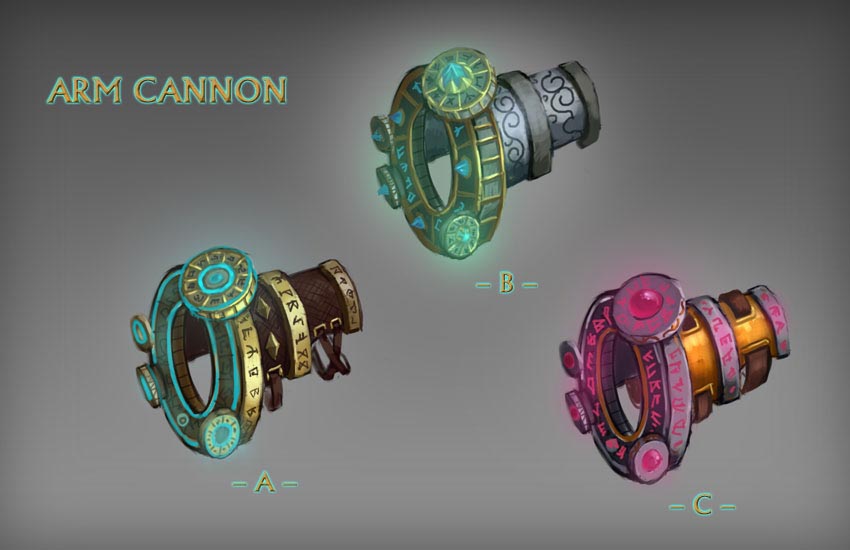
Rune arms are something created for D&D Online. I haven’t personally played DDO since they were introduced, so I don’t have in-depth knowledge of them. But what I understand is that they’re an offhand weapon that allows the artificer to make an energy attack as a bonus action, with a secondary effect of adding elemental damage to the artificer’s main weapon attack.
So, how would you introduce the rune arm into fifth edition? Well, let’s look at it again: it’s an offhand weapon that can only be used by artificers and allows them to make a ranged attack as a free action. Well, my immediate thought is you just described the artillerist artificer’s Eldritch Cannon. In creating an Eldritch Cannon, an artificer can make it a tiny object that can be held in one hand. The artificer can use a bonus action to make an attack with the cannon. So… artificer-only one-hand weapon that can be used to make an attack as a bonus action… Sounds like a rune arm! Now, in DDO, adventurers can find rune arms that inflict a range of damage types or have greater power. But given that these items can only be used by artificers, my response to this would be to treat the rune arm object as a sort of schema—as long as it’s in the possession of an Artillerist artificer, it allows them to summon a different type of Eldritch Cannon. So it still uses the Eldritch Cannon ability and takes the place of the standard cannon, but could change the damage type or enhance the effect.
So that’s what I’d personally do: say that the rune arm is is the common tiny form of Eldritch Cannon used by Artillerist artificers, and create rune arm items that enhance the feature in various ways.
That’s all for now! Thanks as always to my Patreon supporters for making these articles possible!
Earlier this month I revealed my plan to run an online Eberron campaign for my Patreon supporters. The campaign will use a set of pregenerated characters, but the players for each session will be determined by a challenge posed to supporters.
Currently I’m involved in Session Zero: the same process I’d use to lay the groundwork of a campaign at the table, but drawn out and resolved by polling supporters. Through this process, we’ve established a number of important details. Threshold is a town on the edge of Breland, the last outpost of civilization before you reach Graywall. It is in the domain of Count ir’Blis, and a core group of settlers are Brelish veterans who served ir’Blis during the Last War. However, the town has become a haven for devotees of a Sovereign Host sect known as the Three Faces of Coin—a faith devoted to facilitating trade and profit, whether through legitimate commerce or shadier paths. Their efforts helped draw House Orien to the town, and Orien has brought in a local kobold clan to help with labor; this has also brought the Cazhaak faith—an alternate interpretation of the Dark Six—to Threshold. Recently, ir’Blis has allowed a large contingent of Cyran refugees to settle in the town, and they’ve been joined by a few goblin families from Sharn. So there’s a mix of people in Threshold, and lots of potential for conflict and intrigue.
The supporters decided that the adventurers were working for the town itself—that each character has a tie to Threshold and a stake in its prosperity. The next step in this session zero is to define the characters themselves. Through polls, we’re going to define a total of ten characters that will form the recurring cast of player characters; this will ensure that every player will have some options in deciding who to play. We’re starting with a poll that chooses the basic concepts for two characters; the next poll will add details and determine their classes and subclasses.
So, currently we are selecting two characters that I’m defining as The Muscle. Here’s the concepts people are choosing from:
The Sheriff is a warforged juggernaut who served under Count ir’Blis during the Last War, and they have ties to the Brelish veterans who make up part of the population. Along with the Steward, the Sheriff represents the interests of ir’Blis and is tasked to maintain order in Threshold. The next round of questions will determine if the Sheriff is a grim realist, or if they are driven by faith or idealism.
The Marshal is a dragonmarked former Sentinel Marshal of House Deneith. They’re no longer part of the house, and rumors swirl as to whether they were excoriated for wrongdoing or severed ties of their own accord. Either way, they believe in justice and they’re determined to make a difference in Threshold.
The Smith is a Cyran shifter just trying to make an honest living. They’ve opened a general store with their partner, a Cannith tinker. They don’t like to talk about what they did during the war, but they can swing a hammer and you won’t like them when they’re angry. They’re respected within the community of Cyran refugees within the town, and pursue the interests of their people.
The Hunter is a Tharashk half-orc and licensed bounty hunter. They’ve been working the frontier for a decade, and know their way around Droaam and the wilds. Their first interest is profit, and they have ties to the Three Faces of War… but thanks to their time in Droaam, they’ve also adopted some of the beliefs of the Cazhaak faith.
All of these characters will be part of Threshold. The question is which ones will be player characters, and which ones will be NPCs with their own secrets and goals. Will the Sheriff be a player character responsible for maintaining order—or will the Sheriff be an NPC the adventurers will have to deal with if they cause trouble?
Part of what I love about the Session Zero process is seeing how the story evolves through collaboration. I have my own ideas for the story, but things will definitely change depending on which of the characters are selected and the decisions made in the next round of questions. If you’d like to be a part of this process—and to potentially join in the game—join the Threshold tier of my Patreon!
While I’m proud of Exploring Eberron, there’s a lot of Eberron left to explore and KB Presents is working on a number of different projects. We’ve already teased a project codenamed Fool’s Gold. This is something that is still in development, but over the last month I had two new ideas that have taken precedence. The first of these is Threshold, an online Eberron campaign that I’m developing and playing with my Patreon supporters. I’m excited about this, and once I had the idea I wanted to get started on it immediately. I’m still going through the Session Zero on Patreon and working out some details about the town, and I’ll be running the first adventure in November.
In addition to Threshold, I had another “Hmmm” moment—an idea that I loved and wanted to create right away. We initially called this project Skeleton, but I can tell you now that the actual name is Eberron Confidential. I’m not going to say too much about it just yet, but I’ll tell you that it’s short, it’s fun, and it’s something both players and DMs can enjoy. It’s currently in editing, and I think it will be available as a PDF on the DM’s Guild by around November 10th. While this pushed Fool’s Gold, that work isn’t lost; I have two major DM’s Guild Eberron releases planned for 2021.
Of course, Eberron is only part of my professional life! I also create games with my company Twogether Studios. After long complications due to COVID-19, we finally have our games back in stock, including Illimat and my RPG Phoenix: Dawn Command. In addition, we’ve developed a collaborative storytelling game based on The Adventure Zone with the McElroy family, and we’ll be releasing it soon! You can get on the release mailing list here, or you can watch us play it with the McElroys and other friends on our Twitch channel!
If you have any questions about Threshold or The Adventure Zone: Bureau of Balance, post them below! As for Eberron Confidential, I’ll be sharing more details once it’s through editing!
My last IFAQ dealt with the role of mummies in the Blood of Vol. This ties into another question that’s equally relevant to the season: How would you use the Crimson Covenant in your Eberron?
Information about the Blood of Vol is wildly inconsistent across canon material. You can find some of my thoughts on this in this article. My vision of the Blood of Vol is articulated in Exploring Eberron. In short, the Blood of Vol was created in Eberron, when exiled elves fleeing the destruction of the line of Vol settled among humans and dwarves living in a harsh land, long oppressed by tyrants who used the Sovereign Host to justify their rule. The elves shared a tale of a champion who attained divine power only to be crushed by the existing gods, and the humans recast that to fit their reality. In their story, Vol isn’t an elf with a dragonmark who fights the Undying Court, but rather is a human who finds a spark of divinity within and fights the Sovereign Host. The NAME is there and the bones of the story can be seen, but the truth that iinspired it is long forgotten. The elves shared some of their necromantic traditions with the humans, and that aspect of the faith has its roots in Aerenal. But it was only in the synthesis of the cultures and traditions that the faithful actually found the Divinity Within. The Aereni line of Vol were NECROMANCERS; they never harnessed this power.
So: the Blood of Vol was is something entirely unique to Khorvaire, something formed by the blending of Vassal heretics and exiled elves. When this religion was taking root, Erandis Vol was hiding from the Undying Court and building her strength; it was many centuries before she would stumble across the faith that carried her family’s name. She sees the Blood of Vol as a useful tool and is happy to manipulate them, and the result of this is the Order of the Emerald Claw. But she didn’t create their faith and she doesn’t share it. She aspires to be a goddess, but it is her apex dragonmark that is her path to divine power, not some universal Divinity Within.
The Blood of Vol has always been a religious of the downtrodden, of those who believe that the gods are cruel and the universe is unforgiving. Its strongholds lie in Mabaran manifest zones, shunned lands no one else could tame. As discussed in Exploring Eberron, the structure of the faith is far looser than that of the Church of the Silver Flame. Some priests are trained in one of the great temples such, such as the Crimson Monastery of Atur; others have never met a priest from beyond their village, and learned the faith from their local abactor. So, what then is the Crimson Covenant?
The basic principle of the Blood of Vol is that every mortal holds a spark of divinity within their blood, and the goal is to unlock that Divinity Within. But few can accomplish that in their lifetime, and death is oblivion. Some champions of the faith become undead—typically vampires and oathbound mummies—to live beyond what their mortal span would allow. This is a form of martydom; an undead creature has no spark of life, and loses the Divinity Within. But they gain time, and can guide and protect other Seekers. The Crimson Covenant are the oldest and most powerful of these undead champions, some of whom were guiding the Seekers before Erandis Vol even knew the faith existed.
Among most of the faithful the Crimson Covenant is little more than a legend; most seekers believe that Hass Malevanor, High Priest of Atur, is the greatest spiritual leader of the faith. There is good reason for this secrecy. First and foremost, there are many—the Aereni Deathguard, templars of the Silver Flame, paladins of Dol Arrah, and other champions of the light—who would see these elders as monsters to be destroyed. But there is another aspect: all undead aren’t created equal. We think of things in terms of stat blocks and rules, under which a lich is a lich is a lich. But the necromancy of the early Seekers was adapted from Aereni techniques; it was never as sophisticated as the techniques used by the Bloodsails or the Line of Vol, and has its own quirks. The most ancient member of the Crimson Covenant, Duran, was its first lich; but while his will is strong, his enchantments are unable to maintain his body and he exists now as a demilich. Most of the members of the Crimson Covenant are oathbound, and many of their oaths are quite restrictive. Beyond this, many members have had their humanity slowly worn away by the passage of time, and they know it; it is difficult for them to interact directly with the living. With this in mind, Malevanor ISN’T a member of the Crimson Covenant; he is still young, still comfortable with the world. But he and other priests protect the Covenant and rely upon it for guidance, and the Covenant does perform the most sacred rituals of the faith. The core of the Covenant resides in the catacombs below Atur, and it is their devotions that contain and channel the dreadful powers of this sunless land.
So for the most part the Crimson Covenant are masterminds and advisors. They can cast spells and perform rituals that are far beyond Malevanor’s powers—but only a few of them are actually capable of freely moving within the world. As such, they generally support the faith by creating magic items, raising undead (they were certainly an important part of raising the first armies for Karrnath), and casting divinations and other rituals. They teach the most promising students in the Crimson Monastery. But there are only a few—such as the Silent Knight and Lady Dusk—who often act in the outer world. There have been others—there were a few members of the Crimson Covenant who rose from their chamber to lead Seekers in the Last War—but they have been destroyed.
So, to go back to the original question, How would I use the Crimson Covenant in my Eberron? I would use it as something the adventurers hear of in whispers. Seekers may receive guidance from the Crimson Covenant; I might even choose to say that when a Seeker priest casts commune, it’s the Covenant that answers. Its possible they won’t even believe it exists until one of these ancient champions actually DOES appear to assist a group of seekers… or alternately, until one of them is discovered and destroyed, and the Mabaran manifest zone they were containing becomes a threat. Beyond that, it would depend on the relationship between the adventurers and the Seekers. If the adventurers are fighting the Emerald Claw, I’d probably start by having them believe that the mysterious Crimson Covenant is their enemy, perhaps the true leaders of the Emerald Claw. But eventually they would finally meet the Covenant, and if they walked the proper path it could be a powerful ally in the question to put an end to the threat posed by the Claw. With that said…
What’s the relationship between Lady Illmarrow and the Crimson Covenant?
Originally, none. The Crimson Covenant are elder Seekers, many of whom have served the faith for longer than Illmarrow has been aware of it. However, Lady Illmarrow is a mastermind, and over the course of centuries some of her handpicked agents have risen to join the Crimson Covenant. It is through these agents that Illmarrow knows the plans of the abactors and influences the faith to her own ends. It is Illmarrow’s agents who have prevented the Covenant from taking any action against the Emerald Claw, convincing the others that they must wait and see, and that perhaps Illmarrow is acting as a champion of the faith. Some of those councilors slain in the Last War were victims of schemes laid by their fellow councilors, because they posed a threat to Illmarrow’s plans. So the point is that Lady Illmarrow doesn’t control the Crimson Covenant… But she is influencing it, and in many ways slowly poisoning it to help with her agenda. So again, if I were running a campaign in which the adventurers were fighting Illmarrow and the Emerald Claw, an important piece of the endgame would be identifying and destroying her agents in the Crimson Covenant, at which point its surviving members could be valuable allies.
Likewise, I could certainly see a member of the Crimson Covenant who is suspicious of Illmarrow’s influence but unable to act openly serving as a patron for a group of adventurers—potentially using the Immortal Being group patron, or serving as an Undying patron for a warlock or a personal spiritual guide for a Seeker paladin or cleric. Such a patron could direct adventurers to operations of the Emerald Claw or to expose other agents of Illmarrow within the faith.
What’s the relationship between the Blood of Vol and the Bloodsail Principality? Also, the article “Dolurrh’s Dawn” has an individual named Ashalyn Vol who’s said to have created some of the core principles of the Blood of Vol. How’s that work with this interpretation?
Well, I DID say canon was inconsistent! Having said that, let’s take a look at what the canon Bloodsail article says.
The religion known as the Blood of Vol is a bastardized version of the beliefs of the elves of Farlnen, and it has grown and changed over the centuries. Bloodsail priests are far more pragmatic than are their Karrnathi counterparts. They shape their divine spells from the raw energy of Mabar, and whereas the Seekers of Atur try to unlock the immortal potential of the Divinity Within, the priests of Port Cairn are content with the simpler immortality of undeath. Nonetheless, the two faiths share some common practices, and followers of the Blood are treated with respect in Farlnen.
The bolded element is the key. After the line of Vol was eradicated in Aerenal, the Undying Court allowed elves allied to the line but who didn’t carry its blood to either swear fealty to the Court or to accept exile. Some of these went directly north to Farlnen and became the Bloodsails. Others landed in Lhazaar and migrated west, mingling with humans and dwarves. The Blood of Vol arose from that mingling of traditions, and the Divinity Within was a discovery of this new faith. So Ashalyn Vol WAS a cleric and did set the first cornerstones of the faith. But those cornerstones were about channeling the power of Mabar, not about finding the Divinity Within. The idea of fighting against death was there, but how you do it is very different. The Seekers see undeath as a sacrifice; the Bloodsails see it as entirely satisfactory and don’t believe in a divine inner spark; they don’t believe the oathbound gives anything up by becoming undead, and their divine magic isn’t drawn from the same source as that of a Seeker priest. So as noted, the Bloodsails RESPECT the Seekers and recognize their common roots; but they also think the Seekers are, well, crazy humans with bizarre conspiracy theories. “The Sovereigns cursed people with mortality, so they couldn’t become gods themselves” — that’s just a ridiculous idea!
Part of the point of this is to challenge the concepts of Elven Exceptionalism and that Things Were Always Better In The Old Days. I like the idea that the blending of elf and human beliefs and ideas created something new—that this fusion allowed them to DISCOVER the Divinity Within, which is a real divine power source that the line of Vol never knew about or harnessed. To me this is more compelling than saying “Oh, an elf discovered it five thousand years ago – we’re just following in their footsteps and we’ve never really made any sort of improvements.” The Bloodsails ARE just following in Ashalyn’s footsteps, because that’s what elves do; they cling to the traditions of their ancestors. But the Blood of Vol did something NEW. And part of MY idea is that they are continually improving their techniques—that Duran the demilich is a demilich because their original lich technique was flawed and that they’ve gotten better at it — that the techniques used to produce Malevanor were superior to the oathbound rituals they used centuries ago.
What’s the relationship between the Crimson Covenant and Kaius III? How does the Covenant feel about Lady Illmarrow and the Emerald Claw?
In thinking about the Crimson Covenant, it might be helpful to look at the US Supreme Court. It’s a small body of people who are experts at what they do (we hope) but who have differing opinions and who were appointed in very different times. It’s a lifetime position, and in this case, when we say lifetime, we mean eternity—or until you get taken down by a paladin of Dol Arrah. There are members of the Crimson Covenant who are older than Galifar, and at least one who’s older than Karrnath. For these people, the events of the last ten years—the Order of the Emerald Claw, Kaius III—are a tiny drop in the bucket of time. It’s only been a decade; let’s see how it plays out in another decade.
You definitely have factions in the Covenant. There are those who argue that the Covenant should be focused on teaching the living—that it’s not its place to intervene directly. There are those who say that they should be trying to find a way to destroy the Sovereigns directly, those who say they should undermine the institutions that encourage worship of the Sovereigns, and those that say that all this discussion of the Sovereigns is ridiculous, because they don’t exist. There are those who believe Lady Illmarrow poses a threat to the faith, and those who argue that she’s a champion and that the Covenant should be supporting her—along with those who say “Let’s see what happens in the next ten years.”
So there are definitely enough members on the Covenant who support Illmarrow or at least want to wait and see to keep the Covenant as a whole from acting against her. But there’s certainly members of the Covenant who ARE worried about Illmarrow and the Emerald Claw. Such a member might well be secretly working with Kaius III, and might very well work as a patron for an adventurer or a party of adventurers. They can’t convince the majority of the Covenant to take action, but they do believe that something should be done.
What stops the Crimson Covenant from using some preexisting D&D 5e methods of achieving effective immortality, such as the Reincarnate and Clone spells?
Part of the idea of Eberron has always been to consider magic as a tool and a science—which means that we add limitations to it that aren’t necessarily obvious from the rules. If you’re making a character you can be a druid, just like that. But in the WORLD, druidic magic comes from ancient traditions. A random person in Sharn can’t just say “I’m going to be a druid” and start casting thorn whip; they need to LEARN these traditions from someone else. There is no established druidic tradition in Karrnath, therefore, the Crimson Covenant has no druids and no idea how to cast reincarnate. On the other side, clone is an 8th level spell, which is far outside the common power level of the Five Nations—which is normally 1st-3rd level spells are common tools, 4th-5th are attainable but rare. On that scale, clone is the stuff of legends. Even if we assume that there are a few members of the Crimson Covenant who have gained the power to cast 8th level spells, the next point of considering arcane magic as a science is that just because there’s rules for a spell doesn’t mean that every culture has developed every spell. This is something we called out in earlier editions with the idea of limiting certain rituals to character with dragonmarks. As a PLAYER CHARACTER, your wizard can learn any spell on the wizard spell list. And in my Eberron you can be sure that Mordain the Fleshweaver has discovered clone. But beyond that, it’s up to the DM to decide what spells are available to NPCs. If you want to have a member of the Covenant who uses clone as a path to immortality, tell that story! But in my campaign, no one in the Covenant has discovered how to cast that spell.
Ultimately, remember—the rules are a tool for the DM to use to tell a story. It’s always up to us to decide which elements we want to use and which we choose to ignore. I prefer to think of each wizard spell as a scientific discovery, and to consider that different traditions—the Twelve, Arcanix, Aerenal, the dragons—may know spells that the others haven’t yet mastered. Again, player characters can choose any spell—but that’s part of what makes them remarkable.
That’s all for now! My next major article (as chosen by my Patreon supporters) will deal with Ghost Stories of Eberron. And tomorrow I’ll have a few announcements about other things I’m working on!
In November I’m going to start running an online Eberron campaign set in Threshold, a border town that lies on the edge of Breland and Droaam. Between then and now, I’m going to go through the same process I would in running any campaign: working with the players to establish the cast of characters and important elements of the story and campaign setting. The players are my Patreon supporters, and it’s on Patreon that I’ll hold the polls that determine the ANSWERS to the questions I’m raising. But I thought I’d post this first piece here, for anyone who’s interested in my process.
As we begin this story, we know one thing about it: it’s set in Threshold, a newly founded town in the western edge of Breland. We’re in the shadow of Droaam, and there’s the ever-present threat of raids. But there’s byeshk and Dhakaani ruins in the mountains. There’s merchants and diplomats happy to have a final mug of Brelish ale before crossing into the land of monsters. Dragonmarked houses are considering investments; House Orien is here, working on the western rail. It’s rough, it’s dangerous, but it’s a fountain of opportunities.
The question is: what are we doing here? We know where this story is set, but what kind of story is it? Are our adventurers here to protect the town? Are we dreaming of the treasures that could be hidden in forgotten ruins? Are we soldiers in the service of the Brelish crown, or are we reporters here to cover the story of western expansion? In practical terms, what I’m looking for here is a group patron. I want the adventurers in this story to know one another and to have a reason to be here—to identify if this is a war story, a tale of exploration and adventure, or something else entirely. Choosing a group patron will help me plan my initial adventures, and it also helps to provide basic guidelines for the characters. If the adventurers are a squad of the Westwind Raiders, they need to feel like a unit of soldiers; while if they’re a team of reporters for the Sharn Inquisitive, they’ll want a very different set of skills and abilities.
So here’s the patrons I’m putting on the table.
Threshold Itself. The adventurers are all people who have a stake in the town. The cleric is the town preacher. The paladin or fighter is the sheriff. The artificer or wizard is here to study the ruins, but may also be doubling as the local schoolteacher. As a party working for Threshold itself, the adventurers don’t have a boss—but they are united by their shared investment in the town and its future, and will be working together to protect it from threats—whether those threats are minotaur raiders or the overreaching greed of House Orien.
The Westwind Riders. Before Droaam, the Westwind Riders were an elite unit that patrolled western Breland, protecting settlers from the dangerous creatures that dwelt in the Barrens. The last of the Westwind Riders were slain by the Daughters of Sora Kell in the battle that established Droaam. Now Count ir’Blis, Shield of the Graywall, has appointed a new corps of Westwind Riders to protect the people of his domain. As Westwind Riders, the adventurers are an elite military unit sworn to protect Brelish citizens from any dangers they may face. A Westwind campaign will be focused on action, as the adventurers are constantly responding to new threats; but it may be that there are dangers that are best dealt with diplomatically, rather than with spells or steel.
Professional Adventurers. There are many wonders hidden in the Graywall mountains. Dhakaani ruins are merely the beginning; stories hint at portals to demiplanes and relics dating back to the Age of Demons. There’s a fortune waiting for those prepared to venture into the depths and wrest it from ghosts and monsters. With this story, the adventurers are adventurers—professional dungeon-delvers. Should this path be chosen, the next question will be if the adventurers are associated with the virtuous Clifftop Adventurer’s Guild, or the more infamous Deathsgate Guild.
The Sharn Inquisitive. There’s something in Threshold more valuable than gold, and that’s the story. In Threshold itself you have the saga of Brelish settlers seeking their fortune in a dangerous land and of dragonmarked ambition. But it also stands on the edge of Droaam, and that’s a realm with many unanswered questions. How secure is the rule of the Daughters of Sora Kell? Is Droaam on the verge of collapse, or is it stronger than ever? Is the border stable, or could war break out at any time? With this patron, the adventurers are a team of reporters working for the Sharn Inquisitive, and they’re here to find the truth. This campaign would have a strong focus on social interaction and intrigue, with characters needing to have skills that help to get to the truth. But uncovering that truth will be a dangerous job…
Mysterious Visions. Strange visions have drawn a diverse group of people to Threshold. These people have nothing in common, save for these cryptic revelations and the knowledge that there is something they have to do. What is the force that has brought them together, and what is the task that only they can complete? The adventurers in this scenario would be very diverse in their backgrounds; part of the campaign would be trying to figure out why they were chosen and who their immortal patron actually is.
These are just a few of the possible themes for a campaign in Threshold. Adventurers could be working for the Boromar Clan of Sharn, establishing an outpost for this criminal syndicate and seeking to punish Droaam for the actions of Daask. They could be agents of the Twelve, sent to represent the interests of the Dragonmarked Houses. They could be spies seeking to infiltrate Droaam. But the five campaign ideas I’ve mentioned are ones that I feel comfortable running… so these are the five that I’m presenting to my players.
if you want to help make this decision and help as I continue to develop the campaign and the characters, join the Threshold tier on my Patreon. If not, hopefully this was an interesting peek at my process as a DM!
Western Breland is an untamed land, a realm with untold opportunities… and unknown dangers. The Daughters of Sora Kell have laid claim to the land west of the Graywall mountains, and the city of Graywall marks the edge of their territory. But Graywall is a city of monsters, governed by a mind flayer and patrolled by trolls… Not a welcoming haven for Brelish settlers and opportunists. As Droaam grows stronger, Dragonmarked houses and Aurum oligarchs are considering western opportunities, but many don’t trust Graywall and its governor. And so they are looking to the towns springing up on the Brelish side of the frontier… towns like Threshold.
Beginning in November, I’m going to run an online D&D campaign set in the town of Threshold. The characters and the story will be ongoing, but the players will change; before each session, I’ll post a creative challenge to supporters, and the winners will get to play; once you’ve played you’ll be ineligible to play again for the next four sessions, to ensure that we get a rotating cast. While only five people will get to participate in each session, I’ll also be reaching out to supporters to help establish details about the characters and campaign, primarily through polls.
The support of my Patreon backers is what makes it possible for me to spend time on the articles on this site. For some time now, I’ve been thinking about ways to add value for supporters. I’ve considered exclusive content, and I have published a few Patreon-exclusive articles. But I dislike restricting material. Now, everyone who supports at the Threshold tier—which is $1/month above the current Inner Circle—gets a chance to play in the game and an opportunity to help shape the story. To be absolutely clear, there are going to be a limited number of seats and not every Threshold supporter will get to play. But everyone will have the opportunity to compete for a seat, and those who don’t get a seat at the table will still have an opportunity to shape aspects of the story.
In addition to this, I’m adding a discord channel at this level. This will be a place to discuss the campaign itself, as well as the articles I post on my website. I’ll drop in after I post new content, and I will have at least one scheduled AMA on the channel each month.
Now, this is an experiment. I’ve only run a handful of streamed games, and I expect this to be a learning experience. So the first four months are going to be a test period. Starting in November, I will run at least one game a month. I may run more than one session each month, but I don’t yet know the technical challenges I may face, and there’s a number of other things that could place unexpected demands on my time, so I’m only going to promise one session per month in this period. At the end of four months, I’ll evaluate the experiment and settle on a format and schedule for the campaign moving forward. I may or may not release the games to the public during this trial period, but they’ll certainly be available to supporters.
So in summary: I’m adding a $6/month tier to my Patreon, the Threshold tier. People who support at that level will have all the benefits of the Inner Circle—helping shape the content of the IFAQs and Dragonmark articles—but will also receive polls that will help shape the characters and story of the Threshold campaign. At least once each month, I will post a creative challenge for Threshold supporters, and the winners will play in the next session of the online campaign. In February 2021 I’ll evaluate the project and make plans for the next phase.
If you have questions, ask below! Otherwise, I hope I’ll see some of you in Threshold!
Gnomes Beyond Zilargo was the topic my Patreon supporters chose in September, and there’s a lingering question: What would you do with the Svirfneblin in Eberron?
In my personal campaign I tend to limit the number of unique species and subspecies in the world. For example, in my campaign, Hill Dwarves, Mountain Dwarves, Ruinbound Dwarves, and Mark of Warding Dwarves are all just “dwarves”—a character from the Mror Holds could use any of those subraces and I’d just describe the character as a “Mror dwarf”, not a “Mountain dwarf.” Essentially, the Mountain Dwarf subrace represents early military training—it’s a secondary background, not a genetic disposition.
So with that in mind, I have a set of questions I ask when adding any exotic race to Eberron: Why do you want to add this race to the world? Is it simply that you want a character that has its mechanical advantages? Could your character be UNIQUE—perhaps a creation of House Vadalis, Mordain the Fleshweaver, or the daelkyr? Or do you want to add the CULTURE to the world—because you specifically want to be part of the society associated with that species?
With that in mind, the next step is to look at the svirfneblin and identify their defining features in Fifth Edition. As a subrace, they don’t actually have a lot of abilities: they have Superior Darkvision, Stone Camouflage, and speak Undercommon. If we look further to the Monster Manual description, Deep Gnomes have innate spellcasting abilities, and can cast nondetection, disguise self, blur, and blindness. This ties to their existing story: they are a society of subterranean gnomes who have close ties to earth elementals and who largely use their magic to avoid contact with outsiders, hiding themselves away. Keeping both sets of abilities in mind, here’s a few ways I might use them in MY Eberron.
The Gnomes of Lorghalen
Earlier I wrote an article about the Gnomes of Lorghalen, presenting them as a reclusive culture with strong ties to elementals. I wouldn’t say that ALL Lorghalen gnomes are svirfneblin; most dwell on the surface of the island and have no use for Superior Darkvision, the Lorghali work with a wide range of elementals, and I don’t see any reason for the Lorghali to be physically distinct from their Zil ancestors. However, I think it’s entirely plausible to say that there are a number of Lorghali families who took up residence in deep caverns below the island—caves with an especially strong tie to Lamannia, specifically the element of earth. It’s this that drew these families down there—it’s much easier to perform earth magic and work with earth elementals in the depths—and that over the course of generations, the energies of the caverns mutated these families, creating the genetically distinct Deep Gnomes. Essentially, it’s a variation of the genasi. I think these Deep Gnomes would be a fully integrated part of Lorghali society, even if they largely chose to remain in their caves; the Lorghali are a close-knit society, and I don’t see the unusual appearance of the svirfneblin being an issue.
If I went with this approach, I would replace Undercommon with Primordial; the Lorghali have no contact with the daelkyr or their followers, while they use Primordial in their dealings with elementals.
Agents of the Trust
The Trust is known for its secrecy. There’s even rumors of “ghost agents” who use rings of invisibility and sustenance to live their lives entirely unknown. What if evidence surfaced that the Trust wasn’t just training and equipping spies, but that they had magebred a subspecies of gnome, born into the service of the Trust and innately imbued with the ability to evade divination? If you don’t wish to hold on to the culture of the Deep Gnomes, this is a story you could explore. Per the Monster Manual, the svirfneblin can cast nondetection at will—an exceptional tool for a spy. And disguise self and blur are both excellent tools for espionage.
There’s two ways to take this. The first is more benevolent—the process of becoming a Deep Gnome is voluntary, and involves both training and alchemical, arcane treatments—more Captain America than Doctor Moreau. If I went this way, then a player character svirfneblin might be an active agent of the Trust: James Jalius Bonde.
A second approach is to emphasize that the process used to create these Deep Agents is horrifying and that they are forced to serve through lifelong indoctrination and psychological conditioning—that the people of Zilargo don’t know about the svirfneblin and would be horrified if they found out. In this case, I’d emphasize that this is the work of a small sub-branch of the Trust—a semi-rogue agency who has hidden their work from the Triumvirate. The reason for this is to emphasize that if a player character is a svirvneblin who’s broken free, that they aren’t being pursued by the entire Trust, which is a crazy burden to place on a PC; rather, they are dealing with a secret agency WITHIN the Trust, which has limited resources. My inspiration here would be the Bourne Identity series—The hero is hunted by Treadstone, not the entire US government. I’d suggest that the player character is presumed dead, and is trying to stay off the grid. With that in mind, I’d actually be willing to give the Svirfneblin Magic feat, but emphasize that they NEED to stay hidden or they will be targeted by assassins. While it’s a powerful ability, there’s a limited number of scenarios that will actually be broken by nondetection, and I think it’s a fun story to explore.
A third possibility would be to make the svirfneblin a society of gnomes WITHIN Zilargo who managed to magebreed themselves to induce the natural nondetection and other talents, as a way to avoid being watched Trust. Essentially, a secret enclave of brilliant alchemist artificers who believe that the Trust is watching EVERYONE with divination magic ALL THE TIME—sort of a tinfoil hat conspiracy taken to an amazing extreme!
Q&A
Would these Eberron deep gnomes still be gray and bald?
The Lorghali deep gnomes would. The idea is that it’s a physical mutation similar to a genasi. In the case of the “Captain America” agent of the Trust or the “Tinfoil Hat” gnome, I’d be inclined to give them the abilities of the deep gnome but not the traditional appearance; in which case Stone Camouflage might be a sort of limited invisibility (given that it works regardless of what the character is wearing, it’s presumable not just based on skin color). With the “Bourne Identity” version of the Trust agent, I personally WOULD keep the gray-and-bald appearance to emphasize how dramatic the experiments were—that they largely DO stay hidden (though again, Svirfneblin Magic gives them limited use of disguise self!). Of course, in that storyline almost no one knows what a deep gnome is; they’d be a curiosity, quite possibly mistaken for some sort of goblin.
Have you used svirfneblin in an Eberron campaign? If so, share your approach in the comments! And if you’ve missed any of the previous gnome articles, check out the Gnomes of Lorghalen and the Gnomes of Pylas Pyrial! And if you want to vote on the topic of the next dragonmark article, check out my Patreon!
As time permits, I like to answer interesting questions posed by my Patreon supporters. Here’s a few relating to transportation in Eberron.
How ubiquitous was the lighting rail before/during the last war? Going from the map, it doesn’t look like it actually connects to all that much.
The lightning rail has been in operation for almost two centuries, and in my opinion it is a widespread, common form of long distance transportation. I feel that the rail lines shown on the map are just a few of the most notable ones, but that more or less any major city in the Five Nations will have a lightning rail station, unless it was damaged in the Last War and is awaiting repair. In my first draft of the adventure Shadows From The Last War the adventurers take a lightning rail from Sharn to Rukhaan Draal, and use a lightning runner (see below) on the abandoned rails in Darguun to reach Rose Quarry. So in short, it’s as common as you want it to be, but in MY Eberron, most significant cities of the Five Nations are connected by lightning rail.
Does Eberron have an equivalent to cars or motorcycles?
Magical land vehicles are uncommon in Eberron. Aside from the lightning rail, House Orien uses horses with the equivalent of horseshoes of speed for couriers and high-speed stagecoaches, but the horse is still the motive force (note that these are a form of dragonmark focus item and require a rider or coachman with the Mark of Passage). My first draft of SotLW had a lightning runner, a stagecoach-sized vehicle that can run on the lightning rail. The Explorer’s Handbook introduced the elemental land cart, which is essentially an automobile, but notes “Most of the few elemental land carts in existence belong to nobles of one of the dragonmarked houses.” House Orien and the Twelve are surely WORKING on new forms of land transportation and you can introduce them into your campaign if you choose, but they aren’t common in canon Eberron.
How far in the future do you pitch House Orien demiplane transportation? Could it be introduced tomorrow or is it still a few years away in your mind?
To clarify: Demiplanes are small pockets of reality that connected to the material plane in Khyber. These connections defy normal space, so you could find an entrance to the daelkyr Belashyrra’s prison demiplane in the Shadow Marches, walk for a mile, and then emerge in Xen’drik — a trip that would have taken days or weeks by other methods. It’s been suggested that House Orien would love to find a way to harness this effect, creating a system of transplanar highways.
The people of the Five Nations know almost nothing about demiplanes. The idea of Orien’s interest assumes that the house has stumbled upon a demiplane, confirmed that it is a spatial shortcut, and wants to make use of it. My assumption is that they are working on creating artificial portals, because most existing portals won’t be much use; they can’t do much with a random portal out in the middle of the Shadow Marches. But they could develop an eldritch machine that uses the power of the Mark of Passage (hence, Orien) to rip a path into a demiplane.
With all that in mind, how close is that to being functional? NOT AT ALL. First consider that the whole thing is highly experimental. Consider also that they need to figure out how to get passengers safely through the demiplane. It may be a shortcut, but you still may have to travel for a mile across Belashyrra’s prison to reach the exit point; how are they doing that?. What dangers might they face? Which reaches the main point: in my Eberron, ORIEN HAS NO IDEA WHAT THEY ARE MESSING WITH. This is entirely like Weyland-Yutani discovering a xenomorph and saying “I’ll bet we can use that.” They don’t KNOW that they are opening portals into, for example, daelkyr prisons or overlord’s hearts. I expect that these efforts will have DISASTROUS CONSEQUENCES. So in my campaign, this isn’t a service you can actually expect to WORK any time soon; it’s something that serves to drive ADVENTURES, as adventurers are hired to explore demiplanes, or accompany Orien pathfinders, or to deal with the horrors the house accidentally released into Passage by opening portals best left closed.
What about Brooms of Flying? Exploring Eberron says Aundair used these in the war; have they been adapted for civilian use?
By the rules of Fifth Edition, a broom of flying is an extremely useful item. It’s an uncommon magic item, putting it within the range of Khorvaire’s wide magic. Unlike wings of flying, there’s no time limit on the use of the item, and critically, it doesn’t even require attunement. What’s been suggested is that Aundair used these for elite units and that other nations developed them in smaller quantities—so they aren’t commonplace in civilian life, but they are in the world.
With this in mind, the first question I’d ask is are they brooms? While the core magic item is a broom, I see no logical reason that they should be actual brooms in Eberron; remove the mythology of Earth and there’s no particular reason a broom is associated with flight. So I’d actually call them skystaffs. Keep the same essential shape—a short wooden haft—but remove the bristles, add a seat, and perhaps handles that fold out from the shaft. Essentially, make it a tool clearly designed for its function as opposed to a household item that does something unexpected. I’d then say that while anyone can use one, they require Dexterity checks for tight maneuvers or sustained balance at full speed, unless the rider has proficiency in air vehicles—so anyone CAN use one, but it requires some training to actually use one effectively. As a final element, I’d say that a skystaff is made using soarwood, which is a crucial factor in why there aren’t more of them in service at the moment. The enchantment isn’t that difficult—again, “uncommon” level in terms of its power—but the actual components required to create one are in limited supply, so there aren’t that many around. Having said that, they are most often seen in Aundair, and you’ll certainly see a few in the skies above Fairhaven or darting around Arcanix.
That’s all for now! Thanks to my Patreon supporters for their support and questions.
Every month I ask my Patreon supporters for short questions. Normally I’d spread these out over a lot of short articles, but September kept me busy and I didn’t have a chance. So, here’s an assortment of infrequently asked questions, dealing with dwarves, Dar, the Dark Six, numerology, electrum, and much too much more!
Are the Dark six truly evil? Or are they just misunderstood by the civilized people?
There’s no absolute answer, because the Sovereigns and Six can’t be judged independently of their followers. The Sovereigns and Six are IDEAS. To people who follow the Pyrinean Creed, the Dark Six are literally symbols of evil. The Devourer is the source of the destructive powers of nature. The Shadow creates monsters and lures people down dark paths. While to someone who follows the Cazhaak traditions, the Devourer tests us and weeds out the weak, and the Shadow helps us unlock our true potential. But the whole point of religion in Eberron is that there is no absolute proof that one of these beliefs is right and that the other is wrong. The question is which YOU believe to be true, and what you will do because of those beliefs. So, are the Dark Six truly evil? It depends who you ask. I’ve written a number of articles that talk about how different groups view the Dark Six; these include articles on the Shadow, the Keeper, the Fury, and the Traveler.
How well known is the commonality of the 13-1 in Eberron? Is it common numerology? Does it cause issues with there being 15 member of the Sovereign Host?
People within the setting are aware of the patterns that link certain phenomena. The ones most people know about are the moons, the planes, and the Dragonmarks. Most people believe that this is because there is a relationship between these things—that the moons are linked to the planes or to the dragonmarks in some meaningful way. Most people don’t believe that EVERYTHING is somehow tied to a baker’s dozen, so no one things it’s strange that there’s 15 deities in the Sovereign Host or that there’s only eight beasts in the Race of Eight Winds. And while most people do believe that the numerology of moons, marks, and planes is significant, MOST will say that some of the other baker’s dozens—the number of Mror Holds for example—are surely just a bizarre coincidence, though others will claim that it’s tied to the Prophecy. So people are AWARE of it, but they don’t believe that it does or should apply to every aspect of the world.
You once said “Antus ir’Soldorak recently began minting electrum coins called “Eyes” (due to the stylized eye on one face).” What are the public/private reasons for that eye and what has been the public reaction(s)?
So setting aside the IN-WORD explanation, there’s two explanations for why *I* made those decisions. Electrum pieces have been a weird outlier since AD&D; 4E dropped them completely. I wanted to give them an actual concrete role in the setting, along with a reason why they WEREN’T used in 4E — that they are actually new in the world. As for “Eye”, the MAIN reason for this is to fit the pattern of the coin name matching the letter of the metal: copper crowns, silver sovereigns, gold galifars, electrum eyes. Of course, I chose “Eyes” —rather than, say, “Elephants”—because I liked the idea that perhaps there IS a greater significance to it. The Player’s Guide to Eberron introduces an enchantment spell created by the Aurum that uses a platinum piece as a component; it seemed very in line with Soldorak’s ambitions to create a coin that could be used, perhaps, as a specialized scrying target… that in spreading this new currency across the Five Nations, he’s actually laying the groundwork for a vast spying network.
Is that true? That’s up to you to decide, based on the role of the Aurum in your campaign. Likewise on the reaction to the coins themselves. Personally, I think the reaction would vary from indifference to disdain—with some people seeing it as a publicity stunt and others seeing it as unnecessary. On the other hand, Soldorak could create a publicity campaign suggesting that his electrum coins are more reliable than others—especially if this was combine with a surge in counterfeiting of traditional currencies with base metals.
What’s Shaarat Kol and Kethelrax like? Do the kobolds and goblins have the same culture, or are kobolds as described in Volo’s?
In brief: This article discusses the most widespread kobold culture in Eberron. Droaam in particular has a number of micro-cultures created by the interactions between kobolds, goblins, and the other inhabitants of the regions, so there are isolated kobold clans and bands of goblins that have entirely unique traditions. However, most of the kobolds and goblins of the region have a shared history of being oppressed and dominated by other creatures, which has established a strong bond between the two species and a number of common traditions. This is the foundation of Shaarat Kol: it is a dominion formed from the ground up by kobolds and goblins freed from subjugation and working together to CREATE their own culture. It blends together a number of different micro-cultures, and it’s still finding its identity. Full details on Shaarat Kol and Kethelrax could be a topic for a future Dragonmark article.
Do magebred flowers and plants exist and what uses could they have?
Eberron possesses a host of flora not seen on our world. The most common source of such unusual plant-life is the influence of manifest zones. We’ve already talked about many such plants over time: livewood, Araam’s crown, dawn’s glory. The pommow plant of Riedra is specifically called out as being actively magebred—not merely “naturally” occurring in a manifest zone, but developed by the Inspired. A more detailed exploration of magebred and supernatural plants could be a subject for a future Dragonmark article.
What is the path to citizenship in the Five Nations?
Galifar is based on feudal principles, and most nations retain that basic foundation. To become a citizen of such a nation requires an audience with a local noble. The applicant swears fealty to the nation and its ruler, and also direct allegiance to that local noble; the noble in turn formally accepts them as a subject. This means that the noble is accepting responsibility for that individual, and the individual is promising to obey that noble, pay taxes, and answer any call for conscription, as well as to respect the laws of the land. The noble doesn’t HAVE to accept an offer of fealty, and most won’t unless the potential subject intends to reside within their domain. So it’s entirely valid for a Brelish noble to refuse to accept the fealty of an ogre from Droaam because either they don’t believe the ogre will uphold the laws or they don’t believe that the ogre intends to remain within their domain. Likewise, back before Droaam, the Barrens were considered to be part of Breland but the inhabitants of the region weren’t Brelish citizens, because they’d never sworn fealty to any Brelish lord; legally (from the perspective of Galifar) they were outlaws squatting in Brelish land.
In the modern age, much of this process is handled by bureaucracy, especially in the case of children of existing citizens. In some regions there are annual ceremonies where each child swears an oath to the local lord before being recognized as an adult. But in a populous region like Sharn, the parents will file paperwork when the child is born, and when the child becomes an adult they’ll file their own statement. But the underlying principle remains the same: someone needs to make a decision on behalf of the local lord as to whether to accept the offer of fealty, and this will be based on the applicant’s residence, reputation, family, and other factors.
How do governance and taxation work in the biggest principalities in Lhazaar? Are there any established checks on the princes’ powers, or are they all like little autocracies?
Every principality is unique, and the laws of a principality can dramatically change from prince to prince. As shown by the recent article on Lorghalen, the culture and traditions of the gnome islanders have nothing in common with the Bloodsails. The idea of the Principalities as a truly formalized alliance with a single leader and a more unified set of laws is a very new concept; Ryger ir’Wynarn is striving to bring the Principalities together, but that’s very much a work in progress.
What makes the dwarves of the Realm Below concretely different from the dar of Dhakaan? They’re both subterranean empires. If I want to have adventurers have to deal with daelkyr forces massing in a subterranean ruin, why would I use one instead of the other?
One reason to use one culture instead of the other is the location of the story. Sol Udar occupies a small region, primarily just the land under the Ironroot Mountains. Under most of Khorvaire, the Dhakaani were the only advanced subterranean nation. In Xen’drik you don’t have Dhakaani or Udar; instead you might find the Umbragen drow or Giant ruins. As for cosmetic differences, the appearance of the Realm Below is discussed on page 119 of ExploringEberron. The civilization of Sol Udar was a highly magical civilization that incorporated cantrip effects into daily life. An Udar ruin will have magical lighting, illustrate music, climate control. The Dhakaani are primarily a martial society: their forge adepts created magical weapons, but they didn’t have arcane air conditioners or magical jukeboxes. Dhakaani structures are stark and brutalist in design, though extremely durable; from the ground up, they were designed for WAR. The Udar weren’t so warlike, and their homes have a lot more cosmetic comforts. The second aspect is the degree to which the Udar specialized in working with demiplanes—meaning that for any Udar ruin you want to establish what demiplane it’s attached to and how those effects manifest in the ruin.
In Exploring Eberron, Jhazaal Dhakaan is said to have created the Ghaal’duur horn, but she’s also described as a bard. How does this fit with the fact that the Dhakaani have a strong tradition of artificers?
It’s not just Exploring Eberron; the Ghaal’duur is first mentioned as a creation of Jhazaal in the 3.5 Eberron Campaign Setting. It’s always been assumed that the duur’klala create magic items, but they create magic items associated with bardic magic. Duur’kala create items associated with enchantment, inspiration, and healing, while the daashor generally create armor and weapons of war. Now, the daashor CAN create any sort of item. Jhazaal created the First Crown, which is an artifact tied to inspiration; but it was a daashor who created the Rod of Kings. Still, the general principle is that the forge adepts create the tools of war, while the dirge singers create items associated with peace.
Do the Dragonmark houses view The Twelve as an authority or an advisory body?
The Twelve is technically a RESOURCE. It’s an arcane institute devoted to developing tools and techniques that benefit all of the dragonmarked houses. Dragonmarked heirs learn the arcane arts from the Twelve, and many important tools—such as the Kundarak vault network and most dragonmark focus items—were developed by the Twelve. The Council of the Twelve discusses issues of interest to all houses and helps to mediate disputes, but it has no AUTHORITY… though because its work is of great value to all of the houses, no house would want to take actions that would cause it to be cut off from the institute.
What stands out about Eberron’s transitive planes? Or are they just part of the backbone of Eberron’s reality, and a shortcut to the other planes in the Deep Ethereal and the Astral?
They’re primarily a part of the backbone of Eberron’s reality. In the 3.5 ECS the transitive planes were called out as functioning normally, and we’ve never suggested that they were created by the progenitors; instead, they are part of the basic metaphysical framework that the progenitors built upon. So they are largely supposed to fill the same function as they do in other settings.
What was the family of Mordain Fleshweaver inside House Phiarlan?
This is the sort of question I prefer not to answer. The answer has no significance for me. I could make a D6 table of named Phiarlan families and randomly say “Shol”, because hey, that’s a Phiarlan family. But that doesn’t make anyone’s story BETTER. The question is what do you WANT his family to be? If one of your player characters is a Thuranni, you might say that Mordain is also Thuranni, and might take an interest in the character because of that. Or you could say he was Paelion and will have a vendetta against the PC for that reason. But perhaps you’ve got a character who’s a Shol from Phiarlan… well, maybe Mordain is a Shol! Essentially, Mordain’s specific lineage isn’t an important part of his story, so I don’t want to make a choice that has no meaning for me but might get in the way of YOUR story. Since you’re asking the question, you presumably have a situation where it’s going to matter; so what do you WANT the answer to be? What will be the most interesting answer for your campaign?
That’s all for now! I’ll be asking my Patreon supporters for October questions soon, and I have a new Patreon experiment I’ll discuss next week!
The island of Aerenal is home to the majority of the elves of Eberron, including the Aereni and the Tairnadal. I’ve written a number of articles about these cultures, and Exploring Eberron delves deeper still, but my Patreon supporters came up with a few new questions!E
Are the people of Khorvaire aware of the basics of the Undying Court?
I think the common people of Khorvaire are aware that the Aereni worship their ancestors and keep them alive as some form of undead, but that’s about it; I wouldn’t expect a random citizen of the Five Nations to know what a “Deathless” is without making an Intelligence (Religion) check.
Have the Aereni sought to colonize a major Irian manifest zone elsewhere?
It’s never been mentioned in any canon source. The Valraean Protectorate in Exploring Eberron was established to create a secure buffer around Aerenal rather than being driven by a desire for significant expansion. However, just because it hasn’t been done in canon is no reason not to do it in your story. If *I* were to do this, I personally wouldn’t make it AERENAL that’s driving the colony, but rather a specific noble line or dissident group that wants to essentially found a “New Aerenal”—perhaps tied to the Skullborn, the elves who yearn to become deathless but who aren’t willing (or worthy) to follow the long and difficult path this transition usually requires. A secondary advantage to this—making it a smaller faction, not Aerenal as a whole—is that it makes it easier for adventurers to oppose the colony (or ally with it) without affecting their relationship with Aerenal itself.
Is it possible for other non Elven religions or groups to create and maintain positive energy undead like the Undying Court?
Sure. It requires powerful Irian manifest zones, a specific set of rituals and resources, and a population that’s fiercely devoted to the undead—as part of the idea of the positive energy undead it’s that devotion that sustains them when they leave the manifest zone. Like any sort of magic, this isn’t supposed to be easy or trivial; if it was, everyone would be doing it! But it’s not supposed to be something that’s somehow limited to ELVES. I could easily imagine an Irian zone in the Demon Wastes that serves as a bastion for the Ghaash’kala, with a few deathless elders who have protected this haven for millennia.
It seems weird to me how close the Undying Court is to the goals of the Seekers, especially considering the latter were inspired by its enemy.
All of the Elven cultures—the Tairnadal, the Aereni, the line of Vol—were driven by the basic question of how do we preserve our greatest souls? The Aereni created the Undying Court, preserving their heroes with their devotion. The Tairnadal become living avatars of their patron ancestors. The line of Vol noted that the flaw with both of these approaches is they are dependent on their being living elves who continue to practice their devotion. If all elves died—or simply had a change of heart—the patron ancestors would be forgotten and the Undying Court would be trapped in Shae Mordai. So Vol embraced Mabaran necromancy, ensuring that its beloved ancestors would be able to TAKE the lifeforce they needed to survive, whether as vampires, liches, or other undead.
As discussed in Exploring Eberron, the Blood of Vol is a comparatively young religion that was born on Khorvaire and is only loosely inspired by the traditions of the line of Vol (which are preserved more closely by the Bloodsail elves of Farlnen). But actually, the goals of the Undying Court and the Blood of Vol aren’t really that similar. Both agree that death is oblivion. The Blood of Vol believes that all living creatures have a spark of divinity within them—that there is divine potential in life, but that most creatures die before they can master this power. They believe that only the living have this power, and that while undeath may be a way to escape oblivion, undead creatures—both deathless and Mabaran—no longer have the spark of divinity and can never achieve their true potential. The Undying Court essentially believes the OPPOSITE of this; they believe in a transcendental state that can only be attained by the deathless, but the fact that the deathless rely on the living to sustain them prevents everyone from getting to pursue this power. So the Aereni don’t want to live forever; they believe that death and the transition to deathlessness is a necessary part of ascension.
So, they’re similar in “They are religions that believe death is bad and that it’s possible for people to ascend to a higher state.” But the Aereni believe that only a few people can achieve this higher state and that it can only be achieved after death, while the Blood of Vol believe that it’s possible for everyone to achieve divinity, but that death is the absolute end of that journey.
What was there in Aerenal before the elves?
Describing all of the challenges the elf refugees faced in founding their nation and all of the wonders they discovered would be the subject of a major article, not an IFAQ. However, if the question is were there any CIVILIZATIONS in Aerenal before the elves, no. The elves didn’t come to Aerenal as conquerors with the power to sweep aside an existing nation. They were a diverse armada of refugees from different subcultures, fleeing both war and dragonfire. The modern cultures—Vol, Aereni, Tairnadal—evolved ON Aerenal. But the idea has always been presented that Aerenal was an untamed and undeveloped land, a seemingly blessed refuge for these weary travelers.
Having said that, it’s a valid question as to WHY Aerenal was uninhabited. Humanoids are spread across Eberron, and Aerenal is a large and fertile land. Why had no one settled there? Here’s a few possibilities, each of which could support a different story.
It wasn’t sheer luck that brought the refugee fleet to Aerenal, and it wasn’t pure chance that the land was uninhabited and ready from their use. A cabal of dragons were responsible for both of these things; they secretly protected and guided the fleet, and they had carefully cleared the land in advance. This surely means that Aerenal has a role to play in the Prophecy, and it would surely be tied to the ongoing Elf-Dragon Wars. Canon sources have already suggested that those “wars” might be Argonnessen honing the skills of the elves in preparation for a true challenge yet to come; it could be that they set this plan in motion tens of thousands of years ago. If this is the case, it both means that the dragons have a plan for Aerenal and that there MIGHT have been a previous civilization on Aerenal, but if so, the dragons destroyed or removed it. Who knows? Perhaps Seren civilization began on Aerenal!
Aerenal is filled with powerful Irian manifest zones that support the creation of deathless. It’s possible that there was a previous civilization that achieved the creation of deathless, only to disappear completely long before the elves arrived. Did all of its members achieve some sort of deathless transition? Or, like the line of Vol warned, did the living members of the society die (perhaps due to a plague, perhaps due to dragons?) leaving their deathless to fade away without mortal devotion?
Aerenal also holds powerful Mabaran manifest zones. One possibility is that the prior society sought to harness THIS power, and their unwise efforts ultimately resulted in the death of their people. Alternatively, their major cities could have been consumed by Mabar (as described in Exploring Eberron), perhaps still existing there; could this be the origin of the Bone King? If either of these scenarios are true, could the cataclysm occur a second time? Or could the Undying Court hold it at bay?
Are there humanoids that have a significant presence or role in Aerenal beyond elves and half elves—something more meaningful than just traders, ambassadors, or tourists?
No. The 3.5 Eberron Campaign Setting presents the population of Aerenal as 77% elves, 19% deathless, 3% half-elves, 1% other. Both Aereni and Tairnadal are insular cultures unwelcoming to outsiders, and at least throughout the history of the elven presence there’s never been a rival humanoid culture on Aerenal.
That’s all for now! Thanks as always to my Patreon supporters for making this blog possible.