Six Questions: C.A. Suleiman

I know a lot of interesting people. Some I’ve worked with, some I’ve met while traveling the world, some just owe me money. My name may be on the website, but it seems kind of boring if I’m the only person whose voice is heard here. So I’m bringing some of my friends to the site, as time permits. I’m not a podcasty kind of guy, so I’m just keeping things simple: one guest, six questions.

My next guest is C.A. SULEIMAN. I had the privilege of working with him on the Eberron sourcebooks Dragonmarked and City of Stormreach, and he cowrote Faiths of Eberron with Ari Marmell. You may know C.A. from the many products he’s created for White Wolf, for his Egyptian Adventures: Hamunaptra setting, or perhaps you’ve heard his band, Toll Carom. But let me let the man speak for himself!

What’s your story?

I may not be that old, but I’d like to think my story can’t be told effectively in a couple hundred words. In the spirit of the question, though, I suppose my story is that I’m a musician, writer, and game designer who’s worked for most of the top companies in the RPG field. I’ve been a developer for White Wolf for over a decade, and I shepherded Dave Arneson’s Blackmoor property until his death in 2009.

You worked on City of Stormreach, Dragonmarked, and Faiths of Eberron. What’s your favorite thing that you’ve added to the Eberron canon?

I was lucky enough to get to work on a couple of the really seminal sourcebooks for Eberron, and I still feel a fond attachment to the setting and to its fresh vitality. My absolute favorite additions to Eberron never made it into the print canon, actually. One of the things I got to do was take the first crack at developing the Lords of Dust, and not just the cult, but its specific demonic overlords. Canon says there are almost 30 of the buggers, so it’s not like I got to articulate the entire pantheon, but I did create what I thought of as a ‘core group’ of about half a dozen of these rajas — the equivalent of the Lovecraftian big names (Cthulhu, Hastur, Nyarlathotep, etc.) — along with a detailed write-up of each one’s prakhutu (“speaker”) on Eberron. That whole chapter ended up getting cut from the book, and while I did get to sneak one of my rajas into a later book (City of Stormreach), the bulk of that material never saw the light of day. But I’m still most proud of it, I think, and I definitely had a blast coming up with it all. Of the work that ended up appearing in the books, I’d say my favorite stuff is probably my development of the Dark Six pantheon and the Blood of Vol religion. They say I’m good with the Bad Guys™, and I guess it’s true.

You’re the developer for White Wolf’s Mummy: The Curse. What can you tell us about it?

Yep, Mummy: The Curse is my World of Darkness baby. Like the other “relaunch” games (Requiem, Forsaken, et al), it’s a return to the Gothic form of the archetype. The starting point for the design philosophy is the classic mummy figure evoked in the tales of Bram Stoker and the exhibits of Howard Carter and his ilk. The characters’ context is wholly new and unique to my interpretation for the World of Darkness, but the game builds in plenty of opportunities to shamble, plot revenge, choke the life out of hapless tomb robbers, and all the other fun accoutrements we’ve come to associate with mummies.

Stephenie Meyer taught us that vampires sparkle and werewolves never wear shirts. What do you think she’d do with mummies?
What do I think Mrs. Meyer would do to mummies if she got a hold of them? Probably the same thing she did to the vampire and werewolf archetypes: “Borrow” the name of the archetype, and then not just promptly ignore everything that makes the archetype what it is, but to actually design a being that embodies the exact opposite themes. I’d have no problem with the supernatural creatures with which Meyer has populated her world; I simply object to them being called “vampires” and “werewolves,” when it’s pretty clear that they’re not. It’s one thing to offer a new twist or spin on a classic archetype; that’s a time-honored tradition. It’s another thing to effectively redefine an archetype as its own polar opposite.

How do you afford your rock and roll lifestyle? Tell us about Toll Carom.

Toll Carom is my band, though I gave up long ago trying to find a sub-genre/category/niche/thing into which we can feat neatly. Some folks call us alternative rock, and that’s as good a descriptor as any. I grew up an American kid who loved his rock n’ roll, but who was also steeped in the traditional music of his cultural heritage (Palestinian). So, most of my songs incorporate elements of both, with guitars, drums, and English lyrics, but also with traditional folk instruments, like doumbeks and ouds. Our last album, Night in the Sun, received positive notices in places like The Washington Post and Relix magazine, and we think the concept album we’re recording now is going to blow Night out of the water.  Folks can find us on Facebook at http://www.facebook.com/tollcarom

What’s next?

These days, I’m excited mostly about my music, my World of Darkness line (the core set for which should be out any day now), and my novels, the latest of which I’m finishing up as we speak. The new Toll Carom album, The Word, should be out early next year, and our intent is to jump right back into the studio to record its follow-up after the usual round of local support gigs. (My muse is persistently vocal, so I’ve gotten way ahead of myself when it comes to songwriting over the last couple years.)

I’m also excited to be part of the new era in White Wolf publishing, with the launch of Onyx Path Publishing (http://theonyxpath.com/). Moving forward, fans will get to see all kinds of goodies from OPP, with an aggressive publishing schedule over the next year and change, including not just Mummy, but Werewolf: The Apocalypse 20th Anniversary Edition and the return of the much-loved Trinity Universe.


Dragonmarks 11/1: Sports, Holidays, and More!

Time for more Eberron questions!

Are there any Khorvairian analogs to real world holidays or festivals, say if we wanted a Christmas themed game?

It depends what you mean by “direct” analogs. There’s no Santa Claus or Easter Bunny in canon Eberron. With that said, there are some holidays that could be used to give a game a similar favor. A few examples:

  • Wildnight (18-19 Sypheros). The festival of the Fury, a time when passions run high and people cast aside inhibitions. Blend Mardi Gras with a divinely inspired bacchanal and you’re on the right track.
  • Long Shadows (26-28 Vult). Three nights when the Shadow reigns supreme. Most stay indoors by the fire, but it is a time for minions of darkness to take to the streets and celebrate. If you want a Halloweenish tradition, you could say that some people choose to dress as monsters to frighten their friends… though that’s a dangerous game on a night when true monsters are abroad.
  • Boldrei’s Feast (9 Rhaan). A time for a community to come together and strengthen its ties. Certainly a time in which people give thanks, if you take my meaning. Also a traditional day for elections and government appointments.
  • The Ascension (1 Sypheros). The most important celebration in the calendar of the Church of the Silver Flame, the Ascension commemorates Tira’s sacrifice and transformation into the Voice of the Flame.

All of these are described on pages 30-32 of Sharn: City of Towers, along with ten other holidays and festivals.

We rarely hear of “sports” in fantasy. Are bloodless sports a big Eberron thing? Breland Monarchs vs Karrnath Bats” style?  

Funny you should ask, as some sports are covered on pages 32-33 of Sharn. The sport that’s received the most coverage is The Race of Eight Winds, an annual aerial race that involves eight different species of flying creatures. Combat is allowed in the Race, so it’s not entirely bloodless. However, combat isn’t the focus, and many riders will do their best to avoid it; it’s simply the case that if you’re the Griffon, you’ve got a better chance of beating the Pegasus by literally beating the pegasus than you do outflying it. There are certainly bloodless races – pegasus versus pegasus, for example – as well; the Ro8W is simply the biggest sporting event of the year.

As for team events, the only one that’s been mentioned by name is hrazhak (Sharn, page 32), a team sport with its roots among the Eldeen shifters. Again, this is a full-contact sport, but the goal of the game isn’t the elimination of the opposition and only natural weapons are allowed; it’s a rough game, but I wouldn’t define it as a bloodsport. Because of the nature of the game, human players will be at a disadvantage; however, it could still be something that could gain popularity and become a national sport.

There could easily be other organized sports, but none have been mentioned in canon that I’m aware of.

I was wondering, can a half-elf born of elf and human in Eberron develop either half-elf dragonmark, if any at all?

Well, anyone can develop any Dragonmark, if the Prophecy turns that way. However, per canon and tradition, the only way to manifest a dragonmark is if the person with the mark is part of a bloodline that already carries the mark. So the question here is whether the union of a human and half-elf has the potential to produce a human child, or if all the children will be Khoravar. If a human-Khoravar union can produce a human child, then this simply means that the human parent of your half-elf character has a connection to the house in question somewhere down the line.

Note that if a half-elf/human union can produce a human child, this wouldn’t allow a human to develop the mark of Storm, any more than a Tharashk orc can develop the mark of Finding; it’s just latent in his bloodline.

Also, do half-drow have a place in Eberron?

Sure. In my novel The Shattered Land, the protagonists employ a half-drow guide named Gerrion in Stormreach. It’s simply the case that because there is so little interaction between drow and other species there aren’t very many half-drow, and thus they aren’t a cultural force the way the Khoravar are.

Keith, I’ve been enjoying your take on 4e Eberron (which I’m calling Eberron 4.K) but I’m trying to deal with the cost of rituals. Magewrights can learn one or two rituals but how do they handle component costs? I’ve been thinking of the lamplighters, walking around Sharn with Continual Light rituals and re-casting every 24 hours but the ritual is 20 gold or a healing surge. Adventurers can pay that but that’s something like the annual income of the average laborer to power one lamp.

That’s a case of the ritual being poorly designed for Eberron. You’re right; there’s no way people are paying 20 gp/day to keep a streetlight going. I think the answer lies in the streetlamp itself. The ritual allows you to place a continual light on ANYTHING. I can make my boot glow… but it only lasts for an hour. Now think of it as oil. I can pour oil on my boot and set it on fire, and it will provide light for a little while until it burns up the boot. However, if I use that same amount of oil in an oil lantern, it’s going to last far longer, because it’s a tool designed for that purpose.

So, in the case of Continual Light, what I’d say is that the streetlights are designed with dragonshard “wicks” that hold and channel the power of the ritual for an extended period of time. You pay the base cost to start it up the first time; from that point forward, you have a mini-version of the ritual that simply uses a pinch of residuum to keep it going. So the typical lamplighter is going around recharging, but only spending a small amount – which would come from municipal taxes. The “recharge” ritual isn’t a full ritual in its own right, it’s something anyone who knows Continual Light can perform.

As for the general costs of rituals (like arcane lock), the Magewright would simply have to charge enough for her services to cover the cost of the components and generate a profit.

What if dragonmarks started popping in the real world?

I don’t think there’d be a vast immediate impact. Bear in mind that much of what gives the dragonmarks their power is the tools that are designed to focus and channel that power. On its own, the Least Mark of Making lets you cast Mending once per day. That’s handy to be sure, but it’s the ability to use things like the creation forges that makes the mark a true force to be reckoned with. The marks have been around in Eberron for over a thousand years, but their influence has grown considerably over the last few centuries as the houses have developed superior tools and techniques; I’d expect the same if they appeared here.

Kickstarter Round-Up!

I’ll write about some of these in more detail in the future, but I wanted to take a moment to let you know about a few Kickstarter projects that are worth a look!

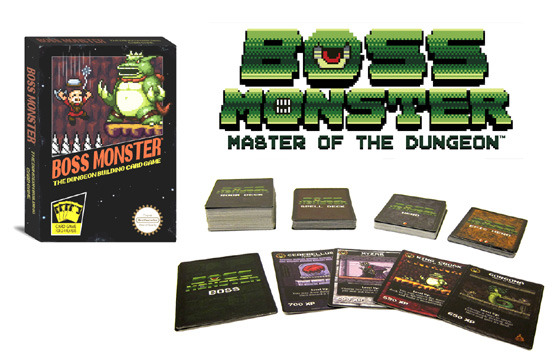
BOSS MONSTER

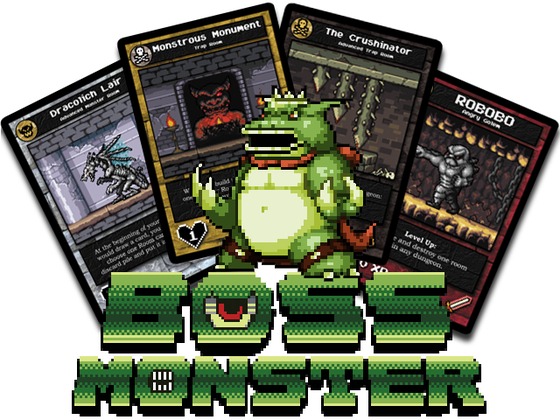
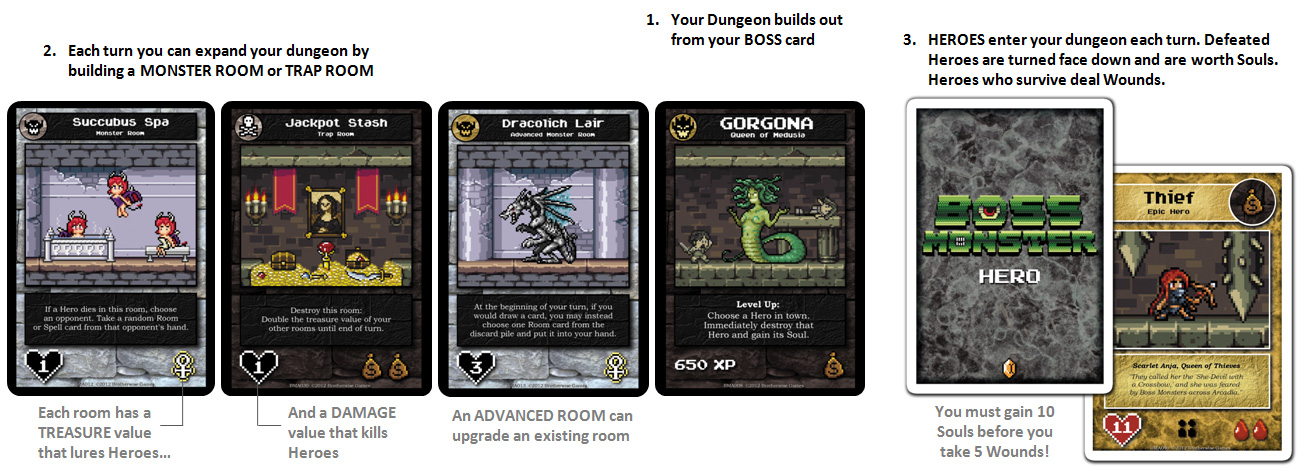
BOSS MONSTER casts you as the beast at the end of an 8-bit side-scrolling dungeon. Your goal? To build a dungeon appealing enough to lure foolish adventurers and deadly enough to destroy them. Of course, all of the other players are monsters with dungeons of their own! As someone who played a lot of Ghosts & Goblins as a kid and who likes games about unhappy endings, I’ve been having a lot of fun with my review copy of Boss Monster, and I look forward to playing the final game. Check it out!

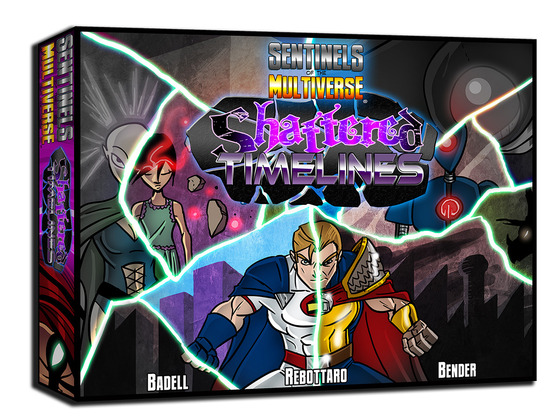
SENTINELS OF THE MULTIVERSE: SHATTERED TIMELINES

Sentinels of the Multiverse is an excellent cooperative game in which players take on the roles of superheroes teaming up to foil the plans of a nefarious villain. The game’s a lot of fun, and as a comic geek I love the degree to which the designers have developed the universe behind the game; cards include quotes from different issues of fictional comics, and if you lay them all out you can piece together the long-term arcs behind them. Shattered Timelines is the latest expansion for the game, but the Kickstarter also offers you an opportunity to pick up the basic game and various promo cards.

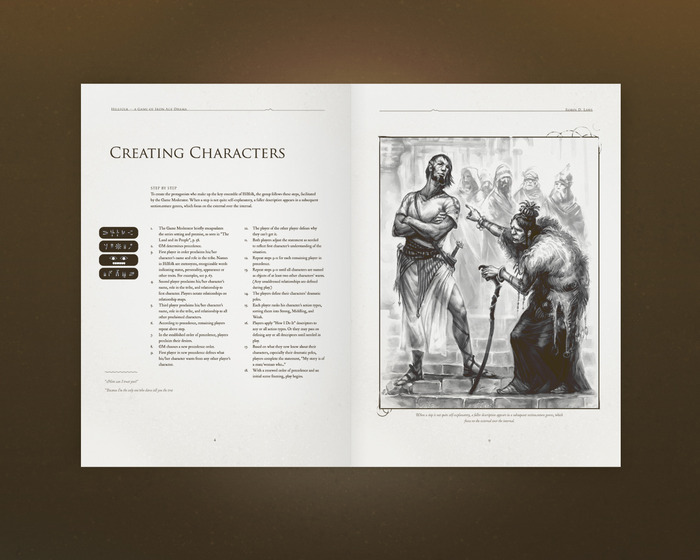
HILLFOLK: DRAMASYSTEM ROLEPLAYING

Hillfolk: DramaSystem Roleplaying is a must for anyone who enjoys compound words. Having said that, this is the latest project from RPG legend Robin D. Laws. You can hear a little more about the project from Robin himself in his Six Questions from last week. Thanks to the miracle of stretch goals, the main book will include a DramaSystem series pitch from me: Dreamspace, which I’ll describe as Stargate meets “The Dream-Quest of Unknown Kadath.” There’s only three days left in the Kickstarter, so if you’re interested get on board now!

CARNIVALE: THE MORGRAUR-RASHAAR

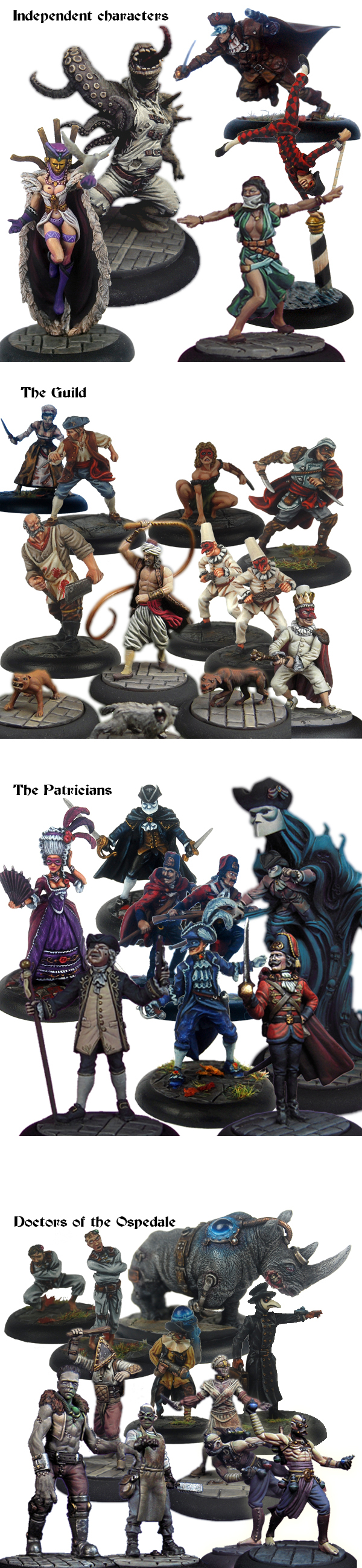
With only twelves hours left as of this writing, you may be too late to catch this one. However, if you enjoy miniatures wargaming, definitely check this out. Les Miserables meets Lovecraft in the canals of Venice! Mad scientists pit brain-transplanted rhinos against arrogant Patricians and the ancient Rashaar! For more information, check out the website here!  


Six Questions: Lee Moyer

I know a lot of interesting people. Some I’ve worked with, some I’ve met while traveling the world, some just owe me money. My name may be on the website, but it seems kind of boring if I’m the only person whose voice is heard here. So I’m bringing some of my friends to the site, as time permits. I’m not a podcasty kind of guy, so I’m just keeping things simple: one guest, six questions.

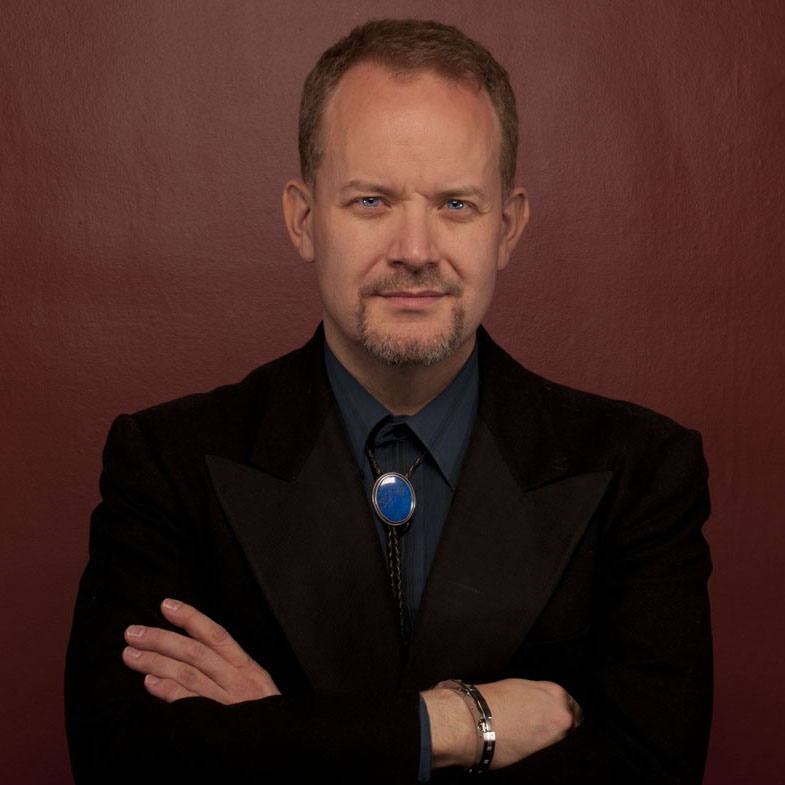
My next guest is Chesley Award winning illustrator, designer and art director LEE MOYER. You may have encountered his work in any one of the numerous RPG sourcebooks or card games he’s worked on, or in such diverse places as the National Zoo and the Smithsonian’s Natural History Museum. You’ve probably seen some of his posters or book covers; one of my personal favorites is the poster/cover he created for the silent movie of Call of Cthulhu. Lee and I have collaborated on a wide range of projects over the years; thanks to him, I’m on collectible trading cards in Mythos and On The Edge. Recently he just finished work on Check These Out 2013, a literary pin-up calender (his second) created in coordination with author Patrick Rothfuss’s Worldbuilders charity.

We’ve collaborated on many projects over the last twenty years. What’s your personal favorite?

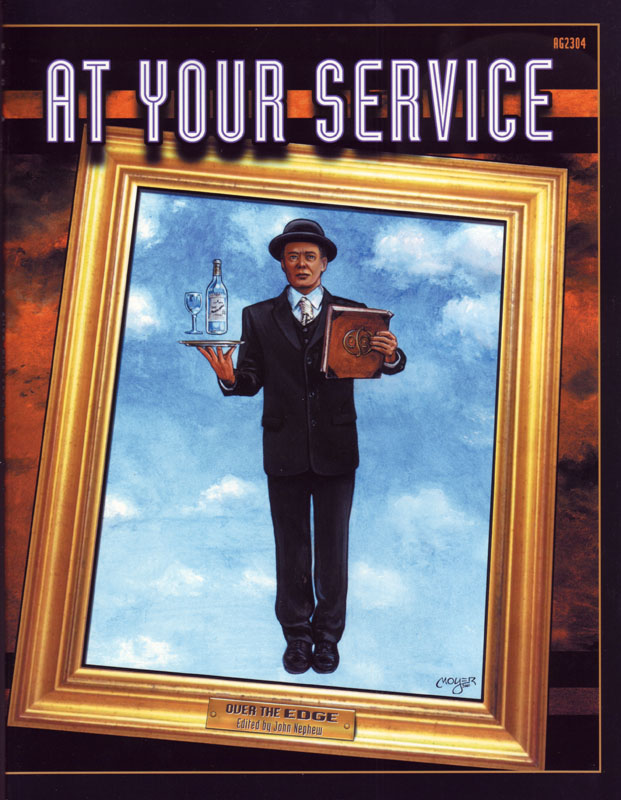
At Your ServiceAt Your Service – A sourcebook for the brilliant Over the Edge RPG.

This compendium of Mediterranean madness is not entirely our work of course (the redoubtable Doc Cross, Joughin & Spey, Neil Laughlin, and the Nephews joined in), but still holds a place of pride for me. As happy as I am with the wraparound cover design, illustrations, map, and logo I designed therein, our collaborations are what I most enjoy. Some highlights? It’s all highlights! The Midwich Family inside the Rose Hotel with their appropriate homage to John Wyndham and anagrams; the Lakshmis and the surprising appearance of an angry Lo Pan; the secrets of Marzipan and Morphine and its Painter of Light and Darkness ™; Gernsbach and Malloy who haven’t both been good guys since The Mask of Dimitrios, The Old Sods Club transporting the Junior Ganymede to Al Amarja: a voodoo-infused gang of nadsat malchicks too cool for skolliwoll; the mysterious shrieking prayer wheels of the Wind Farm; and the possible romance between a fallen angel and an accidentally incarnadine Golem: that adorable little girl from Venus; A macaroni factory that never made macaroni; and a restaurant that serves only fortune cookies.

Any similarities I might bear to Rose Hotel resident Dr. James Harris is a case of life imitating art, not the other way around.

What’s the story behind Check These Out? Why Literary Pin-Ups?

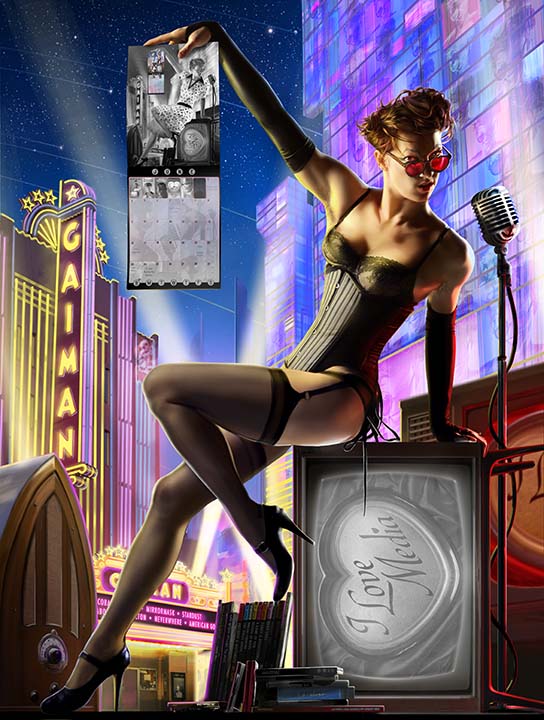
Check This Out: GaimanMy pin-up style poster for Moby Dick! The Musical proved the most popular piece I’d ever painted. I was surprised by the overwhelmingly positive reaction, especially among women, who were if anything more effusive than men. The more I thought about it, the more I wanted to bring old-school pin-ups back in the service of something well worth advertising: Literacy! I wanted to honor the old, but freak the system from within if I could. The strictures placed on the early greats (George Petty, Gil Elvgren, Joyce Ballantyne, et al) could be ignored. I hope that what I’ve done with books, tattoos, ethnicities, muscles, humanity and even underarm hair pushes the stale old envelope in interesting ways.

Representing authors living and dead is a great challenge and honor (Ray Bradbury was my hero growing up, and his inclusion here still feels miraculous to me).

And it’s all for the amazing charity Heifer International!

You can pre-order them here!

Which pin-up was the most challenging, and which was the easiest for you?

Most Challenging: Neil Gaiman  

Why? Having a model before having a concept is unusual. Knowing that Amanda Palmer was the model, who among Neil’s roster of splendid characters, would we cast her as? Yvaine?  Coraline? Door? Delirium? Death warmed over? No. Amanda had been saying (and showing) for years that she WAS Media and who was I to disagree? And how does one show the fractal omnipresence of Media – with a very complicated and recursive image. And how would we arrange to get the reference shots we needed in a timely fashion? Happily I was invited to Readercon in Boston this year, and so was my friend, photographer extraordinaire Kyle Cassidy who’d already scheduled a shoot with his old chum Amanda in the window of time we’d need. But she didn’t have the time or costume for the second costume reference we needed. So I shot Venetia Charles in a Busytown costume that we borrowed from my friends and clients The Northwest Childrens Theatre. And to create the comic strip that fills most of the first week of June, I had to get more hints from Neil about what Shadow himself should look like. And then do the comic strip!

It was complicated. But as with most complicated projects, also deeply rewarding. Going in, I would never have even imagined doing an American Gods comic…. Easiest: Terry Pratchett

If I told you we’d shot Seth Green’s wife, that wouldn’t sound so good, would it?

But it’s true.

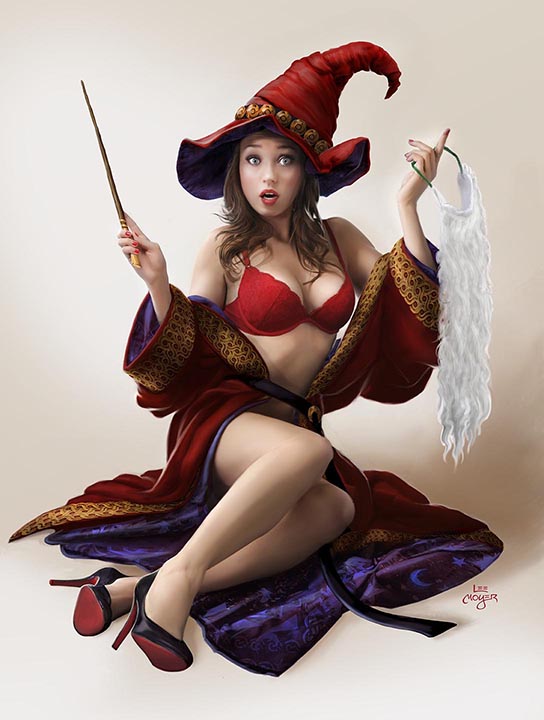
We went to LA and had the talented Allan Amato shoot reference photos of the Team Unicorn’s own Clare Grant. She was not only talented, but maybe the only model who comes with a large selection of wands to choose from (in addition to the big fluffy old bath robe I’d requested). The reference shoot was surreally short and the painting was very straightforward, in part because Terry Pratchett hadn’t asked for a specific character. So, as with Ray Bradbury and all the classic authors of the 2012 calendar, I had the leeway to paint an old-school pin-up in the Gil Elvgren tradition.

If you were trapped on a remote asteroid with only three pieces of your artwork for company, which would you choose?

1. 2013 Check These Out – Literary Pin-Up Calendar (See the previous questions)

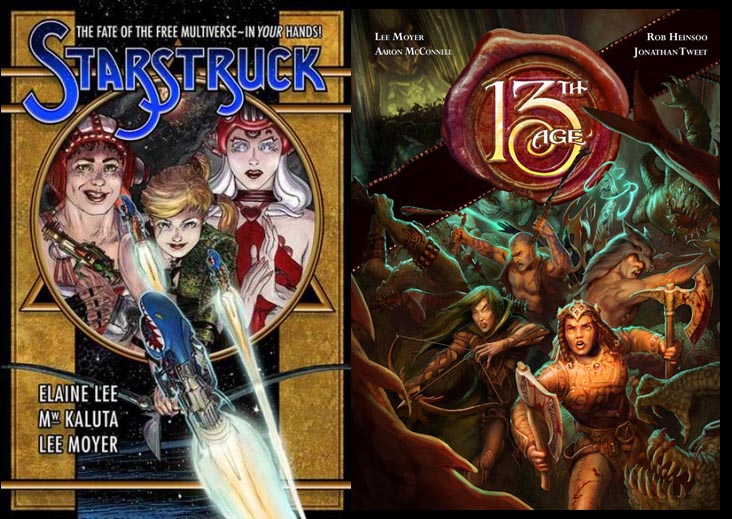
2. Starstruck – I spent more than a year painting over the sublime inkwork of Michael Wm. Kaluta

3. 13th Age – the RPG I’ve just completed with Rob Heinsoo and Jonathan Tweet and Aaron McConnell.

Oh, you just mean artwork?

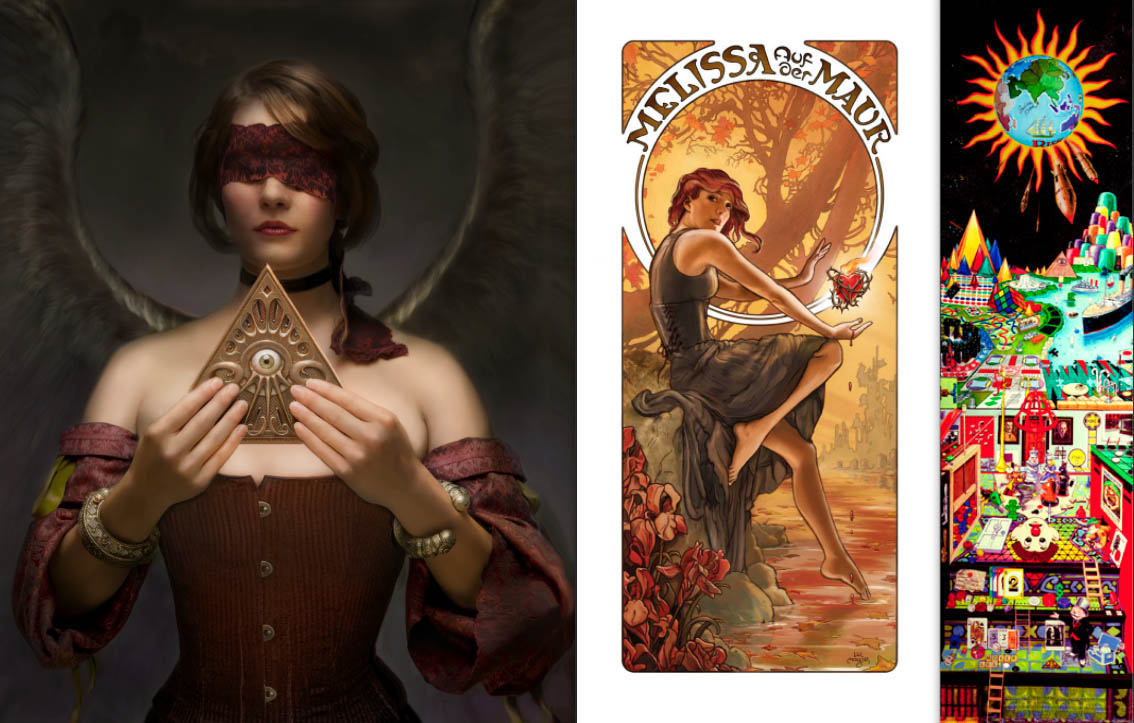
Given a choice, I would much rather be trapped with three pieces of someone else’s artwork – like the Paul Komoda sculptures, Stephen Hickman painting and all those Mucha prints that grace my living space. But if it absolutely has to be my artwork, the clearest choice is Theora. This good luck charm was created by the quixotic urging of photographer Kyle Cassidy with the help of model and costumer Megan Skye Hale. Art Director (and Hugo-winning Author) Mary Robinette Kowal placed it on the cover of Weird Tales, which in turn won me the 2012 Chesley Award for best magazine cover. My Art Nouveau poster for Smashing Pumpkins and Hole bassist Melissa Auf de Mar would probably come next – not least because we signed it with Sandman artist Michael Zulli’s accidentally-purloined (and clearly magical) pencil. And then, there’s the tall thin mural call Past Go which features lots of great games (from Dark Omens to Cosmic Wimpout) in one comparatively small space. It was commissioned for Looney Labs World Headquarters, and the gala at its premiere is one I’ll always remember. 

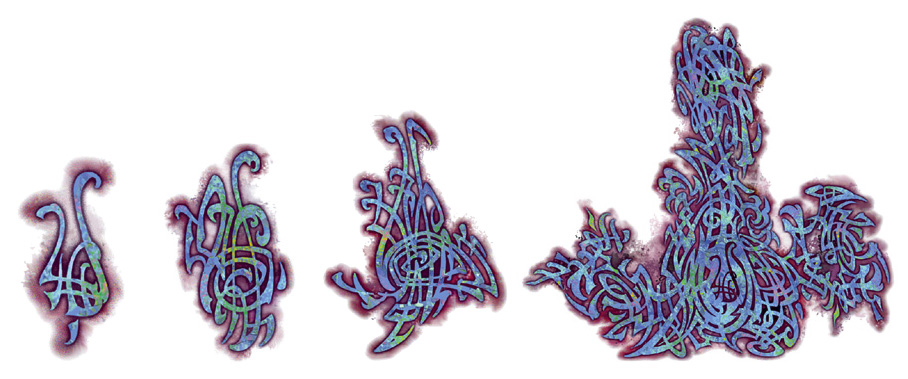
You’ve designed many of the most iconic symbols in Eberron, from the mask of the Undying Court to the symbol of the Silver Flame. You created the most important symbols of all: the thirteen dragonmarks. How did you come up with the look and feel of the Dragonmarks?

Art Director Robert Rapier had some very clear notions about what he wanted, and the colors and tones outside the designs were all him. But the biggest influence of the designs themselves came from Katherine Hanna. She and I had lived together for many years in Virginia and I was deeply familiar with a style of drawing she used wherein the shapes were indicated with short curvilinear line segments. While the lines I used were generally longer, more contiguous, and arguably more Nouveau-inspired, it was her example that stayed with me.

Can I stray for a moment here and talk about how happy I was to finally be able to map Eberron properly in the 4th edition books? What’s next?

A couple book covers for Pyr and Subterranean Press.

A painting for the wondrous Kennedy School. I don’t yet know exactly where it will be placed, but it cant be much more than 50 paces from where you (that is, Keith) got married!

Lots of travel. Two splendid Art Guest of Honor gigs: One at Norwescon (Seattle in March), the other at Keycon (Winnipeg in May); a seminar or two in Roanoke Virginia next summer; a trip to Brighton in a year’s time for World Fantasy Con; and the yearly choice twixt Readercon and the almighty San Diego Comic Con.

A Kickstarter more peculiar than any yet. It bears the tentative title of “There and Back Again” and promises excitement and adventure and really wild things! More details soon (I hope).

And lest I forget, a holiday card that I hope will answer all those difficult questions about Santa, temporality and causality.

A Few Of My Favorite Things: Novels

For the last few months I’ve been doing my best to post a weekly Eberron Q&A. I’m going to continue to write these Dragonmarks, but as I am developing a new fantasy setting, I’m going to mix Eberron posts up with discussion of the new world and more general topics. This question seems like a good bridge, as it applies both to Eberron and the work I’ll be doing in the future.

What are your all-time favorite novels, and have they significantly influenced your work?

I read a great deal as a kid. J.R.R. Tolkien and Edgar Rice Burroughs; Oz, Wonderland, and Narnia; Douglas Adams and Robert Anton Wilson; I loved them all. Narrowing it down to favorites is very difficult, because there’s so many stories that I love. It helps that you say “novels”, but I’ll note that something that has definitely influenced my work is mythology and folklore. As a child I read all the myths I could find. When other kids wanted to play Cops & Robbers, I convinced them to play Egyptian vs Greek Gods. From stories of Baba Yaga and the Brothers Grimm to The One Thousand and One Nights, I loved reading the stories that shaped beliefs and cultures, and I definitely think that this has affected my work. So I’m going to focus on novels—mostly—but if you don’t know your folklore, give it a try.

As for novels… in the interests of not having an infinite list, I’m picking ten. These are books I definitely want to have in whatever the media of the day is for the rest of my life.

Night’s Master by Tanith Lee

Take the lyrical style and interwoven stories of The Thousand and One Nights and set it in a world we’ve never seen. I don’t know if I can point to a specific place where the Tales from the Flat Earth have affected my work, but I love the flavor of her world; there’s certainly a touch of the demons of the Underearth in my portrayal of Quori and Daelkyr.

The Big Sleep by Raymond Chandler

Honestly, I prefer the movie version of The Maltese Falcon to the book, but there’s no comparison when it comes to The Big Sleep. Looking for inspiration for a story set in Sharn? Make Eddie Mars a Boromar halfling, Phillip Marlowe a Tharashk excoriate, and you’re halfway there.

Last Call by Tim Powers

Tarot and the legend of the Fisher King meets Bugsy Siegel and the story of Las Vegas. As someone who loves both magic and games, I enjoy the way this story weaves poker and tarot together. Declarea cold war espionage novel that deals with radio telegraphy and djinni—comes as a close second.

A Game of Thrones by George R. R. Martin

I love the way that Martin creates a world that feels as though it could be real, and the degree to which most of his characters—albeit not all—feel human. Heroes have flaws, and villains at least have motivations we can understand. My interest has dropped a little over the last few books, and I wish Martin would take a page from Eddings or Tepper—end this story arc in a satisfying way, and then tell OTHER stories set in the world as opposed to having the single story that just refuses to come to any real conclusion. Nonetheless, it’s a fantastic series, and taken alone I love the first novel. If I were to point to an impact on Eberron, I suppose I’d say that it’s a world full of intrigues and one where good and evil aren’t always clear cut.

The Three Musketeers by Alexandre Dumas.

It’s a classic and surprisingly fun and easy to read. If you like Stephen Brust’s Phoenix Guards stories, you really should read the original. And setting aside the fact that it’s a classic pulp adventure, change the Musketeers to the Knights of Thrane and Richelieu to Krozen and you have another Eberron campaign ready to go!

American Gods by Neil Gaiman

I mentioned that I love mythology, right? Thus, it’s no surprise that I love Neil Gaiman’s exploration of gods lingering in the modern world. I don’t think there’s a particular impact from this in Eberron, but there are a few threads that are relevant to the new world I’m working on.

The Dictionary of the Khazars by Milorad Pavic

This is a story written in the form of not one, but three dictionaries whose entries describe a particular event. Aside from the novelty of the format, I love the flavor of the tales themselves—from Princess Ateh with her mirror that runs slow, to the chicken that laid a Tuesday. Again, not much impact on Eberron, really, but you’ll certainly see some of its influence in the new world.

The Tain, translated by Thomas Kinsella

The epic tale of Cuchulainn. The style is archaic, and you may find it awkward. Personally, I love the way that style captures the flavor of the culture; as one reviewer says, you can imagine a bard telling the tale in a smoky hall. If you enjoyed, say, Crouching Tiger Hidden Dragon, you might be surprised by the martial exploits of Cuchulainn and his Celtic comrades; the warriors of the tales can leap atop an opponent’s thrown javelin, or catch it midflight and fling it back at the enemy. Certainly if you’re looking for inspiration for using, say, The Book of Nine Swords, The Tain will give you a host of ideas.

Phillip K. Dick

While the question was “novels”, the fact of the matter is that Phillip K. Dick is one of my favorite authors of all time, yet I prefer his short stories to his novels. His ideas are brilliant, and I love the way he questions memory and identity, but often an idea can be captured perfectly well in a short piece. I also appreciate the fact that he’s not afraid to have a story end poorly for the protagonist—something the movies based on his work often forget. “Second Variety”, “Minority Report”, “We Can Remember It For You Wholesale”, and “Imposter” are great places to start (in part to contrast them to the movies that they’ve spawned), but it’s hard to go wrong with his short stories. Lei, Thorn, and Pierce are perhaps characters that are especially influenced by Dick, but his fingerprints are all over my brain.

H.P. Lovecraft

Likewise, it’s not a novel, but if I’m talking about literary influences it would be ridiculous to leave Lovecraft off of it. Lovecraft is scattered throughout Eberron, from the cosmic threat of the Overlords and the decaying families of the Shadow Marches and the horrors of the Daelkyr. And The Dream-Quest of Unknown Kadath” surely played some role in my love of dream adventuring and the appearance of the Quori. Other favorite stories include “The Shadow Over Innsmouth” and “The Whisperer in Darkness”… but again, it’s hard to go wrong here.

As I said, those are ten things I know I will read again tomorrow, and that I want to make sure stay on my shelf. But there’s so many other authors and stories that I’ve loved. Just for the swift honorable mention:

  • Michael Moorcock. As a latchkey kid, I grew up with Elric and Corum. I loved the stories of cursed swords and doomed heroes, and the battle between all-to-often distant order and sardonic chaos. If this affected my work in some way, I think it set in my mind that things don’t always have to end well for the heroes; even if they save the world, all too often there is a terrible price for power or victory.
  • Jack Vance. If you’ve heard the term “Vancian Magic” and don’t know what it means, you should read Jack Vance’s Dying Earth books just for that. Beyond that, though, I love the untraditional approach of Vance’s fantasy. His Cugel isn’t a fighter or a wizard, and the challenges he faces and the ways he overcomes them are as clever as they are often bizarre. The Cugel stories have a unique cadence and style, and if you don’t enjoy it they probably aren’t going to be good books for you—but you should definitely give them a try. While you’re at it, check out Robin D. Law’s Dying Earth RPG!
  • William Gibson. While his latest books haven’t really grabbed me, Neuromancer kicked off my love affair with the cyberpunk genre, and it still holds up for me today.
  • Neal Stephenson. I started with Snow Crash, and that’s still an awesome read. However, anything he writes is sure to be interesting.
  • Sherri S. Tepper. The True Game books have flaws. However, they are quick and easy to read, and I like the flavor and culture that she builds around the talents. It’s something that could easily go farther and deeper, but as a quick read, I enjoy it.
  • Stephen Brust. As with Tepper, I wouldn’t put Brust’s books on my all-time classics list. But they’re fun. What I also enjoy is the way that he shows the impact of magic on a civilization over time – with the Khaavren books showing a society where magic is just beginning to play a role, and the Taltos books taking things to a place where teleportation and resurrection are everyday things. Again, not the best books out there, but quick reading and fun to explore.
  • Fritz Lieber. I give you this line from Swords Against Death: “In the Cold Waste they sought for Fafhrd’s Snow Clan, only to discover that it had been last year overwhelmed by a lemming horde of Ice Gnomes, and according to best rumor, massacred to the last person…”
  • P.G. Wodehouse. I don’t think he’s had any impact on any of my work except possibly Gloom, but I love me some Bertie and Jeeves.

A few more honorable mentions: The Black Company by Glenn Cook; Foucault’s Pendulum by Umberto Eco; Ender’s Game by Orson Scott Card; The Princess Bride by William Goldman; Cold Comfort Farm by Stella Gibbons. I just started rereading Good Omens at lunch, and I recently finished Redshirts. I’m sure I’ll think of another dozen books in an hour, but I think this will do for now.

How about all of you? What are some of your favorite novels, and what’s influenced your stories or adventures?

Six Questions: Robin D. Laws

I know a lot of interesting people. Some I’ve worked with, some I’ve met while traveling the world, some just owe me money. My name may be on the website, but it seems kind of boring if I’m the only person whose voice is heard here. So I’m bringing some of my friends to the site, as time permits. I’m not a podcasty kind of guy, so I’m just keeping things simple: one guest, six questions.

My next guest is ROBIN D. LAWS. One of the great RPG designers of our time, Robin has been an inspiration to me throughout my career. You may know him from Feng Shui, the GUMSHOE investigative roleplaying system, Heroquest, the Dying Earth RPG, or one of the other systems he’s designed. You may be familiar with his fiction or his podcast. You may have heard of his Kickstarter, Hillfolk. Or you may say “Robin Laws? Who’s that?” Let’s find out!

Your favorite director knocks on your door and says that he’s got a multi-million dollar budget to create a movie based on one of your games. Which would you want to see? Why?

I would recoil in dismay to see Howard Hawks, supposedly dead since 1977, standing before me in what would surely have to be undead glory. After returning the beloved director to the eternal rest some wretched nosferatu cruelly wrenched him from, with a jaunty, “I love your work, here’s a wooden stake to the heart,” I would retire, shaken, and perhaps drink a quantity of port.

To further reframe your question, because it would take me the next two weeks to pick a single favorite living director, I’ll instead up its grandiosity several notches and imagine than an entire gaggle of auteurs shows up at my door demanding to immortalize my games on celluloid. I would assign them as follows:

Feng Shui: John Woo (duh)

The Dying Earth: Michael Winterbottom

Rune: Michel Gondry

HeroQuest: Steven Soderbergh

The Esoterrorists: Kiyoshi Kurosawa (Pulse)

Fear Itself: David Cronenberg

Mutant City Blues: Juan J. Campanella (an Argentinean who made a great movie called The Secret in Their Eyes plus many episodes of Law & Order)

Ashen Stars: Duncan Jones

Hillfolk: Nicolas Winding Refn

You’re currently running a Kickstarter for Hillfolk, a game using the DramaSystem rules engine. What’s the story of Hillfolk, and what inspired you to create it?

Hillfolk was inspired by an observation that arose while creating the beat analysis system for understanding narrative rhythm, as seen in Hamlet’s Hit Points. The basic building blocks of story mostly divide into two main types of scene: the procedural, in which the characters face external, practical obstacles, and the dramatic, in which they seek emotional responses from others they care about. In roleplaying we’ve always done the first really well—knocking down doors, fighting monsters, piloting starships. The second, not so much. And when we have, we haven’t gone back to look at the simple basic structure underlying all such scenes and applied it to our form. So that’s what DramaSystem does—as it says on the tin, it keeps the spotlight squarely on drama, using a simple yet powerful dynamic to ensure story flow.

Tell me about the DramaSystem engine itself. What are its strengths? What’s your favorite aspect of the system? And are you a wolf or a lion?

The core of the game is a simple token economy that encourages you, in an emotional confrontation, to give in about half the time and to stand your ground the other half of the time. In a dramatic scene, you have a petitioner and a granter—someone who wants something from the other, and the other, who either grants the petition or refuses it. If you grant me what I want emotionally, you get a drama token as a reward. If you refuse me, I get a drama token as a consolation. Tokens grant additional narrative power—I can use them to force a concession from you, to block you when you try to force a concession from me, to jump or evade a scene, and so on.

This like not only drama, but life, which drama is based on. We have to accommodate the people we love and care about some of the time, because we are emotionally compelled to do so by our ties to them, for good or ill. This dynamic contrasts with the usual roleplaying tendency to see a character as extreme but one-dimensional, never giving in to any proposal that might conceivably contradict that portrayal. DramaSystem PCs are created as contradictions, torn between two Dramatic Poles, so that you can always plausibly pivot from one stance to another without feeling that you’re breaking character.

My favorite element of the system lies in the play it engenders—longform group storymaking with characters you remember and care about long after the series has ended. I care much more about the people populating my in-house Hillfolk playtest, or the later Greasepaint series, than any other group of characters the same group of characters have ever generated.

As for the clan question, I would never take sides in a… who am I kidding? Lion.

What’s the story behind The Birds?

 I was looking for a staple feature for my blog, and started doodling with a green marker, and before I knew it, these queasy verdant avians flew, guns in hand, into bleakly funny comic strip form. It’s a pure personal expression, and I’m as delighted to have those two collections in print as anything else I’ve done.

You’ve provided a wealth of advice to gamemasters over the years, which has been collected in places like Robin’s Laws of Good Gamemastering. If you were stranded on a desert island with only three pieces of system-neutral gaming advice, what would they be?

One, observe your players and gauge their reactions. (This principle would warn me against marauding pirates.)

Two, react to those observations to find the sweet spot of mutual creative gratification. (This would help me in negotiating with the pirates if I failed to evade them.)

Three, always be ready to jettison what you thought would happen in favor of what the players are making happen. (This would aid me in suddenly betraying the pirates and emerging as their new savage warlord.)

What’s next?

The Gaean Reach is a GUMSHOE/Skulduggery hybrid based on Jack Vance’s classic SF setting, as seen in the Demon Princes series and many other novels. The players seek interstellar vengeance against Quandos Vorn—a galactic supervillain whose abilities and crimes they collectively design themselves at the outset of play.

That’s in layout.

In the writing stage is Dreamhounds of Paris, a Trail of Cthulhu campaign sourcebook in collaboration with Kenneth Hite and Steve Dempsey. It is both our Paris book and our dreamlands book. You play the major figures of the surrealist movement after they discover that their dream-haunted, subversive art allows them to directly manipulate the people, places, and landscape of the dreamlands. Goodbye crystal cities, hello melting watches.

Also check out my recently-released fiction projects: the short horror story collection New Tales of the Yellow Sign, and my Pathfinder Tales novel, Blood of the City.


That’s all for this week! However, since Robin and I talked, I’ve jumped on board to write a series pitch for the DramaSystem engine. If the stretch goal is met, I’ll be contributing a scenario I’m calling Dreamspace to the book. “In the future, the only way to reach other worlds is through the underspace of the collective unconscious. You and your fellow oneironauts are the best of the best, but what will you find in the dreams of alien worlds?” Want to see more? Then check out the kickstarter!

Dragonmarks 10/18: Converting Eberron

I’m currently developing a new fantasy setting. I’ll be talking about this more in the months ahead, but one of the key elements is that I’m designing it to be system neutral. I will be launching with RPG support for at least one system, but unlike Eberron the world itself isn’t integrally tied to the mechanics of a particular RPG – and I want to make it as easy as possible for people to adapt the setting to the system of their choice. As this is a topic I’m wrestling with on a daily basis, it’s a great time to address questions about adapting Eberron to other systems.

If you are adapting Eberron to other systems, what is important to have mechanically? (besides dragonmarks and races)

It’s a difficult topic to address without knowing anything about the system in question. You could use Eberron with 13th Age, Dungeon World, or Dread – but obviously in a rules-light system like Dread, you’re going to approach the conversion in a very different way. I’m going to use Dread as an example throughout this article simply because it is so different from any edition of D&D. For those who aren’t familiar with it, in Dread characters are defined by a basic concept and the answers to a list of questions the gamemaster asks the players; they have no numerical statistics. All challenges are resolved through Jenga; when a person tries to do something that involves risk, the gamemaster decides how many tiles they must move in order to succeed.

So, I think your basic guide is the Ten Things You Need To Know About Eberron, found on page 4 of the 4E Eberron Campaign Guide and page 8 of the 3.5 Eberron Campaign Setting. I’m not going to go through all ten points, nor am I going to reprint the full text of a point, so you’ll want to refer to one of the books for full benefit.

  • Tone and attitude. Eberron “combines traditional medieval D&D fantasy with swashbuckling action and dark adventure.” This section mentions that we added action points to support this flavor – that they allow “players to alter the course of dramatic situations and have their characters accomplish the seemingly impossible.” Some systems out there already have something similar built in. If not, one option is to simply lift the 3.5 or 4E action point systems and use them as is – spend an action point to take an extra action, add an extra die, or do something remarkable. For Eberron Dread, I would give each player a token and allow them to use that token once to knock five pulls off of a particular action… which means most things are automatic, but as GM I do still have the ability to say “That’s a 20-pull action, but hey, it’s only 15 with your action point.”
  • A world of magic. Read what it says in the book. The key here is that magic is a part of everyday life. Magewrights are specialists who can cast a handful of spells or rituals, and who have turned that mastery into a job – the locksmith who can perform arcane lock and knock, the oracle who can cast augury and divination. A critical point here is that fully-powered wizards, artificers, and clerics are rare and remarkable; Eberron is a world of widespread low-level magic, and a magewright locksmith can’t simply pick up your spellbook and learn to cast fireball. For the most part this is about the world around the players and the services that are available to them. If the players are in Sharn they should be able to find an arcane locksmith, whether it’s D&D or Eberron Dread.
  • Dragonmark Dynasties. I know you said “besides dragonmarks”, but my point is that there’s more to dragonmarks than the simple mechanics of the mark itself. The dragonmarked houses are influential forces in society because of the magical services they offer. Even if no player character has a dragonmark, they’ll go to House Jorasco for healing, rely on Orien and Lyrandar for transportation, send a message through House Sivis, and take advantage of House Cannith’s services any time they purchase magical goods. House Tharashk’s powers are reflected in their presence in remote places – the fact that their gift allows them to locate veins of precious resources that would otherwise go undiscovered. To cut to the chase: when translating the world to a new system, don’t simply think about the dragonmarks as they will be used by the players; think about how you will represent the primary services and gifts of each house, and how PCs will feel the influence of those houses.

With both this and the previous point, I want to emphasize that if the RPG you’re using has its own magic system, feel free to dramatically change the services available or power of the mark. Don’t worry about directly mimicking the powers of the 3.5 Mark of Creation; consider how creation works within this system, and what magics exist that facilitate it. Then place those powers in the hands of House Cannith. Jorasco heals. Cannith creates. Sivis communicates. The precise powers they wield don’t have to be identical from system to system, as long as they are the masters of those fields.

  • The Last War has ended… sort of. The impact of the war is one of the most fundamental themes of Eberron. Mechanics aside, you should always consider the impact the war has had on your characters and plot. Mechanically, are their any aspects of the system that lend themselves to magical weapons of mass destruction or other things that would have been harnessed to the war effort?

There are many other points you could consider; for example, I will look at the influence of the planes, and the effect of manifest zones, coterminous and remote periods, and the like. However, this isn’t as important as those basic ten points; review that list, and if you feel like you’ve got them covered, you’re on solid ground.

Of course, one of those ten points is “new races.” So…

If creating homebrew Warforged, Kalashtar, Shifters, or Changelings in other systems, what about each race should I focus on?

It’s a difficult question to answer without addressing a particular system, but here’s my take on the core of each race.

  • Warforged. The warforged are constructs. They don’t eat, breathe, or sleep. A warforged soldier is a weapon; his armor is fused to his body. It’s up to you how far to take the construct element. 3.5 provided the warforged with a host of immunities, while 4E scaled them back. Regardless, durability is a core theme: the warforged are bad from leather and steel, and have fewer vital points than a human. A second thing to consider is that the warforged are magical beings; they are living constructs and can evolve beyond their original design. A warforged juggernaut literally grows heavier armor and spikes. While it may not come up in a game, another key fact is that the warforged cannot reproduce; there’s a finite number of them, and if they want to thrive as a race, this is something that will need to be addressed.
  • Kalashtar. A kalashtar shares its mind with an alien spirit. This allows it to resist psychic attacks and enhances its personal psychic abilities. If you’re not using a system that supports psionics, you can mimic this with other forms of magic, or simply emulate it by granting the kalashtar the ability to form simple mindlinks, bonuses to checks to influence people, and the like. At lest it go without saying, kalashtar don’t dream normally.
  • Shifters. I wouldn’t worry about the precise shifter abilities presented in either book as much as I’d try to capture the basic idea of the shifter: a being with a strong primal spirit, who can call its animalistic nature to the fore for a brief period of time. The primal characters fit shifter nature quite well; the druid’s ability to shapeshift is an extension of its inherent nature, while the barbarian calls on feral instinct to fuel his rage. When looking to civilized shifters, it’s a question of how they harness that animalistic spirit for their urban endeavors, and whether they feel trapped in the city or have adapted to it like a rat. But in short, animalistic characteristics that can be enhanced for a brief period of time.
  • Changelings. Obviously the first challenge is the shapeshifting ability, and making it work without unbalancing your game. Note that by default it doesn’t change clothes. Beyond this, changelings are related to doppelgangers (or are one and the same, if you’re using 4E) and as such has a latent gift for telepathy; in 3.5 this is reflected by their bonuses to Bluff and Insight, as they are capable of subconsciously picking up surface thoughts and using them to influence people.

All of this really just scratches the surface; the warforged Dragonshards, Kalashtar DDI article, and other resources delve more into what defines each race. But these are some key things I’d take into account when converting the race.

Are you using Eberron with a system other than Dungeons & Dragons? Tell me what you’re using and what you’ve done with it!

Six Questions: Don Bassingthwaite

I know a lot of interesting people. Some I’ve worked with, some I’ve met while traveling the world, some just owe me money. My name may be on the website, but it seems kind of boring if I’m the only person whose voice is heard here. So I’m bringing some of my friends to the site, as time permits. I’m not a podcasty kind of guy, so I’m just keeping things simple: one guest, six questions.

My second guest is DON BASSINGTHWAITE. He’s the author of seventeen fantasy novels, including The Dragon Below and Legacy of Dhakaan trilogies for Eberron. He’s also written numerous short stories, including “Too Much Is Never Enough” in the cyberpunk compilation Foreshadows: The Ghosts of Zerowhere you’ll also find a story by yours truly!

So, Don—what’s your story?

Do you mean why do I write or who am I overall?

I was born in small-town Ontario, grew up a hugely geeky kid, started my last year of high school preparing to go into science at university, switched to humanities for my first year, then discovered anthropology and switched to that second year because I knew I wanted to channel my geekiness into writing and anthropology is just more inspiring than English. I’m now a hugely geeky adult who gets paid to write (I know!) and work with books in my day job as well (I know!). All my current novels are RPG tie-ins so far, but I still have my eye on finally getting something original published.

Why do I write? Because I enjoy it. Because I like making stories out of things. Because I enjoy submerging myself in imagination.

In both of your Eberron trilogies, you’ve invested a significant amount of energy into developing languages. Why do you feel this is important, and what’s your process as you do it? What’s your favorite Goblin proverb?

Partly it grows out of my background in anthropology. Language is a key aspect of culture so using words and phrases out of another “language” makes a fantasy culture feel more real for me. It can be as small as a throwaway name for a plant or something bigger like abstract concepts. Language can suggest how interactions work between speakers (degrees of formality, for example) or the history between groups (conquest or trading or even just isolation changes languages). Just the sounds a language uses suggests something about its speakers to a reader.

The process pretty much depends on how rigorous I want to be and what I want to accomplish. For The Dragon Below trilogy, I worked out a basic grammar for the savage Bonetree clan because I wanted to be able to emphasize from the beginning that while they were human, they came from a very different, much more isolated background than more civilized characters – I wrote whole (short!) conversations in their language. For Legacy of Dhakaan, I built on previus sources and kept things simpler with just a lexicon of Goblin words and enough general ideas about the language to string pithy proverbs together consistently. With the goblins, I wanted to establish a baseline of familiarity, then blow that up with something startling to say “Hey, remember that these are goblins. They’re monsters.” I actually think the second approach worked better overall.

Favorite Goblin proverb? “Je’shaarat mi paa kotanaa” – A sharp sword hurts less when you fall on it.

If you were Dhakaani, would you be a goblin, hobgoblin, or bugbear? Why?

Goblin. I like the pride of hobgoblins and the brute savagery of bugbears, but there’s something really enjoyably sinister about Dhakaani goblins. In my mind, they thrive on cunning, they’re small and stealthy, and everybody under estimates them. If there was one character from Legacy of Dhakaan I’d love to go back and explore, it would be Chetiin, the old goblin assassin. He’s likable and honorable, but also very ruthless.

How did you develop your original cast for The Binding Stone? Why did you decide to make Geth a shifter, for example?

That’s going back a long way! My character development process is kind of free form but a lot of the choices I made were about picking out the pieces of the Eberron setting (then still under-development) that really appealed to me, then building those into the story. To use Geth as an example: Aside from shifters being more common in the rather wild region where the story began, I liked the duality of control versus savagery that shifters represent, and I felt like I wanted a character who was all action but not necessarily too smart.

That and typical shifter abilities grew into Geth’s style of fighting and his signature weapon (the great-gauntlet that is both weapon and light armor). Then it became a question of where did he get that weapon and why is he still in this wild, somewhat isolated region instead of elsewhere in the world – and that led to his background as a mercenary veteran on the run from his past and that led to the former friend who became one of the other protagonists in the book, Singe, the swordsman/fire wizard who is Geth’s foil because he is smart.

What’s a story that’s inspired you?

You mean stories rather than novels, right? And just one?? Okay, if I restrict myself just to stories and cheat a bit by naming two, I’d say Fritz Leiber’s “Ill Met in Lankhmar” and Tanith Lee’s “Red as Blood.”

“Ill Met in Lankhmar” is brilliant because it expresses both a whole setting (the city of Lankhmar) and a saga (of Fafhrd and the Gray Mouser). It stands on its own but it’s the foundation for so much more. Plus it’s got a great solid fantasy feel. It’s real.

“Red as Blood” is almost the opposite because it’s very dreamlike and unreal, and Tanith Lee’s style of writing is so lush and rich. It’s a story that stands completely on its own. For me, I think it was inspiring because it was one of the first examples I read of something that took the familiar (the story of Snow White) and turned it completely around.

What’s next?

I’m not actually sure. I don’t have anything under contract at the moment but I’ve been saying for years that I want to get something original written and now I’m kicking around ideas. It might end up being a break for writing sword and sorcery style fantasy to try something different, or it might not. The problem with writing something original is that there are just so many possibilities, it can be hard to pick one and just work on it!

Meltdown Celebrity D&D 2013: Penance

On Saturday, October 13th Satine Phoenix and Meltdown Comics are hosting a Celebrity Dungeons & Dragons event in Los Angeles to raise money for the children’s literacy charity Reach Out and Read. Three tables of players will go throughPenance; I wrote this adventure and will be running one of the tables tomorrow. And you can be a part of it!

There’s three ways for you to get involved:

Watch the Games! The adventure begins at 1 PM Pacific Standard Time on Saturday, October 13th. For a small donation to Reach Out and Read, you can watch live streams of the three tables & chat with your fellow viewers. To get in on the stream, go to Meltdown Comics between Noon and Six PM Pacific time on Saturday. The links will not be active until noon, so if you go to the site and don’t see anything about the game, check back!

Buy Games! During the event, a handful of games from Wizards of the Coast will be available on the Meltdown website. If you purchase one of these special games, the proceeds will go to Reach Out & Read, and you can have your game personalized by any or all of the participants!

Get the Adventure! Like what you see? With a donation to Reach Out And Read, you can download a copy of the Penance PDF so you can run it at home! The adventure will only be available on the Meltdown site from 12 PM to 6 PM, so if you want it, make sure to be online!

Participants include:

– Javier Grillo-Marxauch, creator of The Middleman – one of my favorite shows!

– Jason Charles Miller: actor and frontman for Godhead!

David Nett, the mind behind the webseries Gold.

– Sandra “Sex Nerd” Dougherty

– Hot rod artist Coop

And many more! Adam Levermore! Matthew Mercer! Sax Carr! Check here for the full list!

This event is not administrated, sponsored, or endorsed by Wizards of the Coast.


Six Questions: Andrew Looney

I know a lot of interesting people. Some I’ve worked with, some I’ve met while traveling the world, some just owe me money. My name may be on the website, but it seems kind of boring if I’m the only person whose voice is heard here. So I’m bringing some of my friends to the site, as time permits. I’m not a podcasty kind of guy, so I’m just keeping things simple: one guest, six questions.

I’m kicking this off with ANDREW LOONEY. He’s best known as the creator of Fluxx, a crazy card game about change (and the foundation for my recent release, Cthulhu Fluxx). Andy founded Looney Labs with his wife Kristin, and he’s the designer of just about everything the company has published. He’s also a former NASA programmer, a starship captain, a hippie, and the Emperor of the Universe.

So, Andy—what’s your Goal?
Our Company’s official mission is To Create Fun, and everybody knows that All You Need is Love, so I win if I have Love and Fun on the table in front of me. And Chocolate.

What’s with all the pyramids?
Pyramids are cool. I dunno, I’ve just always liked them. Then I had this vision of a game set using elongated pyramids, and the obsession really took off. I can’t explain it any more than that.

What’s your favorite game you didn’t create?
Hearts. I’m also a big fan of Texas Hold’em. And I’d like to give an Honorable Mention to Homeworlds, which is my favorite game for the Looney Pyramids that I didn’t invent (but which still seems disqualified because it uses my pyramids).

If you had a time machine for 24 hours (of time as you experience it), what would you do with it?
Great question! The way you’ve asked it makes me assume that I can make as many timejumps as a want as long as return the machine to it’s owner at the end of the 24 hour rental. Assuming I also have precise targeting, I’d just hit the “road” and see as many temporal sites as I could jam into those 24 hours. I’d just be a tourist — I think I’d be too afraid of unintended consequences to want to change history, and where would you even start? Saving John Lennon? Stopping 9-11? Killing Hitler? Unsinking the Titanic? In Chrononauts I also start by saving John, but with all of history to unravel I think I’d be afraid to do anything but look, as unobtrusively as possible. But to get specific, here are some I’d punch in right away:
• I’d visit the New York World’s Fair on the same spring day in 1965 when I attended as a baby. Ideally, I’d find my family at the Futurama and we’d have a Back to the Future moment.
• I’d go to Disneyland on July 20, 1969 and watch the crowd at Tomorrowland as they hear news of Apollo-11.
• Of course, I’d have to visit the future: 5 years, 10 years, 100 years ahead. I think I’d probably end up spending most of my time looking ahead, much as I’m also fascinated by the past.
• I’d look myself up when I was about 15, and tell myself a few choice bits of advice. I’d pass myself off as second cousin of one of my uncles, or something. But I’d be afraid of telling myself too much, again fearing the paradoxes.
• I’d like to watch an atomic bomb test, from a safe distance of course.
• Who am I kidding? Of course I’d have to save John Lennon!

What don’t we know?
I think the more important question is, what do we THINK we know that we are actually totally wrong about?

What’s next?
Fluxx: The Board Game! It’s gonna be big! No, really, the box will be huge compared to the boxes we usually make! Anyway, it’s very exciting. It’s playtesting really well, so look for it sometime in 2013!

That’s it for this episode! If you have more questions for Andy, go ahead and post them here. I can’t promise he’ll ANSWER any of them, but hey, it’s worth a shot!