Eberron turns Thirteen!

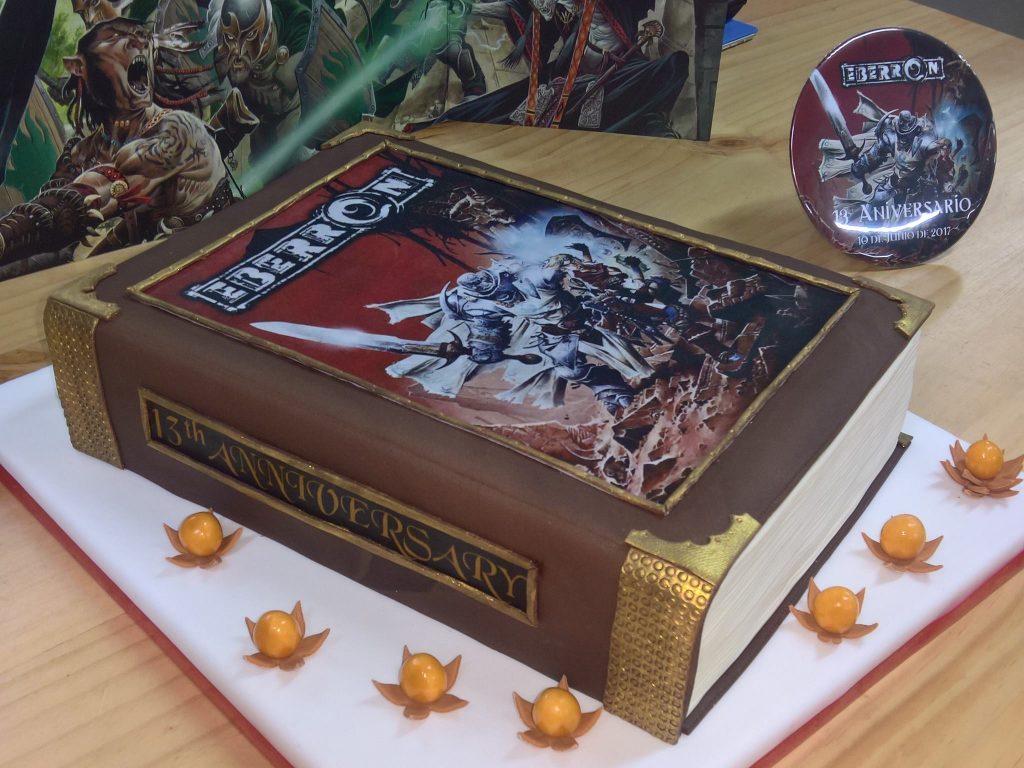
I first began working on Eberron in 2002, but the Eberron Campaign Setting was released in June of 2004. So the setting has just turned thirteen, and anyone who knows Eberron will know that thirteen is a number with special significance. There are thirteen planes, thirteen moons, thirteen dragonmarks… although all too often, one of these thirteen is destroyed or lost. While here in the United States we’re still waiting for Eberron to be unlocked for 5E, a gaming community in Peru organized a month-long Eberron celebration in honor of its 13th anniversary. The tome pictured above is a cake produced for that celebration, and it is one of the most fantastic things I’ve ever seen.
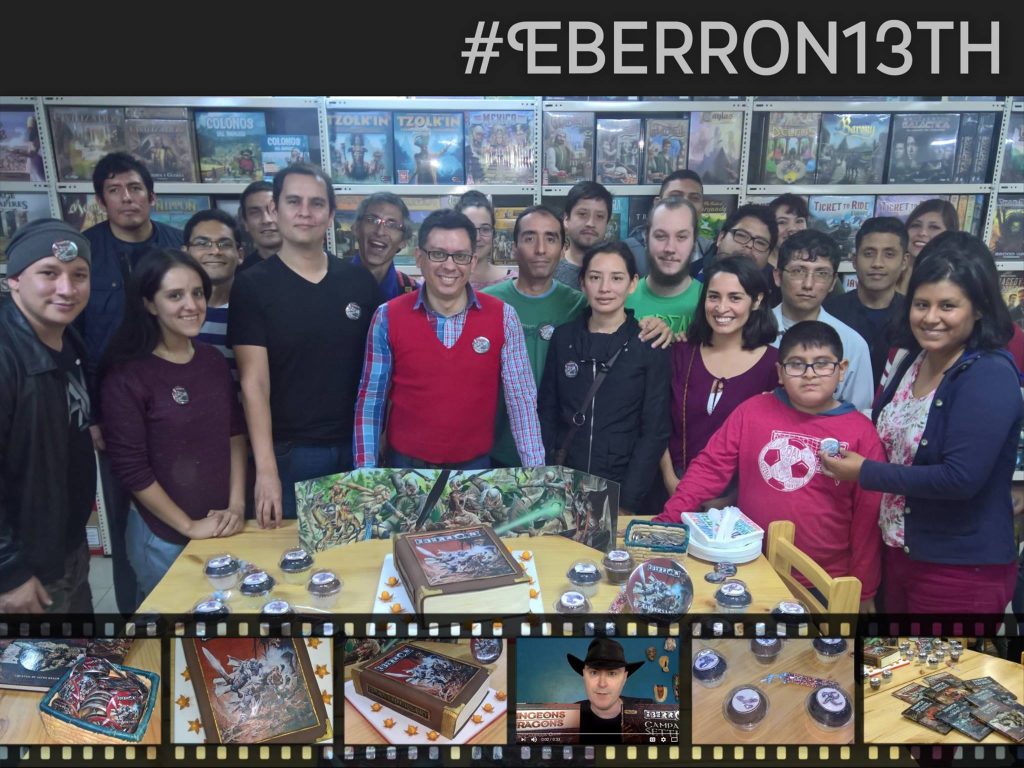
While I couldn’t make it to Peru for the party, I did appear in video form, and I promised to answer a question chosen by the group. I’ll get to that at the end of this post, but before I do I wanted to take a moment to thank all of you who have kept Eberron alive for the past thirteen years. I hope that we will see Eberron officially revived for 5E, but until that time it means a great deal to me that there are still those of you out there who are enjoying the world. My favorite thing about RPGs is the ability to create new stories — and I love that you are out there creating Eberron stories of your own.

At this time, I still have no official news about support for Eberron. I’ll continue to answer questions on this site, but I cannot produce new material here. With this in mind, I am and will be continuing to produce new setting material for my own RPG, Phoenix: Dawn Command. Even if you don’t play Phoenix, my hope is that you may find this material to be useful in your Eberron campaign. The main article I’ve produced is about The Fens, and this follow-up article talks about how you can use the Fens in Eberron.

With that said, there are many people working to keep Eberron alive, and I wanted to call out some of these. I am part of the monthly Manifest Zone podcast; each month we explore a particular aspect of the setting. On Facebook I’m aware of the Eberron Enthusiasts and Sages of Eberron groups, and beyond that The Piazza is the primary Eberron forum I keep an eye on. If you’re into live play, Maze Arcana is a livestream working with Wizards of the Coast, and you can get more Eberron in Role Out.

That’s all I have time to say at the moment, but I’d love to hear more from all of you. What’s your favorite moment from your time with Eberron, or your favorite thing about Eberron itself? What do you want to see in the future?

Meanwhile, here’s the two questions from the party in Peru…

How would you organize a campaign around a party of Dragonmarked characters? What could possibly bring them to work together? 

One obvious answer is the thing that brings all the houses together: The Twelve. This organization serves as a sort of United Nations for the Dragonmarked Houses. It exists to mediate grievances and resolve disputes, but also to unite the houses to accomplish things they couldn’t do alone. The Kundarak vault system – which required the talents and marks of House Orien and House Cannith to create – is a prime example of such cooperation. So, a party of adventurers could easily be elite troubleshooters for the Twelve – nominated by each of their individual houses and dispatched by the Twelve to handle problems or investigate opportunities that matter to all of the houses. Just a few examples of things that could fall into this category…

  • Investigating ancient magic that might be something the houses can use or reverse-engineer, such as evidence of warforged and elemental binding in ancient Xen’drik.
  • Investigating or shutting down operations of House Tarkanan.
  • Investigating a house enclave that has mysteriously gone dark.
  • Recovering valuable treasure from house enclaves in the Mournland.
  • Helping house operations that are threatened – for example, dealing with the Poison Dusk forces threatening a House Tharashk mining operation in Q’barra.
  • Mediating a dispute between two houses.
  • Deal with a house experiment gone wrong – a rogue Cannith construct, Vadalis magebreeding mistake, plague unleashed by Jorasco – without revealing the true nature of the problem to the public.

… And that’s all literally off the top of my head. This provides the PCs with an immediate powerful patron that will always be ready with a new assignment. If you want to complicate things, each of the houses the players are personally tied to could have their own agendas, and players could be torn between their own beliefs, the common goals of the Twelve, and the desires of their house.

A completely different approach would be to focus on a party of adventurers who are all excoriates – the EX-Dragonmarks. This could be unjustified – making them the Dragonmarked equivalent of the A-Team – or they could actively opposed the agendas of the houses they are from. They’re united because they are all outsiders, and the question is whether they are trying to redeem themselves and get back into their houses… or whether they are on an ongoing mission to expose corrupt and illegal activities tied to the Houses, whether these reflect the house as a whole or are the work of a small group of corrupt barons.

There’s three ideas – hopefully that’s enough to get you started.

What is the reach of Zilargo? Does the Trust meddle in other nations if Zilargo’s interests are at stake? 

Absolutely! In my opinion the Trust is one of THE most efficient espionage agencies in Khorvaire. The Zil have always embraced intrigue and cunning over military power as their primary means for affecting change in the world… and with their natural talents for illusion gnomes can be very efficient spies. The Trust doesn’t have the same degree of power or coverage in the Five Nations that it has in Zilargo, but it’s still very efficient. Likewise, the Trust won’t be as blasé about assassination elsewhere as it can be in Zilargo, but it definitely employs assassination when it has to. One of the most dangerous characters in the Sharn: City of Towers sourcebook is Madra Sil Sarin, one of the Trust’s top assassins. Madra has rings of sustenance and invisibility, and communicates with her superiors via telepathic bonds. As a result, she is a ghost: she spends her life in silence and invisibility, moving unseen through the city while waiting for a telepathic call to action.

While agents like Madra are ready to take direct action when it’s called for. the Trust PREFERS to act indirectly. The Zil maxim is Five words can defeat a thousand swords — and the trick is saying the right five words to the proper people. Just as hacking is becoming an increasing concern in modern politics, Zilargo can manipulate things very effectively simply by revealing secrets in the proper place and time. Does Zilargo support the Brelish monarchy or not? Do they support Kaius of Karrnath, or do they want to see rival warlords bring him down? Do they support the theocracy of Thrane, or might they help the monarchy by revealing evidence of corruption within the church?

But to deal with the question: Yes, Zilargo definitely meddles with other nations if their interests are at stake. However, more often than not they will meddle by exposing secrets… doing so in a way that furthers their own agenda, but at the same time, it’s an action that’s hard to trace to Zil actors.

If you’re dealing with PCs who are Zil agents, the most common thing they will be called upon to do is to acquire information – as secrets are the primary weapons in the Zil arsenal.

Dragonmark: The Blood of Vol

With all the things I should be working on, I shouldn’t be doing another Dragonmark so soon. But this topic came up in online discussion and it’s one of those things I can’t resist talking about. The Blood of Vol is one of the most misunderstood aspects of Eberron… which is only fair, since it’s misunderstood by most of the people OF Eberron. So I figured I’d post my thoughts here so people can find them in the future. Bear in mind that everything I say here is based on MY vision of the Blood of Vol, and contradicts canon sources. 

Now as I said, the followers of the Blood of Vol – who call themselves Seekers, shorthand for Seekers of the Divinity Within – are misunderstood both by writers, players, and the majority of the people of Khorvaire. A few common beliefs: The followers of the Blood of Vol worship Erandis Vol. All Seekers revere or worship undead. All Seekers want to become undead. The Seekers are all evil. All Seekers support the Order of the Emerald Claw.

Before I address these points, let’s look at where the Blood of Vol comes from. The roots of the religion can be traced back to the early elves of Aerenal. Elven culture sought to preserve the souls of their greatest heroes, and the resulted in a cultural split. The Tairnadal believed heroes could live on through their ancestors. The Undying Court sought to preserve their heroes through reverence and positive energy. The line of Vol rejected this, saying that both of these paths relied on living elves supporting the dead. They sought an approach that would ensure that their heroes were self-sustaining or could take what they needed to survive. This resulted in the development of Mabaran necromancy and the creation of vampires, liches, and the like. Then the Mark of Death came along, and the Undying Court used this as the foundation for a brutal power grab. Per other sources, The Sibling Kings declared that the blood of Vol was to be completely destroyed, since even a drop could destroy all living things. It was believed that they successfully exterminated the line; the survival of Erandis Vol is a secret that lasts to this day. The allies of the line of Vol were allowed the option of either swearing fealty to the Undying Court or choosing exile.

Now: The religion we know as the Blood of Vol was not practiced by the line of Vol. The elves of the Bloodsail Principality (Eye on Eberron, Dragon 410) are more representative of their traditions. The Blood of Vol evolved from the interaction between elven exiles and humans who believed in the Sovereign Host, and it was something entirely new. The elves brought with them the story of heroes who sought to transcend death, and how they were wiped out by cruel beings who feared the power of their blood. This blended with the myths of the Sovereign Host and the basic question what just god would allow death and suffering? Instead of the Mark of Death, the faith of the Blood of Vol maintains that all of us have a spark of divinity within our blood… and that the jealous gods cursed us with mortality so that we would never be able to unlock that power and challenge them. So: We all have the divinity within, but the universe is against us and death is oblivion. All we can do is stand together, look after those we love, and hope that some day we can break the curse of mortality and bring about a new age.

Now let’s get back to those common misconceptions.

  • The followers of the Blood of Vol worship Erandis Vol. NOPE. The typical Seeker knows nothing about Elven history. If asked to explain who “Vol” is, most would say that Vol was the first Seeker to discover the Divinity Within; others might add that the Sovereigns wiped out Vol and their family, fearing this power. But the Seekers don’t worship any Vol. The idea that Erandis is a member of that founding family would impress Seekers, who would assume that she’s spent the last few thousand years finding a way to break the curse of Mortality and free everyone to unlock the Divinity Within… but Erandis keeps her true identity secret because she doesn’t want the Undying Court coming after her. So only her closest associates know her true identity. Most agents of the Order of the Emerald Claw only know her as “The Queen of Death,” a lich with vast power and wisdom.
  • All Seekers revere or worship undead. The Seekers see undeath as a tool. Undead such as skeletons and zombies are useful and a way to thumb your nose at the universe: You may have killed me, but you’ll have to grind my bones to dust before I stop helping my people. Seekers believe that their souls are destroyed after death, so there is nothing magical about the body; why not use it in a way that will help those who still live? In addition, throughout history the Blood of Vol has had champions who have become undead so that they can continue to teach or protect the living, or search for ways to break the curse of mortality or fight the Sovereigns themselves; essentially, undead saints. What makes these beings worthy of respect isn’t that they are undead: it’s what they do WITH their undeath. So a Seeker doesn’t inherently see a vampire as worthy of reverence; they understand that many vampires are selfish and only out for themselves. They understand that a ghoul may simply be a slavering beast. It’s simply that there are those who have become mummies or vampires or liches so that they can champion the faith, and those beings deserve reverence.
  • All Seekers want to become undead. Actually, most Seekers don’t want to become undead. While it’s a way to literally avoid death, it’s accepted that the Divinity Within is tied to your blood and your lifeforce; once you become undead, you lose that spark (not unlike the fact that Erandis Vol can’t use her dragonmark…). The undead champions are considered to be martyrs who have given up their own chance at divinity to help others. It’s a way to avoid death, but it’s a crappy half-life compared to what we could be.
  • The Seekers are all evil. The Followers of the Blood of Vol have a bleak outlook on the world. Many hate the Sovereigns and consider those who worship them to be dupes and idiots. And they are comfortable with undead and practice necromancy, things many people associate with evil. But Seekers can be any alignment. In short, being a Seeker means you believe in the Divinity within and that death is oblivion. Armed with that knowledge, do you seek personal power or do you try to protect the weak? Do you care only about yourself; your family and community; or all people, as you see every death as a tragedy? The universe is against us: Does that make you selfish, or does it fill you with compassion for those who suffer? Do you hate those who follow the Sovereigns, or do you pity them? The faith of the Blood of Vol is a foundation, and one that encourages compassion and community. It’s what YOU do with that foundation that determines your alignment.
  • All Seekers support the Order of the Emerald Claw. NOPE. Overlap between the faith and the EC is a Venn diagram. Some agents of the Emerald Claw are Seeker extremists who believe that the Queen of the Dead is an undead champion who will break the curse of mortality and show them the path to the Divinity Within. They don’t question her actions: whatever she tells them to do, she must have a reason. Others aren’t Seekers at all; some are simply Karrnathi patriots who believe she will lead their nation to greatness, or who simply seek vengeance on the rest of Khorvaire. And then there are some – like Erandis herself – who see the Emerald Claw as a tool, and don’t believe in Karrnath or the Divinity Within. Meanwhile, the typical Seeker doesn’t condone the terrorist actions of the Emerald Claw and hates the fact that the Emerald Claw paints all Seekers in a bad light.

If you want to do deep reading, here’s a few other options.

Now, let’s get to questions.

Are undead warriors an extreme solution in Karrnath or now undeads are used in common works? Do they have undead farmers?

“Karrnath” isn’t the same thing as the Blood of Vol. The Seekers are comfortable with undead and have always used mindless undead – standard skeletons and zombies – for manual labor. You can definitely find a Seeker farmstead with skeletons in the fields. But Seekers have always been a minority in Karrnath and most Karrns consider that sort of thing to be creepy. During the Last War, Kaius embraced the Blood of Vol during a time of crisis recognizing that their necromancers could help reinforce the armies of Karrnath with undead, and they did. However, many Karrns hated this practice, believing that it sullied the martial reputation of their nation; they didn’t need to turn to such dark magics. Towards the end of the war Regent Moranna broke ties with the Blood of Vol, and Kaius III has actually blamed the Seekers for some of Karrnath’s problems – perhaps it was their dark magics that sickened crops and caused famines in the first place! This is basically a populist move that helped Kaius reinforce his power base, giving his people someone to blame for their misfortunes. In keeping with this – and as a gesture of goodwill to the other Thronehold nations – Kaius largely sealed his undead forces in the catacombs below Atur or in Fort Bones. So there ARE undead still in service in Karrnath – as seen in my novel The Queen of Stone – but they are the exception rather than the rule, and undead haven’t been incorporated into all walks of life. But if you WANT to explore how undead could be incorporated into everyday life, you can do this in Seeker communities – and on a larger scale, in Atur or Fort Bones.

I thought the undead in the Karnath military were former patriotic elite soldiers?

There are two common classes of undead in military service. The rank and file undead soldiers are mindless skeletons and zombies – the sort that can be created by animate dead, which must be controlled by a capable leader. The sentient “Karrnathi Undead” were a later development created at Fort Bones using the Odakyr Rites. These produce skilled undead soldiers that can take personal initiative, but the rituals can only be performed in Mabaran manifest zones (notably Atur and Odakyr, AKA Fort Bones) and require the remains of elite Karrnathi soldiers… so to get an elite Karrnathi skeleton, you have to lose an elite living soldier. Note that Karrnathi undead are sentient but do NOT have memories of their former lives. The Fort Bones article in Dungeon 195 goes into more detail about what Karrnathi Undead are actually like.

How do Seekers see uncorporeal undead? Are they treated the same as zombies?

The undead most commonly encountered in Seeker communities are the mindless skeletons and zombies that can be created using the Animate Dead spell, a third level spell that falls in the scope of Eberron’s “Wide Magic.” Animate Greater Undead is an eighth level spell, far out of reach of most BoV clerics, so you just don’t see a lot of spectres and wraiths in the typical community the way you see skeletons. Beyond this, the attitude towards skeletons and zombies is that they are tools – they’re made with the remains of your friends, but they aren’t your friend. By contrast, a sentient incorporeal undead that has the memories of its former life, such as a ghost, falls into the category of “You’ve transcended death at the cost of your divine spark… now what are you going to do with your unlife?” There’s nothing inherently good or bad about a ghost. If that ghost chooses to help mortals, it’s an undead champion; if it’s a selfish being or a crazed killer, it’s a monster.

BoV is like two different religions. One talks of community, god within, and how to unlock it. I don’t really understand how undeads fit in that: are they experiments? Are they supposed to fight with other Gods? And who is Vol for them?

Largely answered above, but to be clear: Undeath is a tool that allows you to extend existence at the cost of your divine spark. Mindless undead are simply tools, nothing more. Sentient undead who follow the faith are supposed to help mortals, whether that’s by protecting them, teaching them, or potentially yes, finding a way to defeat the gods and break the curse of immortality to them. “Vol” is a mythical figure, possibly the first Seeker; “Erandis” isn’t a name most Seekers have ever heard. Some may know that “Vol” was an elf, a necomancer, or even part of an elven family of master necromancers. But what matters is that this Vol was the one to discover the Divinity Within.

Then there are the ones who know. Vol is an evil lich who cares nothing of humans. They believe that she can become a God. Why should they believe it so much to cast spells through that?

Most of Vol’s inner circle aren’t actually Seekers themselves; they are simply aping the faith of their Seeker followers as a way to gain their loyalty. Such individuals AREN’T divine casters; they’d be arcane casters, like Erandis herself. Those that are Seekers fall into the evil Seeker definition above: They are interested in their OWN personal power and don’t care about the greater good. But as for spellcasting, they don’t get their power from their belief in VOL; they get their power from their belief in their OWN divine sparks. For a divine-class Seeker, their power comes from within.

So the huge misunderstanding I was in is that the Blood of Vol is NOT, in your opinion, a creation of Erandis Vol. I admit this will miss me. I loved the idea of Erandis creating her own religion for transcending death or maybe creating her personal Undying Court. But if I understand you see Erandis taking control of a pre-existing religion that could even be right and twisting the believers at her own plans.

Like all things in Eberron, you should definitely do what makes sense to you! But you are correct about my idea. I like the fact that the religion is an entirely plausible faith that stands on its own and that has a logical basis for providing followers with divine power: that power comes from within them. I love the idea that in spite of the fact that the faith works, that Erandis herself doesn’t believe in it. I also like the idea that this faith has been around for thousands of years – something that’s tricky if Erandis is a visible, known figurehead, since Erandis is hunted by both Aerenal and Argonnessen and the idea of slapping a big “I AM HERE” target on her head is a little wacky. My premise is that the religion emerged long ago, the dragons and the Undying Court looked at it and said “Bad name, but it’s just a name” and that Erandis stepped in long after to take over.

Beyond this, I like it as a religion that has a plausible basis in the world. Person A believes in the Sovereigns, benevolent beings who define reality. Person B’s son dies, and she says “Why would your Sovereigns take my son from me? Why would your Arawai let us starve? Why would your Aureon let this king oppress us? If there are gods in the heavens, they care nothing for me. I will find my power within.” With that said, I also see it as the perfect atheist’s religion. SOME members of the faith believe the whole Sovereigns-are-evil concept, but others simple assert (as presented in Faiths of Eberron) that there are no gods – that all divine power comes from the Divinity Within, and clerics of other faiths are just deluded people slapping pageantry on what ultimately comes from inside them. Power is there to be taken, but that doesn’t mean gods exist.

By the way: am I right that in some canon seeker are said like to search for people to donate blood for rituals and/or for feeding vampires?

You are correct, though they don’t have to search. This is called the Sacrament of Blood, and it’s a communal activity practiced by any Seeker community: coming together and sharing their blood in a basin, which can then be transferred to barrels of preserving pine to be shared with vampires in need. While the feeding of vampires is a side benefit, symbolically it’s about affirming that the members of the community are one, and united in their divinity. It’s covered in detail on page 79 of Faiths of Eberron.

If the champions of the Blood of Vol become undead and continue to walk the earth, even by restricting this to the most valiant ones, after a few centuries of practice that’s bound to be quite a crowd. Are they super-extra-picky? Or is there another explanation?

This is exactly why I push back on the idea that “undeath is the path to divinity” – because it’s not THAT hard to become undead, really, and if that truly was the goal you should have a huge pile of vampires out in the world. Thus, my version of the faith gives a concrete reason why it’s NOT the primary goal. Aside from this: liches and mummies are the preferable form of long-term sentient undead, because they don’t require sustenance (well, the Undying Court maintains that they draw life force from the world around them and are slowly killing us all – but they don’t need blood like vampires do). So that’s the preferable choice for your undead champion… but they aren’t easy to create, and in some ages there’s no one around who CAN make one. Looking to vampires, the community sustains vampires using the Sacrament of Blood, but that’s a limited resource and thus yes, creating a new vampire is considered to be an important decision, not something done lightly.

With that said, why aren’t there more undead champions? Because of all the people who want to destroy them. The Deathguard of Aerenal, the Church of the Silver Flame, the paladins of Dol Arrah… there’s a lot of groups out there that are happy to hunt down vampires and their kin, and this is one reason Erandis Vol keeps a low profile. There is surely a codex in Atur of all the great champions who have been destroyed by misguided mortals.

A good follower of the Blood of Vol wants to preserve all life. This proves to be an uneasy goal to reach, as the very mechanics of the game tend to push players to kill their opponents without seconds thoughts more often than not. What creatures, would you think, the BoV faith may consider “impossible to save” (and so, fair game to kill if they act evil)?

Well, rather than saying they want to preserve all life, I’d say that they consider every death a loss. Every death is a tragedy, and a good follower of the BoV sympathizes will all who labor under the curse; in my opinion, BoV clerics are the MOST likely to help others with resurrection magic, because they don’t believe dying people have some pleasant future with the Sovereigns of Flame. But with that said, that doesn’t mean that every life must be saved or that they cannot kill. Every death is a tragedy, but first and foremost you have to protect your people. If a bandit tries to kill you – or if a paladin of Dol Arrah is going to destroy your undead champion – it’s OK to kill them. If you CAN take them alive, great. But if misguided people pose a clear and deadly threat to the faithful, shed a tear for them and do what you must do to protect those who are truly innocent. Basically, it’s never something you should do without a second thought – but it’s acceptable to kill someone who will kill you or your people if nothing is done.

Aberrations are definitely fair game. Strangely, undead are valid to destroy, because they’re dead. Constructs, oozes, etc – all good. Beyond that, many Seekers only see the divine spark as existing in “things that look like me”. TECHNICALLY any intelligent creature with blood has the Divinity within, but many Seekers only extend that to humanoids, and others limit even further to humans and demihumans. So if you try to protect all sentient things you’d a very noble Seeker… but many would just see the blackscale lizardfolk as a monster, not a brother-in-blood.

What would be the position of the Church toward the warforged, in your opinion?

A warforged is essentially like an undead. Pity them as they have no blood and can never attain true divinity, but if they choose to serve the faith, it’s a noble calling and they should be treated with respect. Now, the stranger case is the warforged Seeker who attains divine power; in the 5E game I’m running right now, one of the PCs is a warforged BoV paladin. Some Seekers will look at this and say that they must have a piece of the divine spark for this to occur. Others would assert that because they are acting as a champion of the faith, they are actually drawing on the divinity of the people they are protecting.

You mentioned that the Bloodsails are more representative of the first traditions of the line of Vol. Does it have something to do with the presence of “Lady Illmarrow”, a.k.a. Vol herself, among the Grim?

No – it’s because the Bloodsails are the direct descendants of the elves who served the line of Vol and fought alongside it against the dragons and the Undying Court. The Blood of Vol took their ideas and mixed them up with existing beliefs about the Sovereigns and such; the Bloodsails follow the more pragmatic approach that death sucks and undeath gives you power and immortality, without investing in the idea of the Divinity Within.

I assume that the Church’s leeway, so to say, from what would had been its first “orthodoxy”, *whereas their very Messiah is still alive among them*, is a side effect of the fact that the existence of the said Messiah must stay a secret laced in several layers of mystery. That’s not a configuration that facilitates control. Would that assumption be correct? Or does Lady Vol just not care at all about what the content of those religions becomes, if she can use the infrastructure as a network for her agenda?

First of all, you might be interesting in this RPG.Net thread on “What’s Erandis Vol been doing for 3,000 years?” But a catch here is that like the line of Vol itself, the Bloodsails don’t make a religion out of undeath; they consider it to be a science. Per Dragon 410, Bloodsail priests “shape their divine magic from the raw energy of Mabar.” They respect the line of Vol as essentially the greatest scientists who unlocked the secrets of Mabaran necromancy, but they respect them for their accomplishments as much as their blood. The Grim Lord Varonaen, who found a way to make the sunless isle bloom, is just as worthy of reverence as Lady Illmarrow. As for Erandis herself, this is essentially the society she grew up in. Her parents didn’t consider themselves to be gods. Now, they told her that SHE had the potential to achieve divinity, but that’s a unique thing and on top of that, she can’t touch that power. So she’s OK using the power she has as a member of the Grim to serve her agenda. Should she finally manage to unlock her TRUE power, well, that’s a question for the future.

You say that Vol doesn’t claim to be the head of the Blood of Vol since she doesn’t want the Undying Court pursuing her. She choose instead to be called the Queen of Death and being known as a wise and very powerful Lich. Isn’t that enough for the Undying Court? They hunt undead. There is a cult that openly cooperate with undead and a very powerful lich. Isn’t already a target? 

OK, there’s a whole lot of elements to unpack here.

  • Don’t overestimate the power of the Undying Court. They wield divine power in Aerenal. They can defend Aerenal from draconic attack… but we’ve specifically called out that they couldn’t retaliate against Argonnessen, because their power is limited to Aerenal. Beyond Aerenal, their power is limited to that of their divine agents – clerics and paladins – who are no more inherently powerful that clerics and paladins of any other religion, such as, say, the Blood of Vol. The elite agents of the Aereni Deathguard are good at what they do. But they’re not epic level. And beyond that, if they are acting in Khorvaire they are agents of a foreign power conducting military operations in another nation – which has all the potential issues of a nation in our world sending assassins to kill an enemy. So: The Deathguard is powerful, yes. But it’s not all-powerful.
  • In life, Erandis Vol wasn’t a powerful wizard. She was a young half-dragon, and she was killed by the forces of the Undying Court. Her mother secretly resurrected her as a lich, using all the power she and Erandis’ father (an epic-level green dragon) had at their disposal to shield their daughter from divination. So: The Undying Court doesn’t believe that anyone escaped the destruction of the line of Vol. They aren’t specifically LOOKING for Erandis, and even if they were, they wouldn’t be looking for a powerful lich wizard; she’s become a powerful lich wizard over the last few thousand years.
  • The faith of the Blood of Vol first appeared over a thousand years ago. You can be sure the Undying Court thoroughly checked it out and confirmed that the only connection to Vol was the name.
  • The Blood of Vol produces undead champions. This is a known thing. The Deathguard will destroy them when possible, which is why there’s not a lot of them. But as noted above, it’s not a trivial thing.
  • The Queen of Death is the leader of the modern Order of the Emerald Claw. She assumed leadership of it less than ten years ago. As far as Aerenal is concerned, she’s just one more undead champion, like many they’ve seen over the years. Something to deal with if there’s an opportunity, but not a reason to unleash everything at their disposal or risk war with Khorvaire. She possesses epic-level shielding against divination. Her followers don’t know her location or true identity. But the Deathguard is good at what they do, and if they dig deep enough, perhaps they CAN discover the identity of the Queen of Death: She’s Lady Illmarrow of Farlnen. She is a Grim Lord of the Bloodsail Principality, an enclave founded by elves who accepted exile following the Blood of Vol, and whose leaders are powerful undead. So: She’s a powerful lich wizard in a place with the largest number of lich wizards in Eberron. She has a legitimate identity and history in that place. And it’s a place that even the Deathguard would tread lightly… and technically, a place where the Undying Court gave these undead elves license to be.

So: all undead champions of the Blood of Vol could be considered targets of opportunity for the Aereni Deathguard – beings they’d destroy if there’s an easy chance. But as it stands, the Queen of Death has done nothing requiring greater action. If they knew she was Erandis, there stands the risk that they would unleash all power at their disposal to deal with her, regardless of the consequences to Khorvaire or Aerenal. But at the moment, she’s a Bloodsail lord allied with an extremist sect of a faith that’s been around for centuries. These are both things that have happened before and don’t require any extreme action.

Also: how many very powerful lich wizards can exist in Eberron? Can’t the prophetic Undying Court just… hem… GUESS?

There’s not a lot of them, to be sure. But the Bloodsail Principality may well have the largest number of them in one place in Eberron. And again, Erandis wasn’t a powerful wizard in life; she came by her lichdom in an unusual way, and mastered magic after the fact. So “powerful lich” doesn’t automatically equal “survivor of the line of Vol.”

Plus they had thousands of years for just finding a phylactery. Maybe for some reason connected to the prophecy they DON’T WANT to stop her?

It’s quite possible, though to me that would be a motivation for the Chamber to leave her alone. With that said, looking the the Undying Court, they haven’t been looking for a phylactery because they had no reason to believe that there was a surviving Vol lich. With that said, this brings up an interesting point. Erandis is a highly unusual lich. She didn’t choose to become a lich; it was done to her. Her mother was determined to do everything possible to protect her child. Usually, a lich regenerates next to their phylactery. In MY Eberron, Erandis regenerates in a random location unrelated to her phylactery, which is in turn shielded by epic defenses against divination. The upshot of this: Erandis herself doesn’t know where her phylactery is. In my Eberron, there have been times early in her existence when she has tried to destroy herself, but she can’t. Not something you have to do, but the point being that not even she knows where or what it is.

By rules vampires are ALWAYS evil. So: are they still the same person they where in life? If a paladin of Vol turns vampire changes his personality? Became a black guard? And how a living paladin of Vol react to these changes?

While alignment restrictions are looser in Eberron, one place where I maintain them is when alignment is enforced by magic. And it’s a good question to ask, because in my opinion the alignment change forced by lycanthropy DOES dramatically alter the victim’s personality. So I’m fine with the idea that vampires become evil… but at this point it’s vital for you to understand how define evil in Eberron, as laid out in this previous post. Evil doesn’t mean you suddenly start murdering children. It means you could start murdering children and not feel remorse. It reflects a lack of empathy and compassion for others, an ability to harm others without remorse. In the case of a vampire, I feel that this is driven by a few factors.

  • Aside from blood, a vampire is sustained by the negative energy of Mabar – an alien plane that consumes life. This is the source of a vampire’s hunger to consume both blood and life energy, and it does change the vampire increasingly over time.
  • Likewise, vampires are made to be predators. They are made to charm and deceive, to hunt and consume. The powers of the vampire come with inhuman instincts that erode their previous nature. They simply can’t feel compassion for others as they once did: they can approve of the concept intellectually, but they don’t FEEL it the way they did before. It’s the way that being a sociopath can be a chemical thing as opposed to learned behavior.

First off, this is why vampires AREN’T the preferred choice for undead champions. Mummies don’t have alignment alteration and don’t need to prey on others as vampires do; they aren’t predators by nature. Thus, the high priest Malevenor is a mummy, not a vampire. But with that said, in Eberron evil characters CAN do good. King Kaius is pushing for peace. You can have an evil paladin of the Silver Flame. So the paladin of the Blood of Vol doesn’t HAVE to become a blackguard when they become a vampire. They COULD – or in 5E terms, they could change their Oath to reflect their nature – but they don’t have to. A vampire champion could still devote his existence to protecting Seekers and seek do serve the greater good. But he’ll find it easier and easier to kill those who oppose him without feeling any remorse, to torture someone to get information when such an act would have seemed repugnant in his warmer days, and so on. Essentially, Eberron is a world in which an evil character can still be a hero – but he’ll find it easier to do bad things in pursuit of that noble cause.

Considering the views the BoV has on undeadhood, and the value of the living, does this also apply the the karnathi skeletons and zombies? You mentioned that while intelligent they do not recall their life before death. Going by their 3.5 stat block their int and wis are completely average but they have a Cha of 1. does this mean they have a complete lack of personality, simply emodying the stereotypical “good soldier” if so I’m curious how their “always evil” alignment plays out?

The principle of the Karrnathi undead is that they are intelligent but not in any way human. They all possess identical skills and by default cannot advance, which is to say that unlike warforged, they can’t learn. The most detailed canon description of the Karrnathi undead comes from Dungeon 195, which notes:

Fear, hunger, and exhaustion are alien to them… One of the few limitations of the undead derives from their utter lack of mercy or compassion. Left on its own, a Karrnathi skeleton will slaughter all opposing forces—soldiers, civilians, even children…  the Kind fears that the undead aren’t animated by the soul of Karrnath, but rather by an aspect of Mabar itself—that the combat styles of the undead might be those of the dark angels of Mabar. Over the years, he has felt a certain malevolence in his skeletal creations that he can’t explain, not to mention their love of slaughter. He has also considered the possibility that they are touched by the spirits of the Qabalrin ancestors of Lady Vol. 

Now: you can always make exceptions to these rules. By default, Karrnathi undead can’t advance. However, I’ve MADE Karrnathi undead with a higher level of skill and with a more distinct (even if still inhuman) personality. So you can certainly create such unique beings if you choose. But looking to the rank and file of the Karrnathi undead, they are intelligent but entirely inhuman. Where each warforged is an individual capable of learning, evolving, and feeling, Karrnathi undead are largely identical sociopaths. This is why I’ve said you couldn’t use them as farmers; they hunger for battle, and would eventually end up killing a stablehand. So when Kaius agreed to seal the bulk of his undead forces below Atur, in part this was a friendly gesture to the other nations… but surely there was an element of him being nervous about leaving the undead standing around when they have nothing to kill.

So who was Erandis in life? 

There’s no canon answer to this, and it’s really a question of what do you want the answer to be? For me, a true answer to this and to the other related questions would require a serious examination of the culture that surrounded the line of Vol. The Bloodsail Principality is an example of the culture that evolved from this, but we haven’t established if they shared most of the same culture and values as the Aereni, or if they were as different from the Aereni as the Tairnadal are. Without a clear understanding of that culture, it’s impossible to say what her life was like. But if you assume some general similarity to the Aereni there’s a few things you can extrapolate.

  • All the Elven cultures are tied to a respect for the great souls of the past, and developing ways to save the great souls of the future. Lineage and history are important, and you are expected to DO something with your life – whether that’s to emulate the deeds of your ancestors or to master (and potentially exceed) their accomplishments. Erandis would surely have grown up knowing that she represents the pinnacle of her family’s work, and that it was her duty to live up to their expectations. Essentially: a “normal childhood” for an elf on Aerenal means something entirely different than what we think of as a “normal childhood”, at it’s going to involve concentrated study in the history of your line and the arts they perfected.
  • Erandis was a half-dragon produced in a secret breeding project with the potential to alter the world. Her existence was probably a secret, so to the degree that elven children run around and play games, she wouldn’t have been running around with them. However, she was part of a breeding program, which to me suggests that she did have siblings; she was simply the only one to manifest the apex mark.
  • My thought is that the war began the day Erandis fully manifested her mark – nothing Vol could do could hide that from Argonnessen. So Erandis had her mark for a period of time, but it’s a form of the mark that had never existed before and she didn’t have time to unlock its power before she was killed.
  • Given all that: I’ve suggested that she was probably around a 6th level wizard when she died. Given the general power level of Eberron, that’s an amazing degree of skill to possess as an adolescent.

So: my PERSONAL belief at this moment (because it might completely change, should I do a more in-depth exploration of the Vol culture) is that Erandis grew up in isolation, surrounded by attendants, tutors, and her siblings. I expect that it was a highly competitive environment – almost Ender’s Game level – as the tutors sought both to determine if any of the subjects possessed the apex mark and to prepare them to use it if they did. So I think you were combining intense necromantic study and competition (again, producing an adolescent 6th level wizard) with trials similar to the Test of Siberys. With all that said, I think there would have been intense focus on the fact that these children were the legacy of the line of Vol and the next generation of elven heroes. They weren’t raised to be weapons; they were raised to be Vol’s answer to the Undying Court. They were raised to be the god-heroes of ages to come. We’ve also established that Erandis’s mother truly loved her. Now, we don’t know how much sentimentality they actually expressed, but I think Erandis knew her parents and knew that they loved her – and that this was part of her drive to succeed – to make them proud.

And then, alone among her siblings, she DOES succeed. She manifests the apex mark. But she dies before she can master it, and her entire culture is wiped out. So again, to me her story is one of maddening tragedy – of having come within inches of a glorious destiny and fulfilling the dreams of her line, only to fail and carry the physical mark of that failure on her skin, the mark she can never unlock.

As a side note: She didn’t get to play with all the girls and boys. But she was a necromantic prodigy and even before she manifested the apex mark she may have displayed unnatural potential. Which is to say that I think even as a child, many of her friends and some of her teachers were dead – she probably spent a lot of time talking with ghosts.

How does a mummy like Malevanor become a spellcasting cleric of the Blood of Vol? If faith is required to cast clerical spells and the tenets of the faith of the Blood of Vol state that such power comes from the Divinity Within and undead are effectively cut off from that, wouldn’t a priest who became undead lose faith in his ability to cast spells?

It’s an excellent point, and why Erandis and Demise are arcane casters, not divine. But there are two ways to justify undead wielding divine power in the BoV, depending on which seems more convenient for the story of your campaign.

The easy version is to say that yes: Malevanor has no divine spark to draw on, but instead he draws on the undeveloped divinity of the faithful he serves. Essentially, the shepherd draws power from his flock. The power still comes from the Divinity Within, but he’s drawing on YOUR Divinity, not his own.

The more convoluted path comes back to the Sacrament of Blood, mentioned earlier: the Seeker practice of communally donating blood for the benefit of undead champions. While this has obvious direct value for vampires, it’s possible that a mummy like Malevanor could also drink blood: it doesn’t provide him with sustenance, but he then draws on the divine spark of the blood in his system. What’s interesting about this is that it makes the blood of the faithful a valuable commodity to more than just vampires – and also means that if Malevanor was cut off from his supply, his divine power would dwindle.

All religions do charity work right? Would the blood of Vol care for a Vampire that was not connected to their religion? For example, someone is turned vampire against their will and is abandoned by their family/group/religion, and resists giving in to the urges of his/hers new instincts, would the seekers care about this person?

It would depend on the Seekers in question. A few observations:

  • Priests of the Blood of Vol are generally very familiar with undead. They understand the needs of vampires better than almost anyone. However, as mentioned above they don’t inherently equate “undead” with “worthy of reverence.” They know ghouls are a threat and excel at dealing with them. They know vampires can be allies or predators, and they’ll deal harshly with predatory vampires. So they could help, but they’re also well-versed in what it would take to simply destroy this rogue vampire.
  • As noted in the previous examples, the Sacrament of Blood is a precious resource. The BoV limits the number of blood-dependent undead it intentionally creates because it has a limited ability to support them. The blood it takes to support this vampire could go to a true champion of the faith.
  • Given that, the situation is no different than if the person in question was simply suffering from a mundane disease. Is the compassion of the priest or community sufficient to cause them to share their limited resources with a stranger? Or do they feel the need to put the needs of their own community first?

The upshot is that it would depend on the state of the community (can they afford to spare the blood?), the demeanor of the vampire (are they at least friendly towards the Seekers, or are they behaving in an actively hostile or predatory fashion?), and the alignment of the priest. An evil cleric would say that the foolish mistakes of outsiders aren’t their concern, and they might actually try to destroy the vampire just to keep it from becoming a threat. A neutral cleric would likely help but would demand something in return; the vampire needs to perform some positive service for the community, or to take time to listen to Seeker doctrine in the hopes they might choose to become a champion of the faith. And a good priest would try to help them because it’s the right thing to do, and because they appreciate the vampire’s desire not to become a predator – though again, they’d likely use this as an opportunity to try to draw the vampire into the faith.

What would the Apex Mark of Death look like?

It’s not something I’ve ever thought about, and not something I’m prepared to give a concrete answer to without further contemplation. But looking at the factors in my mind: It is a form of the Mark of Death – an evolution beyond Siberys, but NOT an entirely new type of Mark. Therefore, I would say that it would have a clear resemblance to the true dragonmarks in general and the Mark of Death specifically. As I mentioned previously, the marks can always be identified: the Siberys Mark has the “nucleus” image of the core mark in the heart of all the widespread lines.

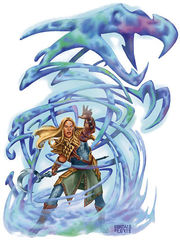
Speaking entirely personally, my vision has always been that it covered her body, like a Siberys mark. So, how is it DIFFERENT from a Siberys mark? What clearly marks it as something grander? Well, my answer would be to say that it extends beyond her body – that she anchors the mark, but that its power reaches into the world. We’ve seen this sort of thing before with the aberrant mark of the Son of Khyber in the novel of the same name and the Living Dragonmark feat, illustrated below.

If you go with this idea, when she was alive and empowered the Mark could literally have surrounded her. It was asked if this would be painful: I don’t see why. Aberrant marks can be painful, but the true Dragonmark is a more harmonious thing. As such, this could be another element of tragedy for Erandis. When her mark fully manifested, it surrounded her. It could be that she could hear it, feel reality in new ways through it, but again… she couldn’t quite UNDERSTAND it or control it. Then she was killed, and NOW the mark is simply dead lines on withered flesh. She knows what it was and what it could be, and knows it is lost.

I suspect a lot of them haven’t thought about the potential problems getting rid of death on a COSMIC level would introduce because of that narrow idea of what constitutes “death”. Makes me suspect there’s room for the story of a struggle against well-intentioned but misguided Seekers who have a potentially functional plan for destroying death… not thinking about how horribly that would screw up the natural world.

That’s definitely a story you could explore. With that said, it’s pretty easy to see that removing the concept of death from our world without any other changes would cause all sorts of disasters. And it’s important to understand that a farmer who follows the Blood of Vol doesn’t want to be an immortal farmer. The principle of the Blood of Vol is that we are all caterpillars, clinging to the branch of a tree. Given enough time, we can undergo a chrysalis and become butterflies – at which point we leave the branch and experience the existence in a new way. When you fully unlock the Divinity Within, you won’t just be a person with magic powers; you will ascend to an entirely different level of existence. The core belief of the Blood of Vol is that mortality means that we end up dying as caterpillars… and that death is final and absolute, condemning our divine spark to dissolution in Dolurrh and oblivion.

So: the BoV doesn’t want a world of immortal caterpillars. They want to end suffering – to eliminate plague and famine – and they want everyone to have lives long enough that they can achieve their potential, unlocking their divinity and moving on to the next stage of existence. In their perfect world, people will be born and they will leave existence: but they leave existence because they move on to something better, not because they die and are extinguished.

A few thoughts tied to this:

  • It is POSSIBLE for people to unlock the Divinity Within and move on without breaking the who cycle for everyone. So selfish Seekers this is all they want to do: achieve personal ascension, with no concern for others. But there are surely BoV “saints” who ARE believed to have ascended and to exist in a higher form already; we just want to make that possible for everyone.
  • Tying to the point that most BoV followers consider the “Vol” in the Blood of Vol to be the original Seeker who discovered the Divinity Within: there’s no issue with this clashing with the true history of the line of Vol. Elves live a long time and thus HAVE more time to try to unlock the Divinity Within. Hearing the true history of the line of Vol, a Seeker would say “So, it’s a family of elves who was studying necromancy? Clearly, the Vol WE reference was a member of that family who discovered the Divinity Within as part of that work.” Essentially, they don’t know WHICH member of the family it was, but there’s nothing problematic about the idea that a long-lived Elven necromancer might have stumbled upon this secret and accomplished something the rest of his family didn’t follow up on.
  • Honestly, I think Seeker sages pity the elves. They have the right idea and they have such long lives they ought to be able to accomplish it. But looking to the Undying Court, they tie themselves to this world – when someone who unlocks the Divinity Within should ascend to something BETTER than this world.

So: You definitely could have fun with a story about Seekers who literally just remove death from a particular area. But for most Seekers it’s not about achieving immortality in this world; it’s about an end to suffering and having as much time as you need to unlock the DW and move on to the next level of existence.

Dragonmarks: The Mourning and the Dread

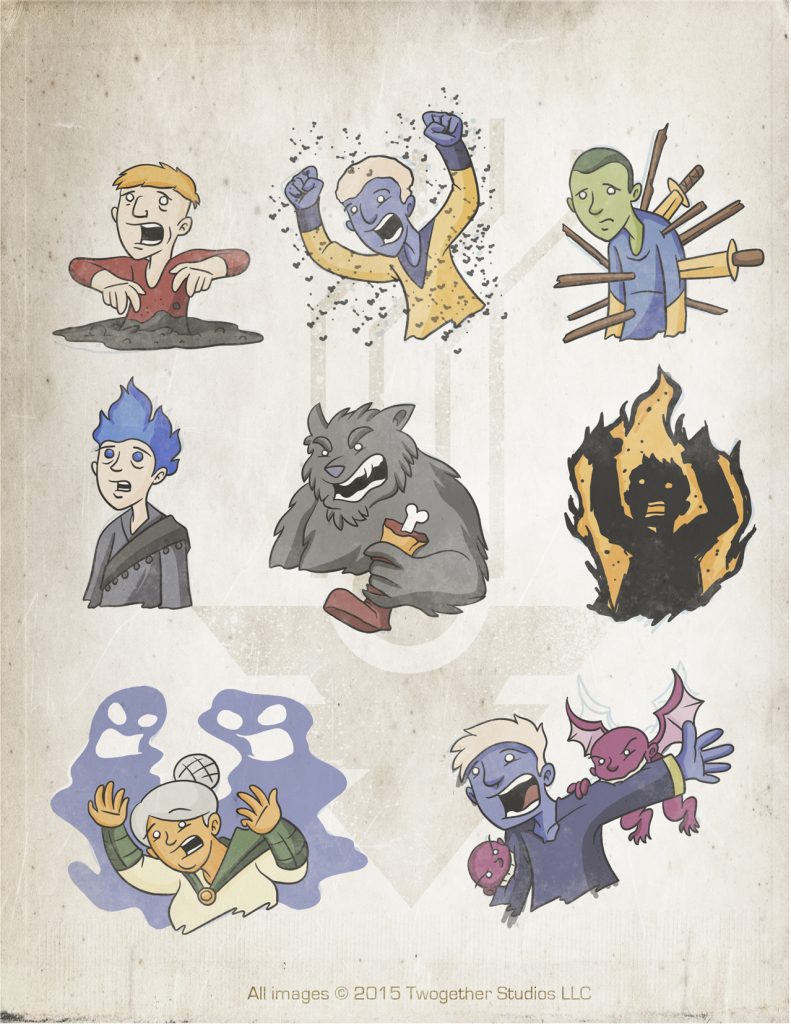
Last Friday I wrote about Manifestations of the Dread. That article focuses on my new RPG Phoenix: Dawn Command, but Eberron players and DMs may find another use for this material, because the effects of the Dread aren’t entirely dissimilar to one of the defining elements of Eberron: The Mourning.

The world of Phoenix: Dawn Command is dealing with an unfolding supernatural threat. The Dread can strike anywhere in the known world, and it takes many forms. The dead rise to prey on the living. The laws of nature are broken. Communities fall prey to mass hysteria, or to malevolent spirits banished long ago that have now returned. Essentially, the entire world of Phoenix is slowly becoming the Mournland… but it’s happening piece by piece.

By contrast, the Mourning happened suddenly and is contained. It consumed the nation of Cyre… and then stopped expanding. Fear of the Mourning is what brought about the end of the Last War. No one knows what caused the Mourning, and until there is an answer, people are afraid to keep fighting… because one possibility is that it was the extensive use of war magic that triggered the Mourning, and that continued conflict could cause it to expand.

Where the Dread is scattered, the effects of the Mourning are contained in a particular region, the Mournland. This area is enclosed by mist: a wall of fog that rises over a hundred feet in height and that covers the entire region from above, preventing direct sunlight and any form of observation. Combined with the considerable danger involved in exploring the Mournland, the result is that very little is known about the region. Everyone knows that it has been transformed, and that living creatures caught in the Mourning were either killed or transformed. Stories say that wounds don’t heal in the Mournland, that dead bodies don’t decompose and that there are battlefields where blood still seeps from the wounds of the fallen. War spells have taken on a life of their own, and massive crabs cover their shells with corpses.

From a design perspective, the Mourning serves a number of purposes. It provides a central mystery. It’s a foundation for the cold war. But beyond that, it takes a region that’s been civilized for centuries and turns it into the world’s biggest dungeon. On some level it’s hard to justify wild monsters and mysteries in Galifar; why weren’t they dealt with by the heroes of previous ages? But the Mourning is a NEW problem. And aside from the things that can be found in its borders, the things that leave the Mournland — both living and otherwise — can be a source of adventure.

With this in mind, my vision of the Mournland was always that it is unpredictable. No one rule should apply to the entire thing. The idea that corpses don’t decay and that wounds won’t heal is an iconic image and may be true in much of the Mournland. But for every village filled with perfectly preserved corpses, you might find another where everything organic has been disintegrated or turned to glass, or a village where animated skeletons carry out a pantomime of their former lives. Some of these things are dangerous, like the shard storm Thorn encounters in the ruins of Ascalin in The Fading Dream. But others may just be strange, and this is where last Friday’s article comes into play. All the things I’ve suggested as manifestations of the Dread could also be symptoms of the Mourning.

For a DM, the value of this variety is the ability to spawn a multitude of unique adventures. The Mournland is the size of an entire nation, filled with cities, villages, fortresses, forgeholds and more… and each one the adventurers visit may present new threats. And rather than having to justify why an ancient ruin is full of treasure, the Mournland holds treasures because until four years ago, it was a prosperous nation. Cyre was the seat of House Cannith, and if you want to find powerful magic, where better to look than a Cannith forgehold? And aside from purely material wealth, the Mournland holds religious relics, sentimental keepsakes, the secret strategic plans of Cyre’s military, and anything else once of value… any of which could be reason for an adventure.

As a player, the Mourning can provide you with a wealth of story hooks. If you’re Cyran, how did you survive the Mourning? Did you just barely escape, or were you away when it struck? Who did you lose to the Mourning, and have you ever wondered if they might still be alive beyond the mists? Is there anything you lost that you’d like to regain, whether of actual value or purely sentimental? Did you lose your extended family, or are they now refugees – and if the latter, where are they? Beyond this, most people lost in the Mourning were killed or lost… but perhaps you were affected by it but survived. Here’s just a few ways you could be affected.

  • Cosmetic Transformation. Your skin or hair might have an unusual color or texture. Perhaps you lost an eye, and your remaining eye glows when you are angry. Maybe your hair is alive; you can’t control it, but is slowly moves of its own accord. These things don’t have any mechanical effect, but can add color to a character. And because they’re so rare and unique, they don’t carry the immediate stigma of an aberrant mark; they’re just strange. 
  • Exotic Race. In one 4E campaign I played a character who was mechanically a deva. But I said he was a normal Cyran peasant who’d been caught in the Mourning, and who was now channeling hundreds of ghosts of others who’d died in the Mourning. The deva is defined by having memories of a thousand lives; in my case, these were the memories of other people, all being channeled through me. You could take a similar approach to any unusual race that you don’t want to fit into the world on a large scale. Tabaxi could have an entire civilization in Xen’drik… or, you might say that Tabaxi are shifters who were caught in the Mourning and transformed, and there’s only around a dozen of you in Khorvaire.
  • Mechanical Powers. My deva character was technically an avenger, but I explained his powers as coming from the spirits he channeled as opposed to divine devotion. City of Stormreach presents the Storm Hammers, a gang made up of Mourning survivors who have manifested unnatural abilities; mechanically they’re sorcerers, warlocks, and barbarians, but the concept is that these are dark gifts of the Mourning as opposed to learned skills. You could similarly explain your class abilities as being tied to the Mourning. Or for a less extreme effect, 5E includes the Magical Initiate feat, which grants use of two cantrips and one spell; this is certainly sufficient to reflect a strange gift of the Mourning. If you go this route, the next question is how this manifests. My deva’s powers were the work of the spirits for which he served as an anchor. The Storm Hammers draw their powers from a dark source, possibly the power of the Mourning itself — and this connection may be driving them mad. Perhaps you were in a Cannith forgehold when the Mourning struck and a bundle of wands fused with your left arm; you channel your magic through the wand-tips protruding from your stump. Or you could have been fused with a demon, an agent of the Lords of Dust that happened to be in the area; as your character level increases you can access to more of the fiend’s powers, but are you also becoming a demon?

SO, CAN YOU TELL US WHAT CAUSED THE MOURNING? 

If I don’t address this, I’m sure someone will ask, so let’s get it out of the way now. I can tell you some things that could have caused the Mourning…

  • The Ashbound and the Children of Winter are on the right track: The Mourning was the natural consequence of the extensive use of magic during the Last War. Ending the war has temporarily stopped it, but the Children of Winter believe that the damage cannot be healed: the only way the world can be restored is to go through the winter to reach the spring that lies beyond. If they are correct, the Mourning will eventually spread until it covers the world. But perhaps they’re mistaken, and there’s a way the damage can be undone… but it would still mean that the people of Khorvaire would have to be careful about overuse of magic in the future.
  • House Cannith was developing a weapon. Something went disastrously wrong. Questions that remain: could this weapon be restored or duplicated? Do any of the current Cannith leaders know about this project? Presuming the forgehold developing it was in Cyre, what happens if the Lord of Blades or someone else discovers it?
  • One of the Overlords of the First Age was bound beneath Cyre. Due to the machinations of the Lords of Dust, the fiend was partially released. The Mourning is a reflection of its influence. At the moment it is building its strength; there is one more step that is required to fully release it. If that occurs, its power – and the Mournland – would spread.
  • The Lord of Blades was behind the Mourning, an attack targeted against the heart of House Cannith. This may have used an epic artifact or eldritch machine — which could potentially still be tied to an Overlord or to the Daelkyr. Generating the Mourning drained the weapon of power… but the Lord of Blades is working to restore its power.
  • The Mourning was actually caused by dragons of the Chamber, as part of a necessary chain of events to prevent the release of an Overlord — for sake of argument, let’s say Tiamat. The Mourning can be reversed, but reversing it will unleash Tiamat, who will corrupt Argonnessen, and set into motion an epic conflict with the dragons.
  • In The Fading Dream, the Eladrin present a theory of what caused the Mourning and how it could be reversed. I won’t spoil it here, but hey, it’s possible.

That’s just off the top of my head. OK, you may say, these things could have caused the Mourning… but what didI don’t know. In MY campaigns I’ve never felt a need to solve the mystery. What I like about the Mourning is the effect it has on the world: driving the cold war between the nations, holding the Last War at bay, creating a giant dungeon in the middle of things. If the mystery of the Mourning is solved, one way or another, it paves the way for the Last War to start anew. That’s not a story I’ve wanted to explore… so I’ve left in unsolved. Which means that I’ve never needed to choose between the host of possibilities. If I decided to tell that story, I’d pick one. But as it stands, I’m happy leaving it as an enigma.

That’s all I have time for, but let me know if you have questions about the Mourning and the Mournland… and share your favorite answers for the Mourning or manifestations of the Mournland!

Dragonmarks: Origin Stories

Recently I made a post about developing origin stories for my new RPG Phoenix: Dawn CommandIn Phoenix, the PCs aren’t casual adventurers; their world is facing a mysterious and terrible threat, and the narrative is about fighting that Dread and trying to unravel its mysteries. As such it’s vital for every character to establish what they are fighting for. Further, the protagonists of Phoenix have died and returned imbued with new skill and supernatural power, and the type of Phoenix you become is determined by the nature of your death and the lessons that you learned… so it’s important to think about who your character was before they became a hero, and exactly how they died.

In Phoenix, this is a cornerstone of the story that drives the campaign. In Eberron — or D&D in general — that’s not always the case. If you know you’re just doing a straight-up dungeon crawl, it may be that the only thing that really matters is your statistics. But even so, what I love about RPGs — as player or GM — is the fact that we’re building a story together. And I want my character to be someone whose story I’d like to know. I could be a 1st level human fighter — done. Or I could be a dragonmarked heir who broke ties with his house to fight for Cyre, because he truly believed their cause was just and the Sovereigns were on their side. Now the war is over, and the Mourning shattered his faith and destroyed everything he loved. Will he try to get back into his house? Will he seek out Prince Oargev and fight on behalf of the Cyran people? Will he find his faith again in a divine revelation, and take levels of paladin or cleric? Will he be approached by the Twelve to become part of a secret group of excoriates doing deniable missions for the houses, or uncover a Quori infestation that’s taken over his old family? I don’t know. But I’d love to see any of those stories play out. And even if we DO just go on a few dungeon crawls, I still feel like this is a character and not just a set of numbers.

If I want a campaign with a clear focus, I’ll often talk to the players and encourage them to come up with a shared character concept that gives them a clear connection from the start and defines the direction of the campaign. Perhaps they’re all members of the Boromar Clan. Or they’re all agents of the Royal Eyes. Or they’re a Valenar warband. Or they all fought for Cyre in the Last War. Or they own an airship. Everyone understands the core story — “We’re all secret agents” — and they should come up with a concept that fits that.

But sometimes it’s more fun to have everyone come up with a unique character that doesn’t have any pre-existing connection and to have the campaign be what brings them together, and that’s what I’d like to explore now… when you’re making a character on your own, but want to develop a compelling story.

Eberron gives a number of handles for you to latch on to. The Last War is one of the easy ones. The war only ended two years ago. If you have the skills of a player character, you’re a capable person… so did you fight in the war? If so, who did you fight for? What did you do? How do you feel about the outcome? If you didn’t fight in the war, why not? What did you do instead? Did you oppose the war or simply find a different path? Personally, I often choose Cyre as a nation for my PCs because the concept of having lost everything is a strong foundation for why a person would become an adventurer. They have no home to return to; everything they once had is gone. So why not seek their fortune in an unconventional manner? On the other hand, there’s ways to do this with any nation. Consider…

  • I fought for Karrnath during the last War. But I’m a follower of the Blood of Vol, and King Kaius betrayed us. Now my friends and family are pariahs in my homeland. I’m equally angry at Kaius for turning on us and on the Order of the Emerald Claw for taking actions that turn the world against us… and if I every have the chance, I’ll make sure that both Kaius and the Emerald Claw pay for what they’ve done.
  • I fought for Thrane during the Last War, as a paladin of the Silver Flame. I love my home and my family, but far too often my duties as a soldier seemed to be at odds with what the Voice of the Flame tells me is right.  I fear that ruling Thrane distracts the Church from its true mission and invites corruption, and I want to protect the innocent – all innocents – from supernatural evil, not serve the cause of one nation over others. So I have struck out on my own, following the Flame as I hear it.
  • I fought for Aundair in the Last War, as youngest son of a noble family of wizards. My parents urged me to stay in the army; there can be no true justice in the world until Galifar is restored. But I know that I will never reach my potential studying with military preceptors. Beyond that, I feel that if Aundair is to triumph in the next war, it needs more than just well-trained wizards. It needs to unravel the mystery of the Mourning. It needs to learn the epic magics of the giants and the dragons. I have left my nation in pursuit of power, but it is always a part of me and I will return.
  • I fought for Breland during the Last War. I’m proud of what I did, but I was looking forward to coming home and hanging up my sword for good. Instead I returned to find my family and friends (being extorted by the corrupt watch/murdered by Daask/squeezed by the Twelve/consumed by a Cult of the Dragon Below/haunted by an ancient curse). I may not serve the crown any more, but it looks like my war has just begun.

When developing a character on your own, it’s important to remember that you will be part of a group. So however powerful and compelling your personal story is, it has to be something that can accommodate other stories. If your backstory is I must get to Thronehold to stop the second Mourning, it’s hard to explain why you’d take a break from that quest to help a friend or investigate a murder. While with the examples above, the goals are long-term as opposed to being urgent. The Karrn generally hates Kaius and the Order of the Emerald Claw, which gives the DM two hooks they could use… but he doesn’t have a specific Emerald Claw plot he has to deal with RIGHT NOW. The Aundairian wants to uncover magical secrets, so any story that could justifiably include an opportunity to learn something new will be of interest… and if nothing like that shows up, there’s no reason she can’t do something else while waiting for the next opportunity. You want a backstory that can add a sense of depth to any situation — not one that’s entirely reliant on the whole group embracing your personal story.

The Last War is one easy source of character hooks. The Dragonmarked Houses are another. Here’s a few ideas off the top of my head:

  • You’re a dragonmarked heir working as an agent of your house. You have a patron in the house who may offer you advice or assignments.
  • You’re an excoriate unjustly banished from your house and you want to find a way to clear your name.
  • Your parents were excoriates. As a foundling, you have to decide if you want to return to the house… and is there a mystery to solve or a feud to settle involving your parents’ excoriation?
  • Your parents were remarkable artificers who made a breakthrough and then were mysteriously killed/vanished/were ruined. You believe House Cannith was responsible and have sworn to take vengeance on the house. Are you correct? Or might you uncover some deeper truth as the campaign goes on? This same premise could be translated to any house; just change the occupation to match the house’s sphere.

In the recent Phoenix post I presented a number of more exotic backstories. Even these can be adapted to Eberron if you use some imagination.

  • The Ship’s Cat is the idea of an unnaturally talented child. Personally, I am a strong advocate of changing the flavor of mechanical elements to fit the needs of a story. In this example, I’d be open to the idea of letting the player use the mechanical statistics of a halfling, even though for other purposes (including Dragonmarks) we’d consider the character to be human.
  • The Adventuring Archaeologist doesn’t require any unusual mechanics, but it is also about the story… the idea that the character is driven to uncover some of the secrets of the world. In this case, I’d advise picking a mystery that’s big enough that it doesn’t have to be solved all at once. For example, you could be intrigued by planar incursions, wanting to investigate the Xoriat incursion that destroyed the Empire of Dhakaan; the Quori-Giant Conflict; and along the way, perhaps you will discover evidence of previously unknown planar incursions, either something that happened in the past or an incursion that’s about to happen. Or perhaps you want to uncover magical secrets, looking for forgotten lore of the Culsir, the Qabalrin, or even the dragons themselves.
  • The Old Soldier is a concept closely tied to Phoenix: a hero of a previous age who has returned to accomplish a task in the present day. But there’s a few ways to explore the same idea in Eberron. The article Dolurrh’s Dawn presents an entire village of reincarnated legends. You could be a creation of Mordain the Fleshweaver or House Vadalis — you have the appearance of the legend, but are you truly the hero reborn or are you some sort of trick? Alternately, the Watchful Rest is a sect that maintains that Aureon and the Keeper preserve great souls from Dolurrh so they can be reborn when needed… could this be your story? Obviously it may be odd if you’re starting at a low level when you were once a hero… but this can still be justified as your full memories not having been instantly restored.
  • The Bad Dog is a bigger challenge. Equipment isn’t important in Phoenix, so the idea of playing a talking dog doesn’t create as many challenges as it does in D&D. With that said, you could certainly play an animal reincarnated into human form. The question then is who performed the spell. Were you the companion of a lone druid, who may have died themselves? Or do you have a connection to one of the druidic sects? Like playing a warforged, an animal reincarnated into human form is an interesting opportunity to explore what it means to be human.

I have a lot of fun building backgrounds with my players for their characters, and I always try to encourage them to develop a story or even run through character background quizzes if they are stuck.

Presenting concrete questions is a good way to help players who don’t know where to begin. Phoenix has a list of basic questions people answer as part of character generation. When I do one-shots, I often present people with multiple-choice questionnaires to give them a quick jump into the world; you can see an example of this in this set of pregens for Phoenix.

Recently I have started a roleplay exercise where in between sessions we will ask background questions that may not come up in game, but help shape the character. The goblin PC might hail from Darguun, but how does he feel that his parents were Cyran? The old orc Gatekeeper lived a full life before he ever left the Marches, so does he see his children or have they grown into adventurers of their own?

This is an excellent approach. When a campaign just begins, people don’t know who their characters are, and trying to nail down this level of detail is simply going to be overwhelming. But as the players become more familiar with their characters, it can be be a lot of fun to explore further during downtime. In Phoenix we encourage players to talk about what happens between missions – Interludes – during these “offline” times.

Do you have any suggestions for characters from lands outside of the Five Nations such as Xen’drik natives coming to Khorvaire, or ways for a Seren to get pulled into the Last War?

It’s a pretty broad question – “Xen’drik natives” covers a lot of ground. But focusing on the Seren, with answers that could apply to some Xen’drik backgrounds…

  • Following a personal divine vision
  • Sent by tribal leader/mystic/dragon to accomplish a quest
  • Driven by insatiable curiosity; you want to see the entire world.
  • Exiled from your tribe for a crime (was this justified, or are they innocent?)
  • Seeking vengeance on foreigner who came to your land and did something terrible; realizes it will take a long time to find this person and to gain the power/allies needed to defeat them, but starting that journey.
  • Same as above, but consider that “a foreigner” could be “a Dragonmarked house” – you’re going to bring down an organization that has done you wrong (better match for Xen’drik than Seren, but still).
  • A foreigner lived among your people. Depending on race, they could have been one of your parents, or could have been your mentor or best friend. Following your death you have traveled to their land to find the truth to their stories/finish the quest they never completed/avenge them/carry out their dying wish.

I used a variation of that last one with the Ghaash’kala half-orc paladin I played in the last 5E Eberron campaign I was in; my father was a paladin from Thrane who came to the Demon Wastes & lived among the Ghaash’kala, dying long before I ever knew him; in the campaign, I was dispatched to the green lands with my father’s sword with a specific mission (protect one of the other PCs, a mysterious reincarnation of Jaela Daeran – long story) but I personally wanted to learn more about my father and why he’d left his homeland.

As for what could draw them into the Last War? Mercenary work. Friendship — fighting to protect their best friend, even though they know nothing of the politics of the war. A vendetta against an enemy commander; they don’t care about the war, they were just hoping to get close enough to kill the commander. Testing the skills of these foreign soldiers, while honing their own.

If you have any questions — or if you’d like to share your own favorite origin story — post them below!

Dragonmarks: Fens and Marches

Last week I posted my first Imperial Dispatch article, delving more deeply into the world of Phoenix: Dawn Command. While I can’t create new material for Eberron, I want to look at what the Fens have to offer if you’re running an Eberron campaign.

The Fens are a region of deep swamp. The exist on the fringes of Ilona, one of the most civilized regions of the world; while they have cultural ties to Ilona, they are generally thought to be backwards. There are two distinct subcultures within the Fens; the Myrai seek to live in harmony with nature, while the Barochai see the natural world as something to be brought to heel and exploited. The noble families of both subcultures derived power from their House Gods, powerful spirits that took mortal avatars within their houses; many lesser families had bond beasts, animals serving as hosts for spirits. Both types of spirits were banished centuries ago when the first Phoenixes came to power, but their cultural influence remains. Meanwhile, in the present day dark powers are at work. Restless dead rise in the shadows. Corrupted bond-spirits merge with beasts and produce twisted monstrosities. And new creatures never seen before are appearing, as if the world itself is trying to make something that can survive the Dread. The greatest city of the southern Fens has been lost, and the Myrai people of the south seek shelter in the Barochai communities.

The Shadow Marches are the simplest match in Eberron. They too are a swampy region whose inhabitants are often considered backward; a region with two distinct traditions rooted in a past conflict, where cults still cling to those ancient traditions. For purposes of this conversion, I’m going to match the Myrai to tribal orcs that generally adhere to the traditions of the Gatekeepers, while the Barochai are a closer match to the blended clans – and especially to House Tharashk itself, as the Barochai are focused on industry and wringing a profit from nature. So I’ll be referring the Myrai as “the tribes” and Barochai as “the clans.”

We’ve never delved too deeply into the environment of the Marches, beyond “swamp.” As such, you could easily incorporate the most distinct physical feature of the Fens into the Shadow Marches. These are the Titans: trees which once grew up to a mile in height, but which were struck down in some ancient cataclysm. Their wood is infused with magic that prevents decay. So although the trees are long dead, but they form the physical foundation of the swamps. If you embrace this idea, the clans and House Tharashk carve their cities into the stumps and trunks of the Titans, while the tribes generally live atop them or make use of natural cracks and crevasses in the surface of a Titan. Both groups harvest lumber from the Titans, though the tribes approach this in a more industrial manner; this process is more akin to quarrying stone than the work of the traditional lumberjack. In d20 terms, the wood of a Titan would generally be considered to be Densewood, with veins which if harvested and treated properly can yield Bronzewood (both materials described on page 120 of the 3.5 Eberron Campaign Setting). In canon Eberron these rare woods come from the forests of Aerenal, but it’s not particularly unbalancing to give these resources to the Shadow Marches… and it justifies Gatekeepers having ancient bronzewood weapons and armor dating back to the Xoriat incursion. While you could make this one of House Tharashk’s industries, I’d be inclined to have Tharashk keep its focus on finding rarer things. Densewood-grade lumber could be an industry that the clans focused on before the rise of Tharashk, while Tharashk uses the Mark of Finding to locate the rarer veins of Bronzewood.

Aside from creating an additional industry for the Marches, this has a few effects.

  • The clans live in fortified communities, carved into the natural shelter of the Titans. Tribes or more isolated families will live atop Titan trunks or in natural “caves.”
  • The people of the region use wood for things that would be made from stone or steel in other places. If a building isn’t carved into a trunk or stump, it will be made from wooden blocks. Wooden spears are very common — used both for defense and as walking staffs — and knives and swords are typically made of Bronzewood.
  • The fallen Titans create a network of islands in the swampy morass. In heavily trafficked areas, bridges connect these islands; beyond this people generally use small boats to get from place to place.
  • The Titans add a vertical aspect to the landscape, especially as people generally live atop them or in their trunks. Bear in mind that the Titans fell thousands of years ago, and many have layers of soil and vegetation that have built up on their trunks.
  • In the Marches/Fens, the Titans have all fallen. However, in Eberron it is possible that living Titans can still be found. The most logical location for this would be the so-called Towering Wood in the Eldeen Reaches. You’d have to decide if the trees of the Towering Wood are full-sized Titans, or perhaps a similar but smaller variant. If you do have Titans, the next question is if one could be awakened. A human is essentially an ant to a Titan, which would make interaction with a Titan difficult. Even speak with plants might not bridge that vast difference of scale; if the Titan noticed the druid they could understand them, but they are still a tiny speck with a tiny voice. Given this, it could be interesting to have a single awakened Titan that’s wandering around the Reaches. Humans have no way to speak with it, but if necessarily Oalian himself might be able to communicate with it.

So to begin with, blending the Fens with the Marches adds an interesting physical element to the Marches in the form of the Titans. The city of Baroch is a fortress carved into the trunk of a Titan. You could use this concept to reimagine Zarash’ak, Tharashk’s capital city; or you could imagine Zarash’ak as a city suspended between a number of Titan stumps.

The Fens are defined by their relationship to the House Gods and bond beasts. While these things don’t exist in Eberron, some of the ideas are still relevant. The Myrai have some easy overlap with those who follow the Gatekeeper traditions… while the Cults of the Dragon Below could pick up the idea of the cults of Zaria or Taeloch. Bear in mind that there’s nothing saying that the members of a Cult of the Dragon Below couldn’t be vigilantes who are actually fighting evil people; it’s simply that they’re doing so because they believe a divine force is telling them to act. The Cults aren’t always evil; they’re just crazy. Meanwhile, you could explore the concept of bond beasts in Eberron. This could easily be a tribal tradition involving animals awakened by Gatekeeper druids; having each major tribal family have its own talking beast could add interesting culture for PCs who leave the cities and deal with the tribes.

With all that said, the Fens are shaped by their current troubles. This is tied to The Dread, the supernatural threat that is the foundation of the story of Phoenix: Dawn Command: a pervasive wave of terrors manifesting across the known world, with no clear rhyme or reason. if you wanted to explore this in the Marches, here’s some easy ways to adapt the threats of Phoenix.

  • The Bones are the corpses of dead soldiers, risen to continue the wars they fought long ago. In the Shadow Marches, these could be the corpses of the early Dragon Below cultists who fought for the Daelkyr in the Xoriat incursion. Alternately, you could have the bones of ancient Gatekeepers and Dhakaani goblins; even though they fought the Daelkyr in the past, that was long before humans, half-orcs, or other common races came to the Marches, and the Bones see all such creatures as invaders. Depending on the level of the PCs, you could use stats for Karrnathi undead for these Bones; with that said, the Bones use the tactics and techniques they used in life, and Gatekeeper Bones would employ druidic magic (perhaps twisted to add flavor).
  • The Fens are dealing with creatures warped by corrupted bond-spirits. This is an easy analogue to an increased surge in aberrations manifesting throughout the Marches, and you could decide whether these aberrations are “naturally” occurring, or if this is about mundane creatures being twisted into aberrations… which certainly was the hallmark of the Daelkyr back in the day.

The current situation in the Fens is driven by the mysterious loss of the great city of Myrn and by the idea that the Myrai are being driven north into the Barochai communities, which is causing overcrowding and tension. If you want to explore this idea, the concept would be that a surge in the appearance of undead and aberrations are driving the tribes to seek shelter in the clan communities. While Tharashk has some roots in the tribes and would likely show some sympathy for their plight, most of the clans consider the tribes to be willfully backwards and wouldn’t be happy with this surge of refugees, especially if people are worried about this rising supernatural threat. And what exactly is causing it? It is a resurgent Daelkyr, which is likely what the Gatekeepers would assume? Or could it be an Overlord rising — a twist that the aberration-focused Gatekeepers might not be prepared for? Either way, this could make an interesting saga for the PCs, especially if one of the PCs has roots in the region; cant they figure out what is behind this rising power before the Shadow Marches are consumed by darkness?

Now let’s look at a few questions…

Would the Titans be naturally occurring behemoths in the Marches, or would their growth be the result of Manifest Zones from ages past?

In Phoenix the idea is that the Titans are organic relics of the Old Kingdoms, and were brought down in the cataclysm that ended those civilizations. In Eberron, I’d mirror this with the story that the Titans were created by Eberron herself when the world was first formed and were brought down during the apocalyptic battles of the Age of Demons. Perhaps it’s literally true, or perhaps the first Titans were the product of a particularly powerful coterminous period/manifest zone interaction with Lamannia… or the work of an Overlord or similar benevolent spirit in the first age of the world. But to me, the idea of the Titans is that all that is left are their corpses. If you were to add them to the Towering Woods, I’d still consider the idea that those are smaller cousins, maybe a thousand feet in height – still huge, but leaving the idea of the Titans as something truly primordial.

Do you have any ideas beyond serpents and alligators (crocodiles?) that could be used as bond animals for a particular tribe? Or any animals added to the gleaner list for the Shadow Marches region?

Wolves, deer, raccoons, bears, beavers, muskrats, and various sorts of birds can all be found in swamps, and you can easily adapt such creatures to a fantasy environment (start with crayfish, end with a chuul) and that’s not including creatures that humanity could have brought over from Sarlona. In the Fens I’ve added the idea of the Fen-Cat, and the idea that humanity brought various sorts of dogs into the Fens with them. But there’s a fairly wide range of swamplife to choose from.

There really isn’t a physical border between Droaam and the Shadow Marches. Presumably the Daughters have their reasons for not invading, but I doubt the people of the Marches know what those reasons are. Have any arrangements been made between both nations?

There’s a number of factors here.

  • Droaam has only been a nation for a decade. The work the Daughters have done to unify the warlords and disparate elements is impressive, but they’ve still never fielded a true army and are working on maintaining discipline and order within their own borders.
  • House Tharashk is the greatest single power in the Shadow Marches. They already have close ties with Droaam, and this is important to Droaam because it’s their one channel for peaceful communication and integration with the Thronehold nations; while for Tharashk, Droaam is a source of a unique resource (monstrous mercenaries).
  • The Shadow Marches are an inhospitable environment with a very diffuse population that knows the environment better than anyone in Droaam. And it’s an environment that may be filled with hostile aberrations.

The critical point: What does Droaam have to gain from conquering the Shadow Marches? They’d get control of its resources, but in the process they’d shatter their ties with Tharashk and make an enemy of the Twelve, which would severely curtail any possibility of peaceful expansion of power into the Five Nations. As a side note, the Marcher orcs were never conquered by the Dhakaani Empire because the Marches had nothing that would make the difficulty of the conquest and occupation worth the trouble of doing it.

Are there still Daelkyr ruins in the Shadow Marches? What does Daelkyr architecture look like?

When the Daelkyr first came to Eberron, they established themselves in Khyber. No one knows exactly when they arrived, for they certainly spent a period of time capturing and altering local creatures to create their armies before unleashing those forces on Dhakaan. But from the start, they struck from the depths. One reason they were easily sealed in Khyber is that for the most part they were already there; the Gatekeepers simply bound them in the depths.

So the Daelkyr didn’t build cities on the surface; where they had strongholds above ground, they were existing structures that they captured. As far as “ruins” go, these would generally appear to be ruins from the original culture, and the differences would be things you’d only spot on closer examination (and largely relate to what unpleasant creatures or magical effects might linger in such places, as opposed to physical architecture).

As for what Daelkyr structures in Khyber look like, they are like the Daelkyr themselves: deeply alien and often inexplicable. In my opinion, they would also be extremely unique; there’s no one Daelkyr style. The halls of Dyrrn the Corruptor might have the biomechanical look of HR Giger. Belashyrra’s citadel could be a massive gibbering creature — a living fortress, every surface festooned with eyes. Orlaask’s fortress is inside a massive gargoyle that wanders the depths of Khyber. Whatever the appearance, the design should feel illogical. You might have a spiral corridor that corkscrews into a dead end, stalactite-like structures that project from the walls for no apparent reason, pools of luminescent liquid scattered around. These things may all have practical value – but if so, it shouldn’t be immediately clear to the human observer.

Almost nobody knows of the Daelkyr invasion. Is that right?

The Xoriat incursion predates human arrival on Khorvaire by thousands of years, and as noted above didn’t leave a lot of obvious physical remnants on the surface (aside from fallen Dhakaani cities). When humans arrived, most assumed that the Goblin civilization had collapsed in civil war, which was partially true; others assumed that the Dhakaani ruins were obviously too advanced to be associated with goblins, and were the work of some other advanced race. In the present day, the people of the Shadow Marches are familiar with stories of the Daelkyr and the ancient incursion, and scholars across Khorvaire are familiar with the theory, but most of the people of the Five Nations know nothing about it.

If you have questions or ideas, post them below!


Dragonmarks: Drow

These… they aren’t the elves you know from Khorvaire. Thousands of years ago, the elves fought the giants that ruled this land. Giant wizards captured elves and experimented on them, created their own soldiers to go places the giants could not. It’s said that they wove dark magic into the elven form, and that these are the result. The first elves call them the drow. 

Lakashtai, The Shattered Land

The conflict with Dal Quor weakened the giants of Xen’drik. In the centuries that followed, the elves rose up against the giants. In the early days of that conflict, the mages of the Sulat League created a new breed of elf. With perfect darkvision and a natural resistance to magic, the Drow were natural predators indoctrinated from birth to prey upon the rebel elves. At first the Drow were myths, spirits of the night that struck without warning and left no survivors. Even after the truth was revealed, the Drow remained a deadly threat throughout the rebellion. When Argonnessen crushed the civilizations of the giants, the Drow were caught in the destruction. Three primary cultures emerged from this time of chaos.

The bulk of the Drow are Vulkoori. Their ancestors took refuge in the deep jungles of Xen’drik and developed their own traditions. They are a primitive tribal culture; many focus their devotion on the scorpion spirit Vulkoor, while others revere a pantheon of primal spirits. Some tribes pursue an endless vendetta against the giants, taking vengeance against their ancient oppressors. Others are simply concerned with survival.

A smaller faction held to the traditions of their creators. These Sulatar held onto some of the techniques and artifacts of the Sulat giants, notably techniques involving the binding of fire elementals.

A third group fled underground, taking refuge in Khyber. There they found a source of dark power and bound their clan to it, drawing strength from this mysterious Umbra. These Umbragen are the most advanced of the Drow cultures, but they are locked in a conflict with the horrors of Khyber and they are slowly losing that war.

All of these cultures tend towards xenophobia and isolation. Explorers and the settlers of Stormreach have encountered the Vulkoori, but they know little about them. Few know the Sulatar or Umbragen exist… though an early encounter with the Sulatar may have provided the Zil with the inspiration that produced their elemental binding techniques.

Each of the Drow cultures serves a different purpose, both for players and gamemasters.

  • Vulkoori Drow can be an ally or a threat for characters exploring Xen’drik. They are resistant to the Traveller’s Curse, which makes them valuable guides for adventuring parties; however, most see the people of Khorvaire as outsiders and looters who have no place in Xen’drik. As a player character, a Vulkoori Drow is an opportunity to play an exotic primitive cast into an alien culture. Xu’sasar in The Dreaming Dark novels is a Vulkoori Drow, though from the pantheistic Qaltiar tradition.
  • The Umbragen are in many ways the closest to the Drow people are familiar with from other settings. They are an advanced subterranean culture centered around a dark power, and they are cruel and ruthless. They are driven by their bitter struggle with the Daelkyr, and this can make them a useful enemy-of-my-enemy; alternately, their quest for the power they need to defeat the Daelkyr could make them a threat to the people of the surface, as the Umbragen will sacrifice anything in pursuit of victory. An Umbragen PC could be an exile who turned on the dark traditions of their people, or a hero seeking the power to save them. Where the Vulkoori is a primitive, for the Umbragen Khorvaire is itself a primitive backwater.
  • The Sulatar aren’t as primitive as the Vulkoori, but neither are they as powerful or malevolent as the Umbragen. They can easily be found as the guardians of giant relics or ruins, and they know secrets about the past that have been forgotten by the others.

What would you like to know about the Drow of Eberron?

How would each of the citizens of the Five Nations see a Drow?

The inhabitants of Stormreach are familiar with Drow, and there are a handful of Drow and half-Drow that have been assimilated into the general population. As a result, people in Sharn and to a lesser extent other Brelish port cities will be somewhat familiar with them; even if they’ve never seen one, they’ve possibly heard stories.

Beyond that, I don’t particularly think the reaction is going to vary by nation; a Drow would be equally unusual anywhere in Khorvaire. With that said, Eberron is a world in which people deal with a wide variety of races (Elves, dwarves, gnomes, halflings, and even goblins) casually and are aware that they could bump into a lizardfolk or a gnoll; as unusual as a Drow is, it’s hardly the strangest thing you might see on the street. What I think the most likely reaction would be is the assumption that the Drow is some sort of one-off mutation of a normal elf. Consider the origin of planetouched Tieflings I’ve discussed earlier – perhaps this is what happens to an elf conceived when Mabar is coterminous? Or perhaps they were exposed to the Mourning? Or they’re part of a Vadalis magebreeding experiment? So: a curiosity to be sure, and not immediately seen as representative of a foreign culture. But I think less threatening than a hobgoblin or dragonborn — so more intriguing than shocking. But as always, go with what best fits your story.

Why did you decide to make Eberron Drow focus on scorpion icons instead of the classic spider icons?

The basic principle is that the traditional Drow association with spiders is tied to a specific culture and to Lolth, a fiend not present by default in the cosmology of Eberron. Vulkoor provides an iconic focus for those who wish it. Beyond this, it does speak to a different culture. The spider is defined by its web, and Lolth’s Drow are subtle and treacherous; the Drow of Vulkoor are more direct predators. It also fits their tribal and often nomadic nature, as the mother scorpion carries her young on her back.

With that said: Personally, I’ve never particularly liked a solitary focus on Vulkoor. My first opportunity to deal with the Drow in depth came when I wrote my novel The Shattered Land. Here I introduced the Qaltiar as a culture who respect the Scorpion, but also revere other primal animistic spirits: the Shifting Panther (displacer beast), the Tlixin Bird, and a host of other totems… and the Sulatar, a Drow culture that has nothing to do with arachnids.  So you it’s up to you whether you run with purely scorpion-focused Vulkoori, or the broader primal Qaltiar.

Where is it in canon that you speak of the Umbragen?

The Umbragen are mentioned in almost all canon sources that deal with Drow. They’re covered in most detail in Dragon 330, which included a detailed look at their culture and racial feats. However, they’re also described on page 52 of Secrets of Xen’drik, page 124 of City of Stormreach, and page 198 of the 4E Eberron Campaign Guide. To be clear, while I’ve said that they are the closest analogue to the Drow of other settings – being a culturally “evil” civilization that lives underground – they are a unique culture and due to their bond to the Umbra, not entirely Drow.

I’m a bit surprised, however, when you say that “for the Umbragen Khorvaire is itself a primitive backwater.” Could you please expend your thoughts about what, according to you, make the Umbragen so superior?

I may have chosen my words poorly, but it’s a difficult concept to distill. There are two things that distinctly distinguish the Umbragen from the civilization of the Five Nations. The Umbragen are less industrial than the Five Nations, to be certain. However, they are distinctly more magical. In my opinion, the typical Umbragen – regardless of whether they’re a soldier, a mystic researcher, a mushroom farmer or a smith – is likely to have at least one level of warlock or soulknife. Half of their government – the Vault of Shadows – is dedicated to mystical research for the benefit of their civilization. Combine this with the fact that they live in the shadow of the Qabalrin, an elvish civilization whose mystic advances matched those of the giants of Xen’drik. So they are used to a far greater degree of casual magic in the world, and the idea that the farmer over there is literally just a farmer – that he can’t conjure a blade of shadows or kill an enemy with a thought – makes him seem pathetic. Add to this the fact that the Umbragen have been at war with Khyber for as long as they can remember: a constant struggle with the terrors of the deep. So again, to them Khorvaire feels soft and weak. They whine about their losses in the Last War? They clearly know nothing of loss or struggle.

Again: taken as a whole, the Five Nations are more advanced as a civilization. The Umbragen have nothing on par with the systems of transit, communication or mass production that are part of daily life in the Five Nations. But the Umbragen are also from a smaller civilization and thus an Umbragen visitor wouldn’t immediately appreciate those things; and besides, if you need to communicate with someone far away, just speak to an Umbral sage who can send a message through the shadows.

With that said, something like Sharn should still be impressive to an Umbragen; the question is whether they’d acknowledge that. The Umbragen also tend to be aggressive and predatory, so a general attitude of “Your civilization is weaker than mine” is good for instilling fear in possible rivals.

How do the different elves view the Xen’Drik Drow and Umbragen and vice versa?

Both sides retain the most basic knowledge of the origins of their people — that they were bitter enemies in the ancient war. The elves of Khorvaire know the Drow as evil servants of the giants, while the Drow know the elves as the rebels whose foolish pride led to the destruction of Xen’drik. With that said, that conflict occurred more than twenty thousand years ago, before the modern civilizations of either elves or Drow existed. The Drow are all isolationists and know next to nothing about the modern elves, and the elves are only aware of the Vulkoori, who they consider to be the savage remnants of their ancient foes. So if a Drow came to Aerenal today, they’d be seen more as a curiosity than a bitter enemy.

With that said, the Tairnadal are deeply concerned with the history of their patron ancestors. Many of those ancestors were champions in the uprising against the giants — meaning that they fought the Drow. Such a Tairnadal might be quite excited to have an opportunity to fight one of these ancient foes.

It’s worth noting that the Qaltiar — a Vulkoori subculture — are Drow who themselves rebelled against the giants. They may still blame the elves for starting the apocalypse that destroyed Xen’drik, but they would be less hostile than others.

Are there any undying Drow or Umbragen? COULD there be? 
Are there any? None that we’ve established in canon. Could there be? Sure. Becoming Deathless has nothing to do with being an elf; it requires specific rituals and access to enormous amounts of positive energy, drawn both directly through Irian manifest zones and indirectly through the reverence of descendants. So it’s unlikely that there are any Deathless Drow in Xen’drik, because they don’t have the manifest zones or knowledge of the rituals (which took thousands of years of work in Aerenal to perfect). But if you wanted some renegade Drow (perhaps some of the original progenitors of the Qaltiar) to have joined the Aereni in the exodus, sure, there could be Deathless Drow.

Manifest Zone: Dragonmarks

The latest episode of the Manifest Zone podcast deals with Dragonmarks and the Dragonmarked Houses. I want to follow up with a quick overview of the topics discussed and provide an opportunity to deal with questions you may have after listening to the episode. I don’t want to retread too much old material, so if you know nothing about the marks, you may want to check out these previous posts on The Dragonmarked Houses and Aberrant Marks.

Dragonmarks are sigils that appear on the skin, reflecting a magical talent possessed by the bearer of the mark. There are thirteen “true” dragonmarks. These are called true marks because they have a consistent appearance, range of abilities and progression; if you have the Least Mark of Making, it’s not going to suddenly mutate into the Lesser Mark of Finding. In addition, the true marks are tied to specific races and bloodlines. They only appear on people with some connection to a dragonmarked bloodline, and someone with a dragonmark can pass that mark to a child.

Per the original 3.5 rules, a dragonmark provides a few concrete mechanical benefits.

  • It allows use of a specific spell like ability (chosen from a short list) a number of times per day.
  • It provides a bonus to a specific skill (so the Mark of Detection provides a +2 to Spot checks, the Mark of Making provides a +2 to Craft checks, etc).
  • It allows the bearer to use dragonshard focus items tied to their mark. From an economic perspective this is the most important aspect. The fact that a gnome with the Least Mark of Scribing can use whispering wind once per day is a cool party trick. The fact that he can operate a speaking stone is what gives the houses their power.

These are the basic abilities of the mark. They are tied to bloodlines. Over the course of centuries, the bloodlines that carried specific marks joined together to form houses, and ultimately those houses came together to form the organization known as The Twelve. So a critical point here is that all of the dragonmarked houses include multiple bloodlines, and over the course of generations new lines have evolved within the houses. So the fact that you have the Mark of Making doesn’t mean you’re directly related to every Cannith heir; it means you’re tied to one of the Cannith lines.

The next important thing to understand is that Eberron treats magic as a science. Which means that you can’t just create something just because you want to, any more that we can create a teleporter today. The fact that it takes a Lyrandar heir to pilot an airship isn’t some sort of scheme on the part of Lyrandar; it’s simply that no one’s been able to mass produce a wheel that unmarked people can use. You can certainly add one in if you want an airship an unmarked pilot can fly – but understand that within the canon assumptions of the setting, that’s a remarkable treasure that can’t be easily reproduced.

So: Each dragonmarked house has a monopoly on a particular magical service because they are the only force that can provide that service. If you want to get a message across the continent in an hour, House Sivis is your only option. In addition to these core services, each house maintains the guilds that dominate the mundane aspects of their specialty. These guilds are a source of training and resources, and most businesses in this field will be licensed by the guild so they can get access to these things. A licensed business shares profits with the guild and must also meet the standards set by the guild. If you’re a tavern licensed by Ghallanda, you have to abide by their standards on sanitation and pricing. As a result, a license – represented by the house seal on a sign – has real value to potential customers as an assurance of the quality of the service. So licensing isn’t just a power play by the houses; the common people trust the quality of guild services, and an unlicensed business will have to earn the trust of its potential clients.

All of which is to say that the houses have real, concrete power in the world. Their heirs can provide services no one else can, and they are the cornerstones of Khorvaire’s economy.

As a player character with a dragonmark, there’s a few things to consider.

  • What is your relationship with the house that carries your mark? Are you a proud scion of your house, working to advance its power and influence in the world? On the other end of the spectrum, are you an excoriate banished from your house for some terrible transgression, or a foundling whose mark has only just manifested… and if the latter, are you excited about your good fortune?
  • The houses have power and influence… these days, dragonmarked heirs could assert that their houses are more powerful than the broken nations of Galifar. Do you embrace that and act like royalty? Or are you more down to earth? Are you proud of your heritage or do you have issues with house leadership?
  • The mark is more than just a spell-like ability. The idea behind the mark giving you a skill bonus is that the mark gives you supernatural insight into the area of expertise. As an heir with the Mark of Making, you understand how things fit together, reflected by your talent for crafting. With the Mark of Scribing, languages make sense to you and you can see the meaning in strange script when others cannot. This is likewise the idea behind your ability to use dragonshard focus item. It’s not that the object just lights up when you touch it; it’s that the object connects to and amplifies an aspect of your mark. It allows you to focus the mark to accomplish something special.

The latest episode of Manifest Zone talks about ways to use the houses as a player or as a gamemaster, and I won’t retread that. But here’s a few questions that have come up.

One thing is missing both here and in the podcast: do you exclude the possibility of using one of the houses as an essentially good/philanthropic organization?

As presented in canon sources, the houses are not essentially philanthropic organizations. They are businesses whose first and foremost purpose is to increase the wealth and power of their founding families. For more than a thousand years they have taken actions necessary to maintain and enforce their monopolies over their fields. Jorasco doesn’t have free clinics that perform charitable healing, something we’ve mentioned the Silver Flame and priests of Boldrei sometimes maintaining.

So: I do exclude the possibility of using one of the houses as essentially a good and philanthropic organization. That’s not their fundamental purpose or nature. If they were inherently good we’d see more charitable works, we’d see more sharing of power within their field. We have multiple examples of Dragonmarked heirs leaving their houses because they want to pursue purely altruistic actions.

With that said: Just because a house isn’t essentially good or philanthropic doesn’t mean that individual people within it can’t be both philanthropic and good. An influential Cannith heir could be working to help warforged within the framework of the house. A particular Jorasco heir could be pioneering new techniques to reduce the costs of healing for all… even though the house may never offer its services for free. Any number of houses could be working on things they feel will make the world a better place. As an agent of the house, a PC could be working with such a patron who has noble goals. Or even if those goals are less noble, they could still involve fighting forces that are unquestionably evil. The houses may not be essentially good, but neither are they essentially evil. They are businesses that have done what has been necessary to survive and thrive over the course of centuries. They are driven by self-interest… and there will certainly be times when that self-interest can serve a greater good.

The Dragonmarked Houses each have their own version of the Test of Siberys specific to the effects and role of their mark and house. The method seems pretty clear for some, such as the Mark of Sentinel/Storm/Shadow/Passage, while it seems odd that there would be a life-threatening reproducible test for Scribing, Making, or Hospitality. Would you mind expanding on the possible methods used in these Tests of Siberys?

This is a topic covered in this previous blog post, but I’ll repost the critical piece here.

In 3.5, every dragonmark provides a bonus to one skill. The Mark of Finding gives you a +2 bonus to Search. The Mark of Making provides you with a +2 bonus to Craft checks. These are powers of the mark! Whether you use the spell-like abilities of 3.5 or the rituals of 4E, there’s no telling what the first power a marked individual will develop will be. So you can’t force a Cannith heir to repair a warforged and hope that he’ll turn up with repair light damage; even if he manifests the mark, it might give him mending. But you can rely on the fact that he will be better at Craft, or that the Tharashk heir will be better at Search. So that’s what you base your test on. Stress doesn’t have to mean a life-or-death situation; it can easily be derived from the threat of social humiliation or professional ruin. So, you’re put in a room with a tool box with only half the tools you need and told to fix something. It’s a nearly impossible task. Can you push your Craft skill to levels you didn’t know you possessed? Even if you can’t, will the stress of trying unlock the crafting talent within you? Likewise for Finding: It’s ultimately a test of the Search skill. And it’s THE test of the Search skill. You have one shot to have your best hunt ever, and if you fail, you shame your family. You don’t have to develop the Mark to succeed, but it would sure make it easier!

Bear in mind that this means it is possible to succeed at the Test without actually developing the mark. While this would be a disappointment to the heir, it’s still an important demonstration of the core skills of the house. So again, think of a way to test the skill. Make it difficult and consider the immense social pressure placed upon the heir. Come up with any way possible to add to the stress of the situation. But it doesn’t have to literally be life or death.

Keith mentioned that the standard houses began the War of the Mark partially to suppress the “source of power” coming from aberrant marks. What economic threat did the aberrant marks pose to the houses? I get that there must have been a popular fear of the real danger posed by aberrant marks, but if that’s the inciting factor in the War of the Mark why was the main opposition towards Aberrants coming from the Twelve? Why not a religion (Silver Flame, in the vein of the lycanthropic purge, perhaps) or the secular monarchy?

In dealing with the War of the Mark, it’s important to understand the world in which it took place. The War of the Mark happened fifteen hundred years before the present day. That’s five hundred years before Galifar and almost eight hundred years before the Church of the Silver Flame was established. It was a world with no lightning rail and no speaking stone network. There was no common code of laws uniting the nations. Humanity’s understanding of arcane magic was far more limited and no one had spells such as sending. The followers of the Sovereign Host had no army, and the nations didn’t perceive the aberrants as a threat that required the mobilization of an army.

What people know about the War of the Mark today is based on centuries of House propaganda. Even calling it a “war” is disingenuous, conjuring images of armies of aberrants wielding dark powers facing off against house armies in dramatic battles. In truth, most of the aberrants were noncombatants and the “war” was an organized and ongoing purge as opposed to an actual conflict. Halas Tarkanan and his peers could singlehandedly cause massive destruction, and they had small units of skilled warriors who did engage with house forces – but these were the exception, and conflict was always more guerilla war than anything else. There’s more details about this in this previous blog post.

The War of the Mark was preceded by a dramatic rise in the number of aberrant marks in the world, and those marks were considerably more powerful than those seen in the world today. So the marks were known and those who bore them were known to be dangerous, and knights of Dol Arrah or local soldiers might deal with a specific problem when it arose. But the idea of them presenting a serious large-scale threat was a new concept. And it was a concept pushed by the houses at the time. Why? Largely as a means for the houses themselves to consolidate their power. This is addressed in Dragonmarked on pages 56-57: “The War of the Mark transformed the dragonmarked houses into their modern form. It solidified the early influence of House Cannith and House Deneith, both of which brought significant military force to bear in the struggle.” … and…  “However, scholars claim that the so-called war was largely fought to secure the power and prominence of the true dragonmarked bloodlines and to eliminate a possible source of competition.” 

Note the word possible in that second quote. Essentially, the aberrants were a convenient foe for the houses to rally against… and the fact that they could position it as “good marks versus bad marks” helped their branding. But it was as much about uniting the houses themselves as anything else, and the result of this was the Twelve and the house structure we see today.

Usually, in canonical sources, characters are simply named as Soandso d’House, rather than Soandso Surname d’House. Is there some pattern to this usage? 

It varies by house and is discussed in more detail in Dragonmarked; notably, Sivis heirs always use line name, and Tharashk heirs typically use their clan name instead of the house name. The general idea is that Soandso Surname d’House is the character’s full name and would be used in formal occasions within the house, where people understand the significance of it… while when dealing with the common folk they drop the surname because the house name is the one people know and respond to. So Lady Elaydren IS Eladyren Vown d’Cannith, but she generally goes by Elaydren d’Cannith outside the house.

Also, the d’ can be used with the surname or house name. Thus you have Tharashk triumvir Varic d’Velderan.

What was, in unified Galifar, the relationship between the House of Shadow and the Citadel?

It’s the same sort of relationship you see in our world today between a national army and a private security force like Blackwater. Consider the following…

  • The Entertainers’ Guild is the foundation of Phiarlan’s reputation and its primary face in the world. This is a legitimate business, and most of the people working for it have no connection with the Serpentine Table.
  • Looking to the Serpentine Table: the Citadel is an arm of the government. It serves the needs of the crown and isn’t available for hire. The Serpentine Table primarily serves the needs of wealthy private citizens, who are primarily engaged in acts of espionage targeting other private citizens.
  • On the other hand, just as the US government might employ private security forces for particular situations, there could be times when someone within the Citadel might engage the services of the Serpentine Table. Perhaps they’re investigating corruption in the Citadel itself. Perhaps they are taking action against a noble family or foreign government and want deniability. Perhaps they have reason to believe Phiarlan has vital sources for their particular task that they don’t have.

So, what’s the relationship? Use them when they are useful. Stomp on any agents you catch with their fingers in one of your cookie jars.

An issue here is that many people have the sense that entertainment is simply a cover for Phiarlan, and nothing could be farther from the truth. Here’s a quote from one of my early Dragonshard articles:

The first and most important thing to know about House Phiarlan is that most of the people of Khorvaire have no idea that the house is engaged in espionage work. The role of entertainer is not simply a cover. It is a tradition that dates back tens of thousands of years, and for many members of the houses, it is the only trade that they follow. Certainly, rumors state that the elves are spies and assassins, but to most people this is an urban legend. Where would the virtuoso soprano find the time to be a spy? She’s known across Khorvaire for her talents — do you really think she sneaks out and kills people during the intermission? And if you walk into a Phiarlan enclave and ask to hire a spy, the coordinator will advise you to hire a Tharashk inquisitive. Phiarlan does possess one of the finest intelligence networks in Khorvaire, rivaled only by the Trust of Zilargo, but these services are available only to guildmasters and nobles, which are forces Phiarlan recognizes as players in the great game of politics and power.

What would be a good way to show a Siberys Mark at lower levels?

It’s an odd question. The defining aspect of a Siberys Mark is that there ARE no low levels: it grants an extremely powerful ability – on par with a 7th-9th level spell. It does so without warning, manifesting suddenly on someone who’s had no mark prior. Granting a low level character the ability to produce a ninth level spell effect is surely going to throw off the balance of your game… and if they DON’T possess that degree of power, they don’t actually have a Siberys Mark. So my main question is the story you’re actually trying to tell here. I’m going to assume that it’s “I want a PC who is marked for greatness and has an important role to play within the house, but I want to start that story at an early level.”

Given that, there’s a few things you could do. We’ve said of Erandis Vol’s apex mark that she never managed to fully control in her mortal life. Now, her mortal life was quite short after she developed the mark, but nonetheless, there is precedent for someone developing a powerful mark and not being able to immediately control its power. So, a few things you could do.

  • The character physically has the mark, but has no power at all.
  • The character has the mark and can’t control it, but you the GM can occasionally spontaneously have the full power of the Mark manifest. Since you decide when it happens, you control how it affects the balance of the game.
  • The character physically has the mark, and you use it to justify the class powers that she possesses. If she has the Mark of Healing, you can make her a Life Cleric and say that she doesn’t pray at all – that all her powers are simply manifestations of the power of her mark, which she’s slowly unlocking. This gives her a far wider range of powers than a Siberys mark normally provides… but so what? In my opinion it’s an interesting character concept and I don’t care if it doesn’t line up with the typical ability of the Mark; perhaps the character is more in tune with the mark than other Siberys heirs have been. The Mark of Storm could produce something like a sorcerer or druid. The Mark of Shadow might produce a rogue with some illusion ability.

If you’d suggest that the answer would be to flavor other features of the character (spells or powers or feats or skills or whatever) as coming from the dragonmark, how would you (roleplay-wise) differentiate that from a character with a less-powerful mark but which features similar character-building choices?

I would probably limit some of the mechanical choices of the character, potentially compensating for that with a bonus. So the life cleric whose powers come from the Mark of Healing shouldn’t be able to cast Flame Strike or any spell that can’t in some way be logically defined as coming from the Mark; but I might compensate with a bonus to caster level or something similar. Meanwhile, the actual cleric who happens to have the Lesser Mark of Healing has no such restrictions… and furthermore, THAT cleric is actually a cleric and connected to a divine power source, and has something in common with other clerics who share their faith. To get more specific I’d really have to know exactly which mark we’re discussing, because each one would be different. Looking at the sorcerer with the Mark of Storm, I’d likewise limit spell choices to things related to wind, weather, and storm… though I’d also be willing (and I’ve done this in a campaign) to reflavor spells to fit with the mark, so letting them have a ball lightning spell that’s essentially a fireball dealing lightning damage. From a roleplaying perspective, I’d emphasize to the player that they feel a connection to a primal force and that their abilities come from it; that they don’t fully understand it and don’t entirely feel in control, that they know there’s greater power still untouched and they don’t know if it could all come boiling out sometime.

Another example would be an artificer with the Mark of Making. A normal artificer starting off with the Least Mark of Making is a typical trained artificer. Their mark gives them insight into artificing, and the player could cosmetically describe it enhancing the character’s actions, but they are fully trained at the job. By contrast, if I had a “latent Siberys” artificer I’d emphasize that he doesn’t understand the science of what he’s doing at all; he experiences it in a primal way and his mark makes the things he’s trying to do happen. He can’t explain it and he doesn’t really understand it; he can just DO it.

What is the in-setting role that a Siberys heir, regardless of character level, plays in a House? Are they the only ones that can use certain powerful Shard Focus Items, or is it just that they have access to some of the most powerful spell effects available to a House?

What works best with the story you want to tell? We’ve never defined a shard item that can only be used by a Siberys heir, but if you want the Siberys-marked PC to have a vital role in the house you could absolutely say that there’s a important focus item that can only be used by Siberys Heirs – and that can’t be used by the PC until she fully masters her mark. As it stands, it’s largely ornamental – a symbol of the house’s power. Spells of 7th-9th level are not normally available in the general public, and a power like True Creation could be tremendously useful if Cannith needs to get a rare resource instantly. On the other hand, Storm of Vengeance doesn’t serve a useful economic function for Lyrandar – but dang, isn’t it impressive that she can do that?

So like many things, it’s a matter of doing what works best for your story. If you just want them to be a symbol, that’s easy. If you want them to be integral, create something that only they can use.

And further; if Siberys marks requiring high levels of experience isn’t intrinsic to them, why would a House allow a Siberys Heir to be an adventurer?

We’re dealing with multiple layers of hypothetical here, because you’re having to change the existing rules to have an unskilled character with a Siberys mark. However, assuming that you’re letting a low-level character have a Siberys mark and you’ve come up with a way to represent it: I don’t think they’d just say “Go out there! Have fun! Kill a goblin or something.” But why could they be encouraged to be an adventurer?

  • All dragonmarks have relevance in the Prophecy. Siberys dragonmarks are incredibly rare and can almost always be assumes to have significant prophetic relevance. There are those in the houses who study such things, and in your campaign such an individual could hold power within the house and have declared that the marked character has to be an adventurer – because it is tied to their prophetic destiny (the details of which may not be shared with the character). Bear in mind that such a scholar could easily be a disguised agent of the Chamber or the Lords of Dust.
  • One of the main values of such a character is as a symbol of the house. Therefore, if the adventures the character is being sent on in some way serve a greater good or at the least reflect well upon the house, they could again demand the character become an adventurer. And again, this could be a case where it’s less important that the thing happen – it’s possible the House could accomplish the task more easily with elite forces – but because they want to build the PC up as a public face.
  • Once the character is skilled, part of their value to the house is as “You’re one of the most powerful agents we have” and then we get into being sent on missions that are important to the house.

Dragonmark Houses are powerful. The Twelve have a foothold on Khorvaire but who is against them? Who’s the enemy of the Twelve? It seems like they have no overall threat against them other than each other and other businesses. Do they have an enemy or is it a House by House basis? Is anyone trying to end the Houses and if so, why?

It is part of the intentional design of the setting that the houses don’t have true economic rivals in 998 YK. It’s an exploration of the theme of monopolistic power and the balance of rising economic power versus an ailing traditional monarchy. As it stands, the houses have a true monopoly on many important services and they’ve had a thousand years to solidify their reputation. We don’t have to like the idea – don’t – but it was the intention of the setting.

By and large, the enemies of the houses are found on a house to house basis. Consider the following.

  • House Conflicts. Phiarlan and Thuranni. Tharashk and Deneith. Cannith and Cannith. A number of the houses have longstanding rivalries, and you can always introduce new ones.
  • Internal Rivalries. Setting aside dramatic schism as you have in Cannith, individual heirs can have feuds. These could be tied to business – a Cannith artificer wanting to steal or spoil a rival’s work – or driven by passion or other exterior factors.
  • Exterior Foes. Many houses have specific enemies. The Ashbound hate House Vadalis. While they are largely isolated from it, the Children of Winter certainly despise the concept of House Jorasco. The Lord of Blades hates Cannith. We’ve presented situations where the Lords of Dust and the Dreaming Dark are manipulating specific enclaves or heirs.
  • Progress. Magic is a science. At the moment, the houses have monopolies on many important services. But all across Khorvaire people are searching for better ways to solve those problems. The Arcane Congress is definitely working on ways to replicate or evolve beyond the methods used by the houses, and right now a Zil binder could be inventing an airship anyone can pilot. The houses will certainly fight to maintain their dominance – but if you want, you can certainly present a dramatic advance that threatens the position of one or more houses.

As for the houses as a whole, there’s two organizations that could fit the bill.

  • The Aurum is a cabal of powerful and wealthy people, specifically to give these people the power to deal with their dragonmarked rivals. Not every Aurum Concordian has it in for the houses, but many of them would like to see the Twelve broken.
  • House Tarkanan can be a rival if you want it to be. Under the leadership of Thora Tavin it’s mainly an underworld organization that seeks to provide a haven for the aberrants and to build power. The Son of Khyber has grander schemes, and when the time is right he may lead the house to take vengeance on the Twelve.

About House Kundarak: I read recently your article on Dreadhold, the Kundarak prison… I was surprised of having so many 10-13 level pngs working there. At that level you are almost a legend in Eberron and you accept to live in a sad desert island?

Dreadhold isn’t a “sad desert island.” It is one of the most important enclaves of House Kundarak, second only to Korunda Gate. It holds some of the most infamous and dangerous prisoners in history, from the false Keeper Melysse Miron to an immortal incarnation of death. As the article says, “it is more than just a prison: it is a stronghold of House Kundarak, and many treasures are hidden in its deep vaults.” Later it’s noted: “Kundarak conducts most of its of its secret research at Dreadhold, and there may be up to twenty additional artificers, wizards, or magewrights working on secret projects on behalf of the house.”

So: Lord Warden Zaxon d’Kundarak is a legend – and it is for that reason that he is entrusted with the awesome responsibility of overseeing Dreadhold. Beyond this, a reason you have one of the finest wizards in Eberron in Dreadhold – along with Warden Darunthar, an excellent artificer – is in part to maintain the defenses and to be able to personally handle any threats; and in part again because Dreadhold is a center for Kundarak’s mystical research. And much of Kundarak’s mystical research is about crafting improved wards and vaults — all of which can be immediately put into effect in Dreadhold.

Dragonmarks: Changelings

Long ago there was a woman named Jes, and she had a hundred children. Her rivals conspired against her, and swore to kill her hundred children. These enemies numbered in the thousands and wielded dark magic, and the Children would never prevail against them. Jes begged the Sovereigns for help, but their only answer was the wind and rain. She sought the aid of the Silver Flame, but its keepers would not hear her. In the depths of her despair, a lonely traveler took her hand. ‘I will protect your children if they follow my path. Let them wander the world. None will know them. They will have no kingdom but the road, and no enemy will find them. They may be shunned by all the world, but they will never be destroyed.’ Jes agreed, and the traveler gave her his cloak. When she draped it over her children, their old faces melted away, and they could be whoever they wanted to be. And so it is until this day. Though the Children are shunned by all, the gift of the traveler protects them still, so long as they follow his path.

The changeling tribes refuse to let their stories be bound by the written word. The Taleshapers maintain that writing down a story traps it in a single shape; like a changeling, a story should be free to choose the face that suits the moment and the audience. This makes it difficult to pin down changeling history. Morgrave’s Handon Dal believes that this apocryphal tale suggests that the changelings were born in the Sarlonan nation of Ohr Kaluun, a realm known for its bitter feuds and mystical eugenics; skulks and tieflings are also believed to have emerged from Kaluunan rituals. Dal asserts that “Jes” was likely a clan matriarch in Ohr Kaluun, who sought aid from Pyrine and Khalesh, whose religions form the foundations of the modern Sovereign Host and Silver Flame, before resorting to changeling transformation as a way for her clan to survive a forced exodus.

Whatever the truth of this tale, it is the foundation for the tribal traditions. Each of the tribes traces its roots back to a group of the Hundred, and ‘The Children’ remains a common term for the changelings as a whole. The Taleshapers say that the Children scattered so that they couldn’t be caught in one place and destroyed. Following the precepts of the tale, they say that they will never raise a kingdom, but that it is their place to be forever unknown, to survive in the face of fear and scorn. Their shapeshifting is a divine gift given to them to preserve them against their enemies, and they are entirely justified in using it to fool the single-skins and take what they need to survive.

I didn’t write the changeling chapter of Races of Eberron. I don’t object to the ideas presented in it, but I’ve always had other thoughts. Eberron content is still restricted and I can’t present a version of changelings for 5E or a truly in-depth racial guide. But I wanted to share a few thoughts about how I use changelings at my table.

In my Eberron, there are three primary changeling cultures in Khorvaire.

  • Foundlings are changelings raised by other species. This could be due to interspecies romance, or the child could be orphaned or descended from an outcast… or part of a family of foundlings. Foundlings have no knowledge of changeling cultural traditions, and rarely have contact with changelings outside their own families. Foundlings develop a wide variety of philosophies, including those described in Races of Eberron. Some foundlings hide from their true nature, adopting a single face and never changing. Some are sociopaths who prey on those around them, stealing the faces of those they kill. There’s no predicting the beliefs of a foundling, and they can be found anywhere.  
  • Stable changelings live in changeling communities that are recognized and known to the people around them. They are often comfortable wearing the skins they were born in, feeling no need to hide their changeling nature. In the Five Nations, Breland is the only nation with stable changeling communities (notable Dragoneyes in Sharn); other stable communities include Lost in Droaam (from Dungeon #193) and the Gray Tide principality in Lhazaar. Stable communities were founded by tribal changelings, so some traditions overlap; however, many have been abandoned as the members of the community don’t feel threatened.
  • Tribal changelings cling to traditions stretching back to their origins in Sarlona; they refer to themselves as ‘The Children’. Their culture is defined by the hostility and distrust of outsiders; they hide their communities and their true identities from others, revealing just enough to keep strangers from seeking more. They live in the shadows of the other races, using their wits and their gifts to survive. Most tribal changelings spend their lives in motion, traveling from place to place and never staying long enough to draw unwanted attention. They are seen as tricksters and tinkers, and this reputation is often deserved; tribal changelings don’t consider it a crime to deceive single-skins. The tribes are based in Thrane, Aundair, and Karrnath, but wandering tribals can be found across Khorvaire.

The relationship between changelings and doppelgangers is in the hands of the gamemaster. “Doppelganger” could simply be a term used to describe a changeling sociopath who uses their powers in a predatory fashion. Alternately, doppelgangers could be a parallel species possessing greater telepathic and shapeshifting abilities; they may consider themselves the true heirs of Ohr Kaluun, asserting that changeling bloodlines are the result of interbreeding with other species. Meanwhile, tribal changelings assert the opposite; doppelgangers aren’t the predecessors of the changeling race, rather they are a cursed offshoot of it.  

In the past I never had an opportunity or reason to develop changelings further. Races of Eberron is the canon resource on changelings and it didn’t come up in other projects, until I wrote the article on Lost for Dungeon. However, when 5E started up a friend of mine launched an Eberron campaign and I decided to play a changeling rogue I called Tel, though the name the party knew her by was Max. I decided that Max was a tribal changeling, and so I worked a little more on their culture.

For me, one of the pillars of tribal culture is the idea of Personas: distinct identities that serve a personal and cultural role. I wrote the following as part of my character write-up for Max.

While Max can wear any face that she wants, such a disguise has no depth. A disguise she makes up for a task is a newborn, with no voice or history of its own. These personas have their own history and personality. Each one is a real person, with friends, enemies, and goals of their own. One way to think about it is that each persona is a story … and that while Max is wearing the persona, it’s her duty to further that story. Tel is true neutral. Max is neutral good; it’s important to her to help people, and she wants to make the world a better place. Bronson is a criminal who has survived a hundred streetfights and has a reputation as a ruthless torturer. He’s going to want to see profit in a venture, and won’t hesitate to kill or cause pain. Bronson also doesn’t speak Elvish, even though Tel does; she’d have to shift to another persona to do that.

Personas are tools. They have established identities that can be useful to the changelings who use them; in this example, Bronson has connections in the Boromar Clan established before my character was born, and the persona provides Max with access to those contacts. But it’s also a way for the changeling to focus their thoughts and talents. Personas are more than just faces. Mastering a persona is like learning to think in another language. It’s about being that person. Max is soft hearted and dislikes violence; Bronson is a ruthless killer. So when she knows violence is around the corner, Max will give way to Bronson and let him handle the fight. Likewise, Max knows people and is good at friendly manipulation; she’s the persona Tel uses when she plans to rely on Deception and Insight. While Bronson specializes in Intimidation. From a mechanical perspective, Max the rogue has the rogue’s specialization in different skills. From a story perspective, that specialization reflects her personas. So the raw character has specialties in Intimidation and Insight; but if I’m going to use Intimidation, I’ll switch to Bronson, because that’s his specialty. 

Every changeling can assume any number of faces. As noted above, these are newborns with no history, no fixed behavior; you might use them once and forget about them. Each changeling creates their own personas, creating one or more people they want to be. But they can also inherit personas from other members of their tribe. This involves training, with a living master of the persona teaching the youth how to be that persona. Many personas are unique, with only one member of the tribe being allowed to use the persona at any time; this prevents someone from doing something with the persona that could spoil it for others. However, there are also personas shared by the tribe. These are generally travelers – merchants, bards, tinkers, mercenaries – people no one knows exceptionally well, so it’s easy for different changelings to play the part without getting tripped up by recent events.

Again, to be clear: Not every face a changeling assumes is a persona. A tribal changeling can impersonate a guard for a momentary advantage and then throw the face away, or wear a particular guise for a party. Personas are a deeper part of the culture.

A second concept for tribal changelings is the ideas of skin cant. This is the concept that tribes employ cosmetic details – tattoos, birthmarks, scars, patterns of freckles – that have specific meaning to other members of their tribe. A particular facial scar (which could be added to any guise) might tell other members of the tribe I need help or everything I’m saying is a lie. It’s a simple way for a changeling to share information that also allows members of a tribe of identify one another even if they are wearing unknown faces.

LET ME TELL YOU ABOUT MY CHARACTER: TEL & MAX

So, now you’ve seen my ideas for tribal changelings… here’s an example of how I put these into action. At the start of the campaign, I developed four distinct personas for Tel. Here’s my notes on each one.

  • Max (female Karrnathi human) is Tel’s first face, the first persona she created on her own. She’s a freelance inquisitive (licensed by Tharashk). This fits, as she is extremely inquisitive by nature. If she sees someone in distress, she’ll ask what’s wrong… and if she can easily help, she will. She likes to make friends and help people when she can do it without personal cost. As a result of this, she has a lot of friends in a lot of places both people she’s done favors for, and people who she owes favors to. While she is an inquisitive, Max’s specialty is people. She’s as much a con artist as she is a detective, though she tries to use these talents to help rather than hurt. She has the changeling knack for seeing beyond the surface and an exceptional talent for sincerity and disguise. Max generally refers to herself as “Max” even when she’s using temporary faces simply because the things she’s doing are Max things; Tel is about helping the tribe, and if she’s just helping her friends, it’s Max doing it. As a Karrn who grew up near the Ironroots, she speaks (and curses in) fluent Dwarvish; she understands Elvish and Goblin but doesn’t speak either well. She’s prepared to fight, but doesn’t enjoy it, especially if it comes to killing; she prefers to leave bloodletting to Bronson and Meriwether.


  • Bronson Droranath (male Brelish dwarf) is a freelancer with the Boromar Clan… sometimes a fixer, sometimes a legbreaker, but he’s best known as an interrogater. He has a reputation in the Clan as someone who specializes in causing pain – not the deadliest dwarf in Dura, but if you get into a fight with him, he’ll leave a scar. Bronson has endured a great deal of pain, both physical and emotional, and he enjoys sharing it with others. He believes that the world is a cesspool and feels no remorse for his actions. Technically, he believes in the Sovereigns, but he also believes that they are cruel bastards. He despises Dassk and has a few enemies among the monsters. Tel inherited Bronson from her mother, Galiandrya. He’s been active in Sharn for seventy years, with long leaves of absence; once Garrow rose to power, Gal didn’t use him often. Bronson was the primary tool Gal used to teach Tel the intricacies of shapechanging. While he’s very familiar to her, Tel doesn’t like Bronson much, and she’s actually a little afraid of him… but there are certain jobs he’s good at and many of her useful Sharn contacts will only deal with him. He speaks Common and Dwarvish.


  • Rael Hess D’Medani (male Brelish Khoravar) is a foundling, a dragonmarked heir who had to earn his way back into his house after his grandparents were excoriated. He was taken in by the Hesses, who have always been noted for eccentricity; Rael lives up to that reputation. He’s a brilliant inquisitive, but has little patience for working within house protocols, and he’s never bound himself to the Guild. He shows up when he wants and disappears just as quickly. He’s helped the Sharn Watch, and worked with the King’s Guard during the war; as he had a distant connection with his house, he could provide direct assistance without the house taking sides. As such, he has a few distant acquaintances in the Guard and Watch who might call on his talents. Rael knows many trivial details, and can pontificate for hours on how a particular clue relates to a story. With that said, he’s astonishingly perceptive and intuitive. Rael is an heirloom persona created by Tel’s uncle Hol, who was a brilliant inquisitive in his own right. Hol groomed Tel to assume Rael, and this is the source of her inquisitive talents; Max still sees Rael as a wise mentor. Hol was eventually murdered; Rael still hopes to solve that case. Rael was sponsored by Uther Hess d’Medani, who knows his true nature but considers Rael a friend; Uther has also been a good friend to Max. While Rael doesn’t actually have a dragonmark, he often uses his mark as a form of meditation. He speaks all the languages Tel knows.


  • Meriwether (female Lhazaar elf) is a Phiarlan excoriate; technically she was Thuranni, but she left the house before the Shadow Schism. Before she was cut off from the house, she was a member of the Serpentine Table and a professional killer. Max saved Meriwether when the assassin was on the run, shortly after Max had begun wandering the world. Meriwether took in the changeling girl and taught her many things, honing her natural instincts for stealth, teaching her to spot a threat, and showing her how to use a rapier and blow and the trick to striking a lethal blow. Eventually, Meriwether died (a story that will need to be told at some point), and Max chose to continue her memory. Max knows a great deal about Meriwether and can get by fairly well even when dealing with her acquaintances (and she had very few friends). However, she certainly doesn’t know EVERYTHING about Meriwether. There also exists the possibility that Meriwether herself planned for Max to carry on in her name… that there’s some long game at work, and that Max could have suppressed memories or magic tattoos that won’t reveal themselves until the time is right. In connection with this: Meriwether was a storyteller as well as an assassin. She often told Max stories of the Valeus Tairn, who preserve the spirits of their ancestors by emulating their deeds. Following Tairnadal tradition, Max has kept a silk scarf of Meriwether’s and pulls it up to cover her lower face when she’s on a “Meri mission.” Is she actually preserving Meri’s spirit? Who knows. Meri wants her to become an assassin; Rael wants her to be an inquisitive.

So Max is entirely Tel’s creation. Bronson and Rael are inherited personas. And Meriwether is a real person who played an influential role in Tel’s life, who she adopted as a persona after the real Meriwether died. At the table, I’d switch between personas as best suited the current scenario. In addition to that, each persona provided different hooks the GM could play with. Did Meriwether have plans for Tel/Max? Could an old rival of Bronson’s show up with a grudge?

In addition to all this, there was one more twist. This campaign was a follow-up to a previous Eberron campaign that had lasted for years. In that campaign, the changeling Garrow – introduced in Shadows of the Last War as an agent of the Emerald Claw – ended up overthrowing Kaius and ruling Karrnath on behalf of Erandis Vol, until finally being brought down by the player characters. This new campaign was set a decade after the original, and I wrote up the following as part of Max’s background.

Max’s true name is Teliandyri, painted in blue and gold. She is a changeling of the true lineage of the Dawn Wanderers, a tribe of the Children based in Karrnath and the Lhazaar Principalities. Long ago, the Dawn Wanderers integrated the faith of the Blood of Vol into their beliefs, maintaining that the lesson of the Traveler is that every changeling has the potential to become the Traveler. The first Wanderer to present this faith spoke with the voice of Garrow, and Garrow has remained in her line as a champion of both Blood and Children. This proud tradition came to an end when Max’s mother Galiandyra (Gal) assumed the role of Garrow. GarrowGal betrayed her people and her faith for the promise of power, joining Erandis Vol’s corrupt Order of the Emerald Claw and ultimately seizing power in Karrnath. GarrowGal was defeated by Queen Bellandra ir’Wynarn, and her death sparked a backlash against both Children and Seekers.

Max comes from a proud line. Her ancestors created heroes, stories, and priests. Her people have always provided leadership and inspiration for the Dawn Wanderers, and the same things are expected of her. Garrow is hers by right of blood. But Galiandyra’s actions have cast a shadow on her blood, both in the eyes of the tribe and Tel herself. She has vowed to wander until she finds a way to redeem Garrow and undo the harm her mother has done to both Seekers and Children.

She left Karrnath when she was twelve — young for a wanderer, but changelings mature more quickly than humans. She has spent the last eight years roaming the Five Nations, drawing on the faces she has inherited and making names of her own. Max is her favorite face; she’s curious and always searching for mysteries. She has friends, enemies, and contacts in many places, and has many safe havens… but nothing she’d call a home. There is always a place for her among the Dawn Wanderers, but neither she nor they will rest until she has resolved her vow.

So Max also had a fifth Persona: Garrow. But the idea was that she’d never use Garrow until she had an opportunity to redeem him. And, of course, while they were playing different characters, all the other players in the group had been in that game where Garrow was a recurring villain… and I was looking forward to bringing him back and playing out that story.

As it turned out, the campaign didn’t last as long as the one before; people moved and life interfered. But I’ve always liked Max’s story.

Let me know what you’ve done with changelings in your campaign! Meanwhile, here’s a few questions that have come up.

A rogue has a wide variety of skills that can easily be adapted to several personas, what about ideas for some of the other classes?

Personas can be tied to skills – as the example of Max, where Bronson was used for Intimidation and Rael was the expert in Perception. But personas can also be about different approaches to the same thing. A changeling fighter could have a one persona for each of the three faces of war – a monster-hunting champion sworn to spread the light of Dol Arrah, a stoic soldier who fought for Breland during the Last War, and a ruthless mercenary who will use any dirty trick to achieve victory (and who has ties to House Deneith). As a player, it’s the question of whether this situation calls for a hero, a stoic, or a pragmatist – and each of these personas further has different connections in the world that could play a role in an adventure.

Beyond this, personas can have roles within the tribe or community that go beyond skills. The same changeling fighter could have a persona that’s a martial champion of the tribe, a hero who defends them from their enemies. Like Max and Garrow, it’s not a question of when it’s useful for the PC to assume this role; it’s a question of when they are prepared to live up to it and have the skills necessary to take on that mantle. For Max, becoming Garrow was a long term goal.

The same principle could apply to any class. A changeling wizard could have different personas for different schools of magic; if he primarily memorizes illusion spells, he’ll use his sly illusionist persona, while he uses a fiery dwarf when focusing on evocation. Or he might have an elderly sage for scholarly work and lore, along with a young battle mage persona who handles combat.

Like the Valeus Tairn, do you think changelings have a certain standard of reputation a persona needs to gain before they’d pass it on or is it more abstract along the lines of this persona still has a story to tell?

There’s a few issues to consider…

  • Does this persona have a strong enough identity that it can be passed on? Can you teach someone else to be this person?
  • Does this persona have any value to the tribe? Is there a REASON to keep this persona alive? Bronson provides valuable underworld connections in Sharn and as a dwarf, we could keep him going for another century.
  • In some cases a persona is essentially an office. Garrow is a spiritual leader within the Dawn Wanderers, and for Tel to assume the role is like becoming the Dalai Lama; she wouldn’t become Garrow until she can both redeem the identity and until she believes she can live up to the duties of being Garrow.

Looking to Garrow specifically, with the Tairnadal they keep the spirit of their heroes alive; here the point is that the changeling who takes on the persona of a hero has to be prepared to actually be that hero.

Would it be safe to say that most major “political” roles in a stable settlement may have personas attached? For example, you don’t go to Grey Tide healer, you go to Vim. There might be two or three changelings who could be Vim at any given time, but the healer is Vim. 

It would vary from community to community. And unlike Tairnadal, inherited personas don’t have to be legendary figures. In one village, the healer develops a persona for his healing work – Vim, a kindly, knowledgable man who puts patients at ease. As this is a persona, he can set it aside when he goes home to his family; Vim is the healer. People react well to Vim, and his apprentices learn the persona, so that way everyone who deals with “Vim” has that same sense of confidence and comfort (even though they know they may not be dealing with the original Vim). Over time Vim becomes the job, outliving the originator.

If there’s a major plague or something, would it be odd to see all three of these in the Vim persona at the same time?

Well, the apprentices have the skills whether they’re Vim or not, so they could heal without being Vim. On the other hand, they’ll be at their best when they’re Vim, because that persona is entirely focused on being the best healer. In a stable community, I think you could see this – three Vims at once – because the persona isn’t a deception; again, it’s basically an office and a focusing tool. It would certainly be rare among tribal changelings, where it’s generally important to maintain the illusion that the personas are real people.

So when they need leadership, they find Prince Kel, when they need healing, they find Vim, though these both may be assumed by a changeling named Rhett who makes his living as a farmer. More or less correct?

Close. Rhett may have been a farmer as a child. But being Vim requires significant training, and having mastered the form it’s unlikely those skills would be wasted on farming; if Rhett doesn’t serve as Vim full time, he’s probably apprentice to the primary Vim. Skill doesn’t come with the shape; rather, the shape serves both as a mnemonic focus for the changeling and as an identifying factor to those coming for service. Max’s mother taught her to be Bronson, and that work included learning to fight and to intimidate. Hol taught her the art of detection, and Rael was the focus for those skills. Rhett would be taught to be Vim, learning the art of medicine at the same time that he learns the mannerisms and features of the old healer.

And looking again to Max, she possesses all her skills in all her forms. The idea is simply that she is most comfortable using the skills in the persona associated with them. When she’s Bronson, she thinks like Bronson, ruthless and cruel; this is the best match for close combat. But she can still use a rapier as Rael without mechanical penalty. So going back to Rhett, assuming Vim’s form doesn’t make him a healer; training makes him a healer. It’s just that his training in medicine went hand in hand with being Vim, and people know to look for Vim when they need healing – trusting that someone who’s learned to mimic his form has also learned his skills.

How do you deal with Changling characters who have met and spent time with humanoids with wings, or who can breath underwater, like Aarikocra or Tritons?

Per the Eberron Campaign Setting book, the Changeling ability mimics Disguise Self, which specifically DOES NOT provide the abilities of the assumed form; this is in contrast to Alter Self, which does allow the user to create functional wings. Per the ECS, a changeling can LOOK like a Triton or an Aarikocra, but they can’t breathe water or fly.

How do the wandering tribals wander? Do they do so as individuals or as communities? If as communities, how do they travel without being immediately spotted?

Generally, individually or in small groups. A small group would have a nondescript wagon designed so it can easily be converted to appear to fill a number of different roles; it could be a merchant wagon, a coach of tourists, an entertainer and their entourage, and so on. this would be customized based on the region, the relevant personas they have with ties to the area, and what they plan to do in the area. If they have something to sell, they’re merchants. If they’re flush with cash, they’re tourists. If they’ve got a bard, they’re entertainers. And bear in mind, the changeling entertainer could have a legitimate Phiarlan license and be ready to put on a show. Beyond this, they are generally traveling through regions they know. So they know village X is strongly religious but has no priest and always responds well to a traveling preacher, while town Y has a soft spot for soldiers.

Beyond this, you also have individual tribals who remain stationary for periods in larger communities. They serve as anchors, passing messages between groups of wanderers, helping to gather resources, and filling wanderers in on local news or important changes in the community (along with things like “Jal was publicly killed while using his Old Barmy identity, so Barmy is dead in this region.”). When the anchor gets tired of the post, they can trade places with a wanderer familiar with the anchor persona. Typically, an anchor is someone who sees a fair amount without drawing a lot of attention or having too much responsibility – beggars, barmaids, etc – but some anchors hold more significant positions. For example, a changeling with healing skills may serve as a healer in a small village. That village is a central hub for the migration patterns of wanderers of that tribe, and they all know that the village is a safe place for an injured member of the tribe to go for healing and recovery without having to worry about being exposed and drawing hostility.

However, with personae which are deliberately passed from one changeling to another (at last the question!), are magical or psionic means ever used to transfer actual memories from one to the next?

It’s possible. Part of this depends on your view of the relationship between changelings and doppelgangers. Traditional doppegangers are fully telepathic and can detect thoughts at will. You could assert that changelings and doppelgangers are different species, or you could say that they are the same species; that the telepathic talent is something that exists in the race but must be honed; and thus, that doppelgangers have mastered this particular gift but that all changelings possess it on some level. When I first created the setting, my idea was that they WERE the same species and that there would be a “monster class” (this was just after Savage Species had been released) allowing a PC changeling to hone those doppelganger abilities. The racial skill bonuses of a changeling – Insight, Intimidation, and Bluff – are based on the idea that all changelings have some innate, instinctive telepathy, even if it’s not consciously controlled. One of the things I always liked about this is the idea that changelings essentially judge people by their thoughts/body language more than by their appearance.

If you embrace this idea, you can say that there are some tribes that have harnessed this ability and use telepathy in this manner. However, even if you don’t go this far, you could also say that a changeling persona teacher does develop a strong psychic bond with their student – that while this isn’t mechanically represented by a general telepathic ability, for story purposes it is possible for them to telepathically share memories through a process of meditation (a sort of mind meld).

As a side note, back in 3E I wrote the setting-neutral Complete Guide To Doppelgangers for Goodman Games. In that, doppelganger communites do have living “memory wells” where they can essentially download memories so that other doppelgangers in their community can catch up on the latest memories for a particular persona.

When a changeling has multiple strong personae, is the root identity always in total control? Do personae ever “fight” for dominance? Or slip out suddenly? Say Max is performing normal duties, when she spots one of Bronson’s arch-enemies. Could Bronson suddenly take over? Or would that only happen in a changeling who is somehow mentally damaged?

There’s some fine lines to define here. First of all, as *I* run them, the core personality is always in control of which personas are assumed. When Tel is being Max, the only personas involved are Tel and Max, and Bronson can’t suddenly jump in and take over. If a fight breaks out, it’s a question as to whether Tel WANTS to shift to Bronson.

Now, when Tel is Bronson, she is entirely in control in the sense that Tel’s desires and long-term goals drive Bronson’s actions. He’s not going to suddenly murder her friends. But she is embracing Bronson’s feelings and instincts, and letting those guide her response to a situation. So I describe Tel as being “afraid of Bronson” because she’s more likely to be ruthless or cruel when she’s Bronson. But she’s never ENTIRELY out of control, and she can always switch out of Bronson. Part of this means that if you have three changelings who have the Vim persona, they are still shaped by their own unique motives – they aren’t the EXACT SAME PERSON when they are Vim. But Vim will be a lens that filters that core personality.

Now, you could certainly present a mentally unstable changeling whose personas have fully taken on their own lives, but that’s not the standard.

Dragonmarks: Magicians

It’s busy as always here. Renegade Games just announced the Scott Pilgrim game I’ve been working on, and I just got back from a trip to LA where I did some things with Maze Arcana, Saving Throw, and Geek & Sundry. I don’t have time for a big article, but an interesting question came up during the week and wanted to explore it.

Before I start I want to take a moment to address the limitations of this format. Eberron is the intellectual property of Wizards of the Coast, and at the moment, only WotC can create new material for Eberron. What I can do – both here and on Manifest Zone – is to clarify the material that does exist, as well as talk about how I use it and interpret it. But I can’t create entirely new material. So for example: I’d really like to write more about the planes, but I can’t precisely because so little has been written about them – and it’s a logical subject for an official sourcebook or series of official articles at some point in the future. This is why I’m planning to post more Phoenix material here in the future. I can’t create new material for the Shadow Marches, but I can create material for the Fens in Phoenix… and give some tips as to how you could adapt that to the Shadow Marches. So keep an eye out for that. And in the meantime, the best thing you can do for Eberron is to continue to voice your interest and support – to be sure that WotC knows there is ongoing interest in new material!

This question came up in a discussion earlier this week, and it pushes a lot of my buttons, so…

I’ve always felt the sorcerer is a strange class. They don’t “understand magic,” but they can read scrolls, use wands, and have Spellcraft and Knowledge: Arcana in their skill list. Theoretically you could have a sorcerer with Charisma 18 and Intelligence 3, who can barely read but can still use scrolls… Finally, specifically for Eberron, do they immediately control their power or do they have the same problem as aberrant dragonmarks, where they could accidentally harm friends or family? And aren’t they persecuted as “Hidden Aberrants?”

The first issue here is how you view classes. Are classes a construct that exists in the world exactly as they exist in the rules? Does every member of a class have access to all the choices within that class? Or are they simply mechanical tools that allow us as GMs and players to model the characters we want to play? Does every sorcerer in the world recognize “I am a sorcerer?” Or is that a term we use to identify anyone using this rule set, but not something they would recognize?

To me, what’s important is to start with an idea of who a character is and what their role is in the world. Then I will apply a class and break it down from there. Each class has a core, basic mechanical principle; the sorcerer’s is I cast arcane magic from a very limited list of spells, but with greater flexibility in casting than a wizard. The wizard has to memorize spells in advance, but has the ability to use any spell they can acquire; the sorcerer is limited to a very specific set of spells. Bear in mind that arcane magic is an ambient force that exists in the world of Eberron. The power is there, and it can be manipulated by tools, by formulas, by innate talent. A sorcerer interacts with this power in a fundamentally different way than a wizard – but within that framework (spontaneous arcane casting) there’s room for a lot of different concepts and stories.

  • Harry ir’Potter. There are people in Eberron who simply have a natural potential to channel the ambient arcane power in the world, but it’s a gift that they’ll never manifest unless they learn to harness is. Arcanix seeks out these sorcerers. By studying the principles of magic and engaging in a focused curriculum, they learn to produce specific magical effects. This character possesses both Spellcraft and Knowledge: Arcana, reflecting their disciplined study of magic. Their spells have no particular relation to one another, because they have chosen exactly what spells they want to cast as part of their studies; they understand their talent and its limitations. These characters are called sorcerers at Arcanix, though many wizards refer to them as “living wands”, mocking their inability to master a spell from a spell book.
  • Touched By Fire. Irilask is a tiefling conceived in a manifest zone tied to Fernia. She is a living conduit to Fernia, and she has developed the ability to channel its eternal flames. All her spells have to do with fire; as DM, I may allow her to cosmetically shift some spells to reflect this, so maybe her ghost armor is made of solidified flames. She could know Spellcraft or Knowledge: Arcana, but it’s up to the player; her spells aren’t tied to arcane study and there’s no reason she needs to have these skills.
  • Dragonmarked Savant. Haskal d’Lyrandar is a dragonmarked scion with the Mark of Storms. While he only possesses the Least Mark of Storms, he has connected to the mark in a deeper way that most heirs ever do. His mark is a lens through which he focuses arcane power related to winds and lightning; he levitate on a cushion of wind, or strike his foes with lightning or shocking grasp. Again, these are powers most heirs can never develop (and more destructive than the typical mark powers); the point is that the mark helps him understand and focus arcane power. Like Irilask, he doesn’t need to understand how magic works, because the mark is the tool that allows him to use it. He could study Spellcraft, but he doesn’t have to.
  • Deadly Aberrant. Tesha possesses an aberrant mark with power not seen in centuries. Like Haskal, she has a base mark (Inflict Wounds)… but like Haskal, I’m using the sorcerer class to represent the unusually powerful and versatile nature of her mark, which does far more than simply granting a single spell-like ability once in a day. Just as in the stories, Tesha’s abilities manifested when she was young and were never under control, and she killed her family before she knew what she was doing. Even now, these powers frighten her… and yet, they continue to grow stronger (as she gains new spells). If Tesha was a PC, I might provide her with a mechanical benefit (say, +1 to save DCs) in exchange for the downside that as GM, I can trigger her abilities without her permission. Meanwhile, she knows absolutely nothing about Spellcraft or Knowledge: Arcana; she doesn’t understand her powers or CHOOSE to make them grow stronger, they simply do.

These are just a few concepts off the top of my head. A sorcerer could be someone twisted by the power of the Mourning. They could be the beneficiary of some sort of fey boon, or the result of mysterious magebreeding experiments. A sorcerer could have a connection to one of the Progenitor dragons, something I explored in a Dragon article back in the day. Of all these examples, Harry Potter is the only one who would think of himself as a “sorcerer” – it’s simply that *I* will use the class to mechanically represent the concepts I’ve come up with. Most likely an expert in the arcane will use the term “sorcerer” to identify “spontaneous arcane caster”, and HE might call Tesha or Irilask sorcerers, but THEY don’t identify that way.

Let’s revisit a few specific points…

They don’t “understand magic,” but they can read scrolls, use wands, and have Spellcraft and Knowledge: Arcana in their skill list.

First of all: a sorcerer doesn’t have to understand magic. That doesn’t mean they don’t. Looking to the examples I gave above, Harry Potter DEFINITELY understands magic and based on his concept he should have Spellcraft and Knowledge: Arcana. Haskal and Irilask don’t have to understand magic, but they could if you wanted to take the character in that direction – in which case they should take the skills reflecting it. Tesha definitely doesn’t understand magic and her powers have nothing to do with Spellcraft or Knowledge… so I wouldn’t give her the skills. The fact that they are on the skill list is a tool we can choose to use; but if it doesn’t make sense with the concept, don’t give them those skills.

The second question does follow, though: Tesha could be an illiterate peasant. So how is it that she can use a scroll?

The question you have to ask here is what is a scroll? Being literate doesn’t allow you to use it; a normal person can’t read a scroll and produce a magical effect. A scroll isn’t written in any sort of normal language, hence the existence of the read magic spell. Instead, a scroll is about sigils and symbols that contain pure arcane magic… and once you activate the scroll, the magic is GONE. So again, it’s not simply about words; a scroll is a spell that’s been frozen midcast and bound to paper. In my opinion, the ability of a sorcerer to use a scroll doesn’t represent them literally reading it the way you might read a book; it represents them connecting with the magic, feeling the locked progress, and having the power to unlock it and release the power inside. The same principle holds true for a wand. A wand doesn’t have a button; you have to understand how arcane magic works. A wizard may have a disciplined, technical approach to using a wand. In the case of Tesha, whether she’s using a wand or a scroll, she doesn’t understand what she’s doing in a scientific way. She just holds the scroll and she can feel the power within it, see the pattern in her mind… and she somehow knows that if she completes that unfinished pattern, makes that connection, the power bound to the page will be unleashed.

Because they approach it technically, a wizard can look at a scroll and copy the concept into their spell book. They look at the frozen spell and say “I get it – I understand the principle here and I think I can replicate that.” The sorcerer can’t do that, but they can still unleash the frozen spell.

Finally, specifically for Eberron, do they immediately control their power or do they have the same problem as aberrant dragonmarks, where they could accidentally harm friends or family? And aren’t they persecuted as “Hidden Aberrants?”

As outlined above, this entirely depends on the story of your sorcerer. Harry ir’Potter will never manifest magic if he doesn’t get training. Irilask is in some ways like an aberrant, having the ability to spontaneously produce fire, but the fact that it IS entirely under her control and has no negative consequences is what makes her NOT an aberrant. Meanwhile, Tesha IS an aberrant, and her sorcerer levels are simply a reflection of her aberrant power; and it’s part of her story that these powers are dangerous, and thus she WILL be persecuted.

Bear in mind that people with PC class levels are rare in Eberron, and add to that the idea that there is no one set of rules governing how a sorcerer’s abilities manifest. Even with aberrant dragon marks, it’s STORY that says that they are dangerous to the bearer and those around them. Mechanically nothing says an aberrant mark can trigger on its own; it’s a choice we ENCOURAGE because it’s part of the flavor of the setting, and that STORY is why aberrants are feared.

I almost always have low level NPCs call their spells by other names, until some bookish wizard gets a chance to correct them. 

At my table, the spell the sorcerer casts may not BE the same “spell” that the wizard uses. In the examples above, the way Irilask casts her fireball will be quite different to what Harry would do, let alone a wizard. These spells have to have the same limitations laid out in the rules: verbal components, somatic components, etc. And someone can use Spellcraft to recognize a spell from these things. But that doesn’t mean that there is one single incantation that is the only way to cast a fireball, and that Irilask has somehow spontaneously stumbled onto it thanks to her connection to Fernia. Irilask has to have SOMETHING that matches the limitations of a verbal component; but in her case, that could be a strange sort of throat-singing that helps her focus her power, while Harry DOES use the same incantation an Arcanix wizard would use. Spellcraft is about recognizing patterns of magic as much as specific words.

This ties to my idea that Aereni arcane magic presents very differently from Aundair’s path. At my table the idea is that the Aereni use a definitive lexicon of magical incantations, and that as an Aereni wizard you not only learn the 82 words for fire and the proper conjugation, you also learn to enunciate them with the exact pronunciation the elf who first scribed the spell… while Aundair’s Path is that each wizard works from a basic toolset but personalizes it. So four wizards from Arcanix are all using the same fundamental incantation for their fireball, but they are emphasizing different syllables, and they’ve added or dropped a few words to find out what works best for them. Their gestures are similarly unique. Think of it as the magical equivalent of music. The Aereni are a classical symphony orchestra, where each piece has to work just so; Arcanix teaches jazz, and every time you cast a spell the casting might be slightly different, as you adjust to the feelings of the moment. Which is why an Aereni spends a century learning the same foundation a human can master in a decade. It’s not that the elf is stupid; it’s that their wizardry is literally more ARCANE, and human wizardry is more “figure out what works and run with it.” I think the Aereni are appalled by human wizards and amazed that they somehow produce magic with their clumsy, kluge-y methods. Meanwhile, those same methods are why human wizards are coming up with things that the elves have never tried in twenty thousand years of working spells… because their approach to magic encourages creativity.

With planes like Lamannia and Thelanis, is it possible that “sorcerer druids” would appear in the Eldeen Reaches and similar places, essentially treating primal magic like normal sorcerers would arcane?

I have no object to the concept of a spontaneous primal caster. The point of the sorcerer vs the wizard is that arcane energy exists in the world waiting to be manipulated, and the two classes represent two different ways of manipulating that energy. Primal magic is also a force that exists in the world, and I am entirely open to the idea that there are different ways to manipulate that. With that said, I seen Thelanis as more tied to arcane magic than to primal magic… back to my previous posts on Thelanis, I don’t see there being anything natural about Thelanis. A dryad is a fey creature, not an elemental. She’s not a natural entity; she’s about the magic we imagine could be part of the world. So it’s more that I see there being Greensingers with levels in Sorcerer and Bard, who supplement their primal magic with arcane illusion and enchantment, than I see Thelanis producing primal sorcerers. Lamannia is a stronger possibility, but personally, I’d see a primal sorcerer as someone who has simply developed an innate connection to Eberron itself. On some level I could see this in the Rothfuss style of someone who knows “the name of the wind” – they don’t know any of the standard druidic rituals or tradition, but they have found a way to directly interact with primal forces.

How do you conceptualize progress as a wizard (i.e. levelling up) versus society’s progress in arcane magic as a whole in a world where magic is a scientific discipline?

Good question. Check out this post if you haven’t. The main issue is that arcane magic IS fundamentally different from our science and technology. It behaves in a scientific fashion: it is reliable, repeatable, predictable. However, it is something that incorporates a living component in a way that’s not easily defined. A 5th level wizard may be more intelligent than a higher level wizard, and could have a better understanding of magical theory (Spellcraft) than that wizard. They can read a 7th level spell and understand the concept, but they can’t cast it. Further, even the higher level wizard has to memorize that spell and then they can only cast it once before they need to prepare it again. Which means that it’s not simple science like a software engineer coding a piece of software or a scientist making a calculation. The wizard is a direct living component of this effect. The basic idea of arcane magic is that there is ambient energy in the world that can be channeled to alter reality. But beyond understanding theory, I believe that this requires significant willpower and takes a certain toll on the mind of the user. Note that a wizard’s Will Saving Throw goes up as they increase in level. In memorizing a spell, a wizard is balancing forces, weighing energy, both making mental calculations and potentially performing sub-rituals that are triggered when the final spell is released. But the short form is that a lower level wizard literally cannot cast that higher level spell. Something about their brain simply isn’t capable of serving as a channel or focus for the power that’s being unleashed. And that right there is something scientists in our world don’t generally have to deal with.

So first of all: It is certainly the case that if you go to Arcanix, they have a library of spells that almost no one can cast. They’ve had high-level wizards (like Mordain) in the past. And there are a few 12th level wizards floating around Aundair over the course of the war. They know this power exists, but most people simply cannot perform these spells. And you can be sure that they’re researching ways to make that possible.

WITH ALL OF THAT SAID: A fundamental pillar of Eberron is that player characters are exceptional. This is reflected by action points, by the fact that they use player character classes, and by the fact that they can both quickly advance in level and attain levels far beyond the masses. So if a wizard is a scientist, your PC IS Tesla or Einstein. The fact that YOUR wizard can create new spells doesn’t mean that EVERY wizard in the world can do it so easily; your character may make arcane breakthroughs people have been struggling with for centuries.

A 20th level wizard living in the present is going to be able to call down meteor swarms just as a 20th level wizard living in pre-Galifar Khorvaire 1,500 years earlier would be. The GM could restrict the spell list for the earlier wizard but does that still leaves us with phenomenally powerful spells available in the present (and also probably upsets the player of the ancient high level wizard)?

There’s a few ways to look at this. In the case of non-human civilizations, that’s correct. Giants, dragons and Aereni were all throwing around meteor swarms long ago. With HUMAN civilization, there’s room to play with this. Some day I’d like to do a deeper look at the evolution of arcane magic, and to identify the breakthroughs and legendary wizards who made them. But here’s the simple answer I came up with using 3.5 rules to consider how magic might have evolved in Galifar: Components. In 3.5 there are meta magic feats – Still Spell, Silent Spell – that let you cast a spell without verbal or somatic components… by increasing the slot of the spell by one level. This means it is POSSIBLE to perform those effects without gestures or incantations. In MY Eberron, those gestures and incantations didn’t appear out of the blue: they were painstakingly developed over centuries of research. The fact that proper gestures help to efficiently channel arcane energy was a revelation, and then generations of human wizards worked to refine those gestures. Likewise with incantations. So go back a thousand years and a wizard would be casting many of the same spells, but he’d be doing it without somatic or verbal components, and the spell slot would be two higher. So back in the day, Magic Missile was a third level spell. When your future wizard pops back, flinging magic missiles around like they’re nothing, it’s AMAZING to past wizard… even though he recognizes the principles you’re using. Meanwhile, in the present day, we’ve become so dependent on incantations and gestures that most wizards can’t even imagine casting a spell without them without special training (metamagic feats)… just as now we have matches and lighters, most people don’t know how make a fire without them.

How do NpC adepts fit into the mix, especially in 3.5 when they get familiars? If they are a healer, does their magical companion strike anyone as out of the ordinary?

First of all: just as I’ve outlined with sorcerers, the adept is a tool you can use to represent a certain type of character. Just because it has a particular spell on its spell list or skill in its skill list doesn’t mean that EVERY adept has access to that spell in the context of the world. And looking to familiars, note that per the SRD, they may call a familiar; it doesn’t automatically appear if they never call it. So, for example, most Jorasco healers are adepts. Some revere Arawai or Boldrei, while others are agnostic and draw their healing power through the lens of their dragonmark. A Jorasco adept whose power is justified as coming from his mark will simply never take spells like Burning Hands or Wall of Fire; those spells are on the adept spell list, but they don’t make logical sense for THIS adept.

So within the world, adepts are healers, both secular and religious. They are found in all of the major faiths as a step between the mundane priest and the full cleric; they are able to touch the divine, but not with the full power of a cleric, just as the magewright understands the principles of magic but not so well as the wizard. They can also be found in places like the Elder as a simple village healer… though I also created the Gleaner to serve this role.

As for familiars, there are wizards and sorcerers in the world. Familiars exist. And hey, in 3.5 gnomes can talk to animals… not to mention Vadalis magebreeding. Familiars may draw attention, but it’s not like people will freak out about them; it’s a recognized magical talent.

Would 4E/5E rituals be the natural culmination of the process of greater spell acessibility at the cost of more complex spell components? It seems to me that rituals almost all but eliminate the caster themselves as a living component.

I’ve written about rituals before. The basic CONCEPT of rituals is a far better match for Eberron’s vision of a magical economy than Vancian magic. It’s hard to imagine a magewright making a living making arcane locks if he can only make two per day; what’s he do for the rest of the day? This is what led to Dragonmark Focus Items in 3.5 – the point that while a Sivis Gnome can cast Whispering Wind once per day with his mark alone, what is economically important is that it lets him use a Speaking Stone and communicate more frequently. In addition, the idea has always been that Eberron dragonshards are the “fuel” of the magical economy. If you consider 4E’s residuum to be crushed and refined Eberron dragonshards (something I discussed in the Q’barra Dragon backdrops, IIRC) then that works. The magewright can cast arcane lock as often as he wishes during a day, provided he has the time (15 minutes per ritual) and a sufficient supply of dragonshards,  and he marks up the costs to make his profit.

So: the basic principle of rituals is very good for Eberron. However, what I HATE about 4E rituals is the idea that it’s all about just essentially reading them off a book. Because Magewrights and Eberron are about the idea that performing a particular ritual or set if rituals is a JOB – that you have an arcane locksmith who knows knock and arcane lock, an augur who can perform divinations, a lamplighter who makes continual flames… not that these guys could pass books around and suddenly trade jobs. So what I do in 4E is to say that Magewright is a feat allowing the individual to perform three rituals without a ritual book. So PCs with the Ritual Caster feature are prodigies who are so talented that they can just look at a book and perform the ritual on the spot; but most people in the world spend years studying a book and mastering the ritual. They don’t need the book to perform the ritual, but they also can’t just spot-read a different ritual.

Having said all of that, how do rituals eliminate the caster as a component? The ritual can’t cast itself. It’s a pattern that produces an effect… but you still need the ritual caster to perform that ritual, channel and focus the energy, and make it happen. Even dragon mark focus items require a character with a dragonmark to operate them.

Tied to “Greater Spell Accessibility”, in my 4E Eberron I also restricted a significant number of rituals to the dragonmarked… essentially having rituals take on the role of the Dragonmark focus items in 3.5, but with the idea that the Arcane Congress is always looking for ways to replicate these effects with rituals anyone can learn. This is discussed in far more detail in this post.

How have you used sorcerers and magic in YOUR games?

Dragonmarks: Rural Eberron

I’m working on a lot of projects right now. Over the next few months I’m going to be putting most of my energy into Phoenix: Dawn Command. Part of the point of developing a new setting and system is that I’m free to develop it in a way I can’t currently develop Eberron. However, my intention is to include conversion notes and to develop ideas that could fit into Eberron or another world, so you can get the most out of whatever I’m doing.

I’m also part of a new Eberron podcast called Manifest Zone. We recently sent out a call for questions. Many of the questions we received are too narrow or specific for what we want to do with the podcast… but they’re still some great questions that I wanted to address. Here’s on that stood out for me.

It’s easy to make Eberron feel like Eberron in the big cities. How do I do the same when visiting a tavern, or hamlet?

It’s an excellent question. I’m going to start with the general topic of rural Eberron, and deal with taverns in a second post – because I actually have a surprising amount to say about taverns. But starting with the general issue: What makes a farm in Breland different from one in the Dalelands of the Forgotten Realms? What is it that makes that small Aundairian village different from a generic Tolkien scene? As a gamemaster, what can you do to draw people into the setting? Well, let’s look at a few of the pillars of the setting.

Magic is a part of everyday life.

Remember: Eberron isn’t about high magic and the works of epic wizards. It’s about wide magic – the widespread use of low-level magic to solve problems that we’ve solved with technology. Everyone needs light. Farmers might not people able to afford everbright lanterns in every room, but I’d still imagine a farm would have at least two. Of course, rural magic depends on where you are. In Karrnath, a Seeker community will have skeletons performing menial tasks. In Aundair, a farm might have a floating disk that serves some of the same purposes as a tractor. In the Eldeen, you might have gleaners – the druidic equivalent of magewrights, with farmers knowing a simple druidic ritual or two to help with the crop. And consider that even one level of magewright gives access to the magecraft spell, which provides a +5 to Craft checks. From the ECS:

Every magewright worthy of the name knows the magecraft spell (see page 113). Truly expert coopers recite the magecraft  spell over their barrels, the best blacksmiths chant it as they hammer hot iron, and the finest potters cast it while they spin their clay. 

Magewrights aren’t limited to the big city; it’s an NPC class for a reason. So again, in describing a blacksmith, mention the magical gestures he makes over his forge and the sigils engraved in the anvil (designed to effectively channel the magecraft effect).

Beyond this, communities will be built around useful magical resources. Any thriving community will have a central well enchanted with a purify water effect. One of the most useful spells is a cantrip: prestidigitation. With this spell you can clean, heat, cool, flavor. Given that these principles exist, it’s easy to envision minor magic items that do just one of these things… and now you have mystical refrigerators, vacuum cleaners, microwaves, washing machines, and more. In a small town people may not own personal magic items, but a large farm may still have an ice room. We’ve mentioned before that Aundairian villages often have cleansing stones, a central fountain-like structure where you can bring laundry to have it instantly cleaned.

Even where people aren’t using magic themselves, consider manifest zones. Sharn exists because it’s built on a manifest zone that makes the towers possible. Dreadhold is built on a manifest zone that strengthens its stone, while it’s the zones to Irian that make the Undying Court possible in Aerenal. Manifest zones are natural resources, and where there are manifest zones with beneficial effects people will take advantage of them. A manifest zone to Fernia could be unnaturally temperate, or it could be that within the stone, basalt grows unusually warm – so the people in the zone heat their houses and foods with these stones. Use your imagination: what could be a beneficial manifestation of a particular plane, and how would people harness it?

Finally, consider the ambient impact of the greater magical economy. Mention the airship this passes overhead; perhaps the old farmer hates the damn things (remember that airships haven’t been around that long!). Perhaps a House Orien representative is in town negotiating a new lightning rail that’s going to pass through the area.

If it’s in D&D, there’s a place for it in Eberron.

Khorvaire isn’t our world. It’s a world where ogres and griffons and medusas are part of nature, and that’s before you get into the possibilities of magebreeding (Cows that produce chocolate milk? Hens that lay hardboiled eggs?). That Aundairian ranch might be breeding dragonhawks instead of horses. When you pass by a field in Breland you might see an ogre pulling a plow on his own. His name’s Bargh; he was a mercenary with Tharashk during the war, and liked the area so much he just stayed behind afterwards and was taken in by the local farm. Which leads to…

Consider the impact of the war.

We’re two years out from a devastating century of war, which involved a wide range of magical weapons. You could have the equivalent of a magical minefield – a stretch of land that’s been abandoned because of explosive wards still scattered across the countryside. You could come to a place where a bridge is being rebuilt and you have to take ferries across; the Brelish ferryman curses the damn Cyrans, and complains about how they ruined his town and now Boranel is buying them dinner. You might find craters from powerful war magics, ruins that have never been rebuilt, a hamlet that was once a prosperous town before the war took most of its population… or another town that’s home to a large refugee population, and tensions are high.

Consider Religion. 

In a village in Thrane, you might find the townsfolk practicing archery on the green while a cantor sings praises to Tira. Next door in Breland you may have a village that has no priest, but everyone believes the oldest farmer is blessed by Arawai, and he speaks on her behalf at village gatherings. Shrines to Sovereigns can take many forms. Daca sits on a pillar in Sharn, but you could just as easily find a pillar saint in a small town.The central square in a Karrnathi hamlet contains a bloodstained stone basin, used for the ritual sharing of blood. In western Breland you might find a cairn made from shards of shattered statues; this dates back to a time when the Znir gnolls lived in the region, but the locals have continued to add stones to it.

Presumably, small villages are less diverse than great cities like Sharn, but how much so? Do non-humans tend to have their own communities in rural areas, or are they integrated with the majority human population?

I believe that most communities are integrated in the Five Nations. It varies by nation – Humans make up 70% of the population in Thrane, while they are less than half of the populace of Breland. Tied to this, through the Dragonmarked Houses every common race has a critical role in the economy that helps their position in society. There’s surely racisim in Khorvaire, and you can play that up from any angle you like; but it’s still the case that I’m used to having halflings running the inn the hospital, and gnomes sending messages. And this has been true for a thousand years. Dwarves built the towers of Sharn. So in my opinion, while racism is definitely out there, in the Five Nations nationalism is stronger. If I’m from Breland, I care more about the fact that you’re Brelish than that you’re a dwarf; that piece of things will come second.

So for the most part, I believe you see diversity in communities. In Breland, if there’s ten families in a village, you can expect at least two of them to be dwarves or gnomes. With that said, you’re likely to see SOME concentration simply because it’s necessary to sustain a community. Which is to say, if each village was a perfect microcosm you’d have one gnome family, one dwarf family, one halfling family… and what happens when the children are looking for mates? So I suspect you have village A that’s blended dwarves and humans, village B that’s gnomes and humans, etc… but people aren’t going to freak out if a halfling moves in. Probably.

You certainly could have entire villages of a particular race, but I don’t think it’s the norm.

Are there any significant numbers of warforged outside of the cities, e.g. the village with the warforged named Smith who was welcomed because the former village smith died in the War?

I’d expect warforged to congregate in the cities. Lacking clear direction and purpose and owning no property, it’s easier for them to make a start around others of their kind. And warforged are both new and created as weapons of war – so it’s far more logical to see prejudice against warforged than against the races that have been part of your civilization for centuries. With that said, I think you see warforged in small communities where they have attachments to people who live there. When the soldier came home to his farm after the war, his warforged companion came with him and works on the farm. In the local tavern, a warforged remains as the bouncer. And I think an entire village of warforged – a gift of land from a noble grateful for their service – is an intriguing story idea. As for your smith (and I played a warforged artificer named Smith for a while), some villages would welcome him and others might drive him away; again, prejudice against warforged is more common than any of the demihumans.

Could a kalashar thrive in a hamet where she is the only psion for miles, or would she feel the need to conceal her talents? Similar question for changelings?

I think a kalashtar could do just fine. It’s easy for kalashtar to disguise themselves as humans if they want, but I also don’t think we’ve established fear of psionics as a big thing in the Five Nations; most people would just assume it’s some sort of mind magic. Changelings are another question and one I’ll address at more length at some places. Breland is fairly accepting of changelings and they may live openly. In other places you’ll oftn see changelings concealing their true nature; bear in mind, the reason they are called “changelings” dates from people having children with a disguised shapeshifter, and when the child is born a changeling, believing that their actual baby has been stolen away. And you also have small communities that are entirely changelings – though you won’t know it passing through. So it depends on the place: changelings will often hide, but a trusted changling whose family has been part of the community for a while may just live out in the open.

These are just a few ideas. The possibilities are endless, especially when you get into the different nations and their own unique elements, but that’s all I have time for now. Feel free to share ways you’ve presented the flavor of the world below!